
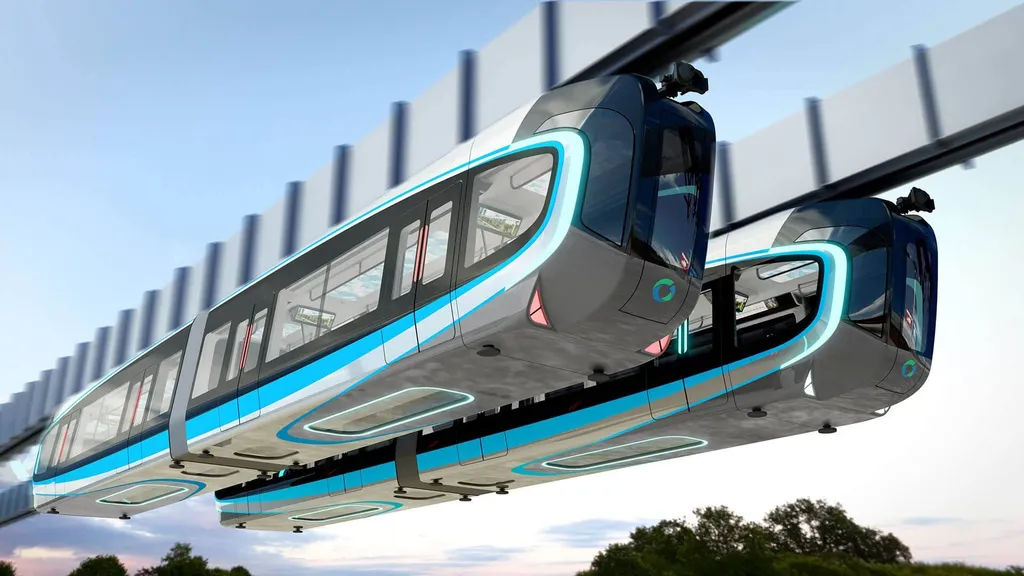
In the heart of China, a groundbreaking project is redefining urban transit and setting new standards for sustainable construction. The Wuhan Optics Valley Sky Rail, the first suspended monorail transit line to enter commercial operation in China, is not just a marvel of modern engineering but also a testament to innovative design and green construction practices. At the forefront of this project is CHEN Zhijun, a lead researcher from China Railway Siyuan Survey and Design Group Co., Ltd., who has been instrumental in the structural design and research of the elevated stations along the line.
The Optics Valley Sky Rail is more than just a mode of transportation; it’s an experience. Each of the elevated stations along the line is uniquely designed, offering passengers a different scenic view. “Every station unique scenery” is not just a design concept but a promise kept, according to CHEN Zhijun. The stations are constructed using prefabricated steel frame systems, a departure from traditional methods that has significant implications for the construction industry.
The use of prefabricated steel structures has proven to be a game-changer. “We’ve seen a reduction in the construction period by approximately 25%,” says CHEN Zhijun. This efficiency is not just about speed; it’s about sustainability. Prefabricated structures minimize waste, reduce environmental impact, and offer a more efficient use of resources. This is particularly relevant for the energy sector, where sustainable practices are increasingly becoming a priority.
The design of the stations is not just about aesthetics; it’s about functionality and safety. The prefabricated steel frame station bodies have undergone rigorous structural design and seismic analysis to ensure they meet regulatory requirements. The research conducted by CHEN Zhijun and his team has led to the development of an innovatively designed guideway track installation device, which has been widely praised for its minimal installation error and performance.
The implications of this research extend beyond the Optics Valley Sky Rail. The use of prefabricated steel structures in rail transit projects could become a norm, setting a new standard for sustainable construction. The solutions proposed by CHEN Zhijun and his team are highly targeted, offering valuable experience for future suspended monorail system designs.
The research was published in ‘Chengshi guidao jiaotong yanjiu’, which translates to ‘Urban Rail Transit Research’, underscoring the relevance of the findings to the broader field of urban transit. As cities around the world grapple with issues of sustainability, efficiency, and safety, the Wuhan Optics Valley Sky Rail stands as a beacon of innovation, offering a glimpse into the future of urban transit.
The commercial impacts of this research are profound. The energy sector, in particular, stands to benefit from the sustainable practices demonstrated in this project. As the world moves towards a greener future, the lessons learned from the Optics Valley Sky Rail could shape the development of urban transit systems worldwide. The research conducted by CHEN Zhijun and his team is not just about building a rail line; it’s about building a sustainable future.