
In the quest for more efficient and sustainable energy storage solutions, researchers have been exploring various materials and techniques to enhance the performance of batteries. A recent study published in *Cailiao gongcheng* (which translates to *Materials Engineering*) sheds light on the impact of high-energy ball milling on the microstructure and electrochemical behavior of β-MnO2, a material with significant potential for use in zinc-ion batteries. The lead author, XIN Shenghai from the School of Quality and Technical Supervision at Hebei University, and his team have uncovered insights that could pave the way for more efficient energy storage technologies.
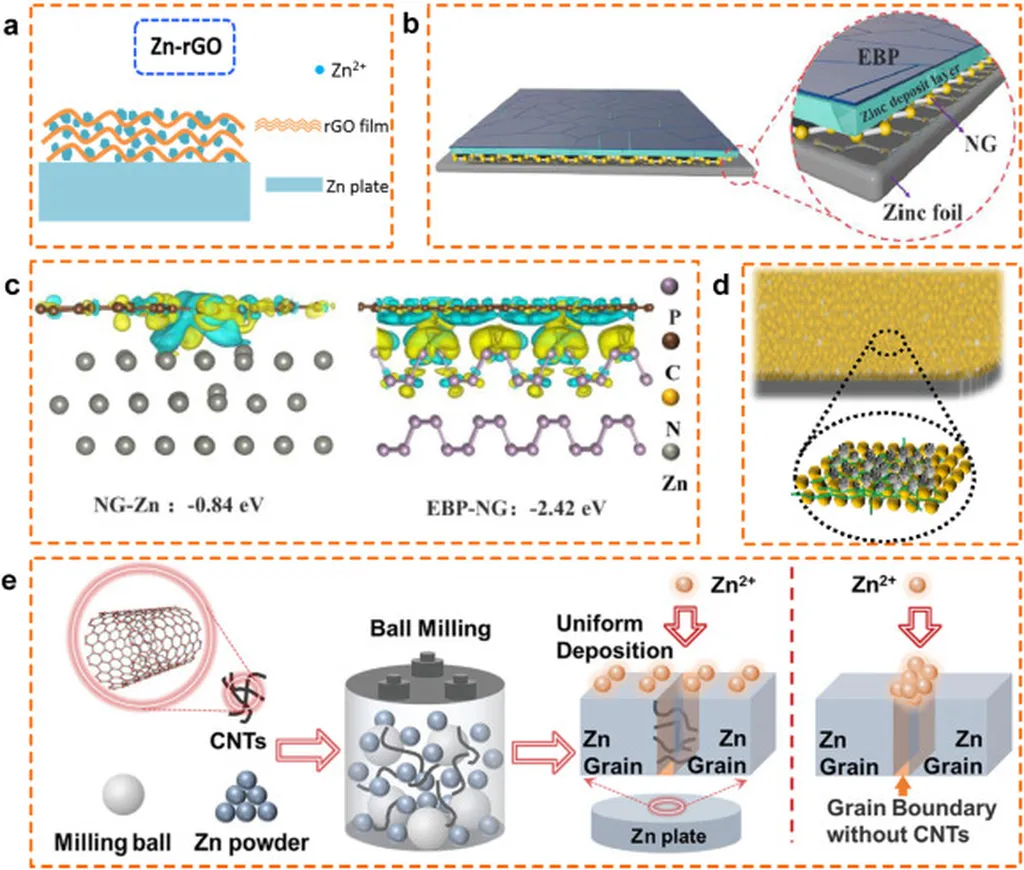
The study investigates how high-energy ball milling affects the crystal structure, particle morphology, size, and atomic arrangement of β-MnO2 samples. Using advanced techniques such as XRD, SEM, laser particle size analysis, and TEM, the researchers observed that ball milling induces significant changes in the material’s microstructure. “Compared with the sample before ball milling, the phase structure space group of the sample after ball milling changes, the grain size and particle size are reduced, and the coexistence of crystalline and amorphous microstructure is formed,” XIN explains.
One of the most intriguing findings is the evolution of particle morphology over different ball milling times. Initially, the particles become finely dispersed, but as the milling time increases, they begin to agglomerate and eventually form platelets. This morphological transformation is accompanied by increasing lattice distortion, which plays a crucial role in the material’s electrochemical performance.
The electrochemical tests revealed that the number of cycles required to reach the maximum discharge capacity decreases with ball milling. However, the maximum discharge capacity itself is influenced by the grain size, particle morphology, and lattice distortion induced by the milling process. Notably, the sample milled for 4.0 hours exhibited the highest maximum discharge capacity, while the sample milled for 5.5 hours showed the best capacity retention rate after 100 charge and discharge cycles.
XIN highlights the practical implications of these findings: “The charge transfer impedance and Warburg diffusion impedance of the 4.0-hour milled specimen cell are relatively small, and the peak area of cyclic voltammetry is relatively large compared with other cells. This indicates that the specimen cell has a relatively high electrochemical capacity and a relatively small charge/discharge potential difference.”
The commercial implications for the energy sector are substantial. As the demand for efficient and sustainable energy storage solutions grows, understanding how to optimize the performance of materials like β-MnO2 through techniques such as high-energy ball milling could lead to significant advancements in battery technology. This research not only provides a deeper understanding of the relationship between microstructure and electrochemical behavior but also offers a roadmap for developing more efficient zinc-ion batteries.
As the energy sector continues to evolve, the insights gained from this study could shape the future of energy storage, making it more reliable and sustainable. The findings published in *Cailiao gongcheng* mark a significant step forward in the quest for better energy storage solutions, with the potential to impact various industries and applications.