
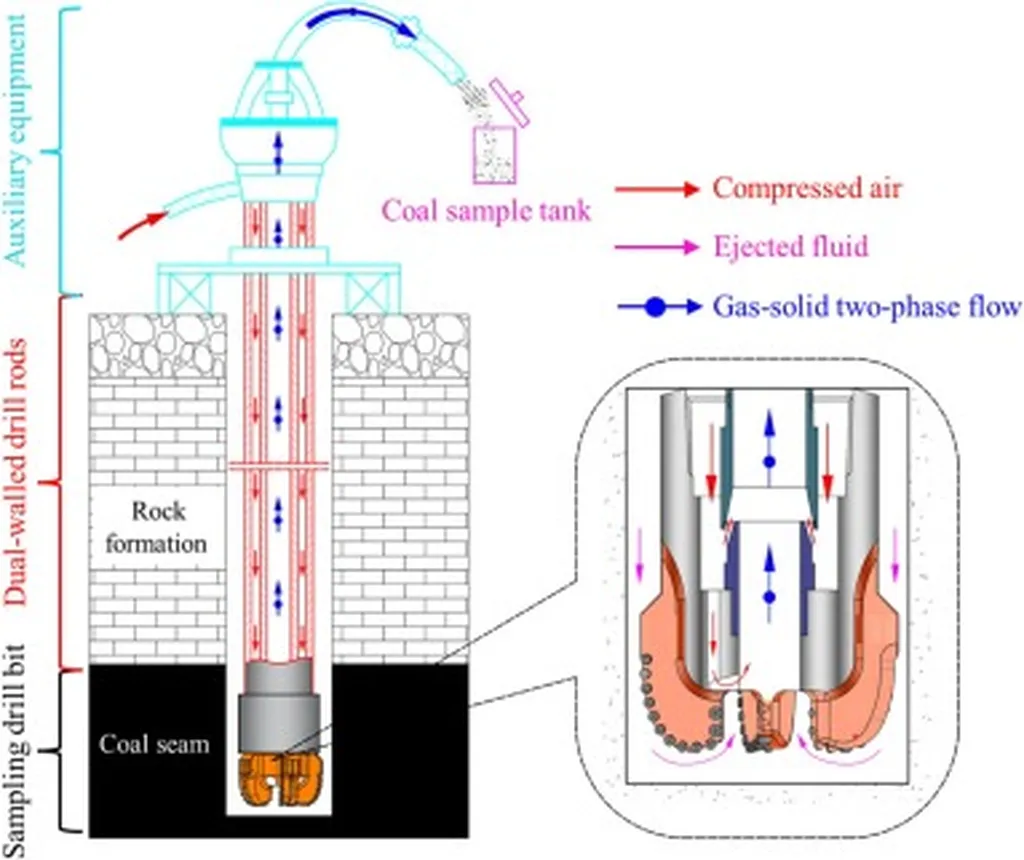
In the heart of China’s Henan province, researchers have developed a novel method and software to improve the accuracy of coal seam gas content measurements, a critical parameter for coalbed methane resource evaluation and safety management. The study, led by WEN Zhihui from the College of Safety Science and Engineering at Henan Polytechnic University, addresses the challenges posed by long-distance and long-drilling confined sampling techniques widely used in gas area management.
Coal seam gas content is a fundamental parameter in the evaluation and development of coalbed methane resources, as well as in predicting and managing gas-related disasters. However, traditional sampling methods often lead to significant gas loss, resulting in inaccurate measurements. “The traditional sampling method of ‘catching powder at the mouth of the hole’ can underestimate the gas content by up to 6.58%,” explains WEN Zhihui, the lead author of the study.
To tackle this issue, WEN and his team analyzed the desorption process and patterns of underground confined sampling gas. They proposed a new method for calculating gas loss based on Sun Chongxu’s formula and developed an auxiliary software using the C# language and MySQL database. The software aids in determining the amount of gas loss during the sampling process, thereby enhancing the accuracy of gas content measurements.
The results of the study are promising. The average loss of gas sampled from confined sampling obtained by the new method and auxiliary software accounted for 13.15% of the gas content. This improvement in accuracy is crucial for the energy sector, as it enables more precise evaluation of coalbed methane resources and better prediction of gas protrusion risks.
The implications of this research are far-reaching. Accurate gas content measurements are essential for the safe and efficient development of coalbed methane resources, a vital energy source. By improving the accuracy of these measurements, the new method and software can contribute to safer mining practices and more effective resource management.
As the energy sector continues to evolve, the need for precise and reliable measurement techniques becomes increasingly important. This research, published in the Journal of China University of Mining & Technology, offers a significant step forward in this area, paving the way for future developments in coal seam gas content measurement and management.
The study not only enhances the understanding of gas desorption processes but also provides practical tools for improving the accuracy of gas content measurements. This advancement is expected to have a substantial impact on the energy sector, particularly in coalbed methane resource evaluation and safety management. As the world continues to seek sustainable energy solutions, the precise measurement and management of coal seam gas content will play a crucial role in meeting global energy demands.