
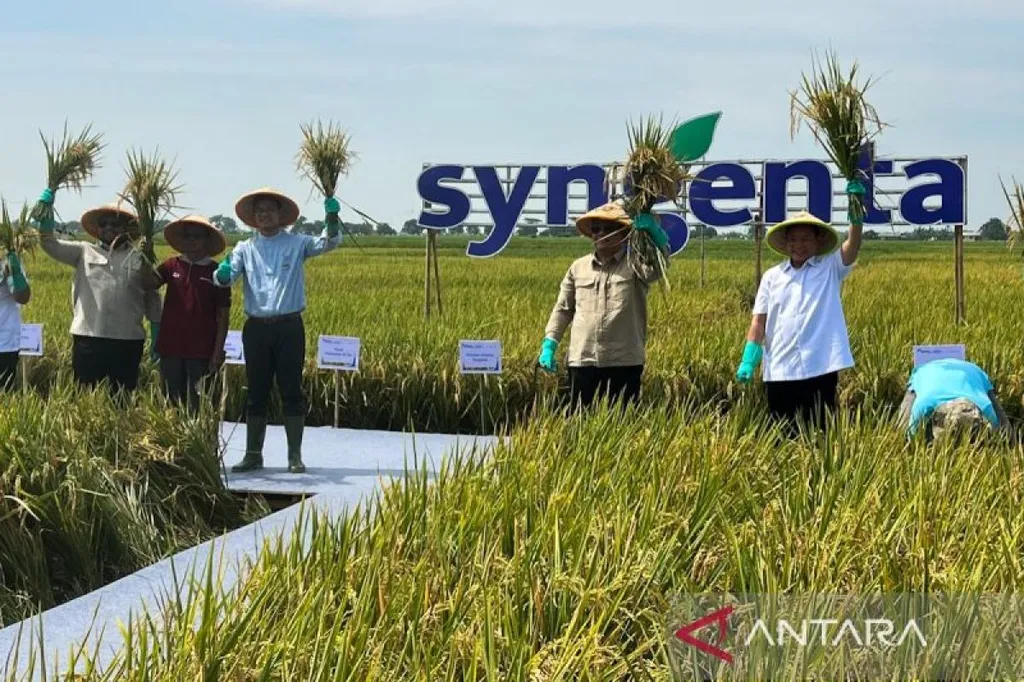
In the heart of Indonesia’s Malang Regency, a quiet revolution is taking root, one that could reshape the future of agriculture and, by extension, the energy sector. A recent study published in the journal Habitat, translated from Indonesian as “Home,” has shed light on the factors influencing rice farmers’ adoption of smart farming technologies, offering insights that could drive commercial impacts far beyond the paddies of Kanigoro Village.
The research, led by Syifa Aulia from the Faculty of Agriculture at Brawijaya University, focuses on the underutilization of smart farming tools like the Smart Soil Sensor and Bird Control Sound System. Despite their potential to boost agricultural efficiency and productivity, these technologies have yet to gain widespread traction among local farmers.
Aulia’s study, which employed a quantitative approach involving 100 rice farmers, revealed that three key factors influence farmers’ intentions to adopt smart farming technology: attitude, subjective norm, and perceived behavioral control. These findings are framed within the Theory of Planned Behavior (TPB), a well-established psychological model that predicts behavior based on these three components.
The results showed that all three factors have a positive and significant effect on farmers’ intentions, with perceived behavioral control emerging as the most dominant influence. “This means that farmers’ confidence in their ability to use the technology and their access to it is crucial,” Aulia explained. “Beyond building positive attitudes, it’s essential to strengthen social support and increase farmers’ confidence in their ability and access to technology.”
The implications of this research extend far beyond the rice paddies of Kanigoro Village. As the world grapples with the challenges of climate change and food security, the adoption of smart farming technologies could play a pivotal role in enhancing agricultural productivity and sustainability. Moreover, the energy sector stands to benefit from these advancements, as smart farming technologies can optimize resource use, reduce energy consumption, and even harness renewable energy sources.
For instance, smart soil sensors can provide real-time data on soil moisture and temperature, enabling farmers to optimize irrigation and reduce water waste. Similarly, bird control sound systems can minimize crop damage without the need for harmful pesticides, contributing to a more sustainable and energy-efficient agricultural ecosystem.
The study also highlights the importance of social support and education in driving technological adoption. By fostering a supportive environment and providing farmers with the necessary skills and knowledge, policymakers and industry stakeholders can accelerate the transition towards smart farming.
As Aulia noted, “The future of agriculture lies in the hands of our farmers. By empowering them with the right tools and support, we can unlock the full potential of smart farming technologies and pave the way for a more sustainable and productive agricultural sector.”
In the broader context, this research underscores the need for a holistic approach to technological adoption, one that considers not just the technical aspects but also the human factors. By addressing the attitudes, social norms, and perceived behavioral control of end-users, we can drive meaningful change and shape a future where technology and agriculture coexist harmoniously.
As the world looks towards the horizon of smart farming, the insights gleaned from this study serve as a beacon, guiding us towards a future where technology and tradition converge to create a more sustainable and productive agricultural landscape. The journey has just begun, and the path forward is illuminated by the quiet revolution taking place in the rice paddies of Kanigoro Village.