
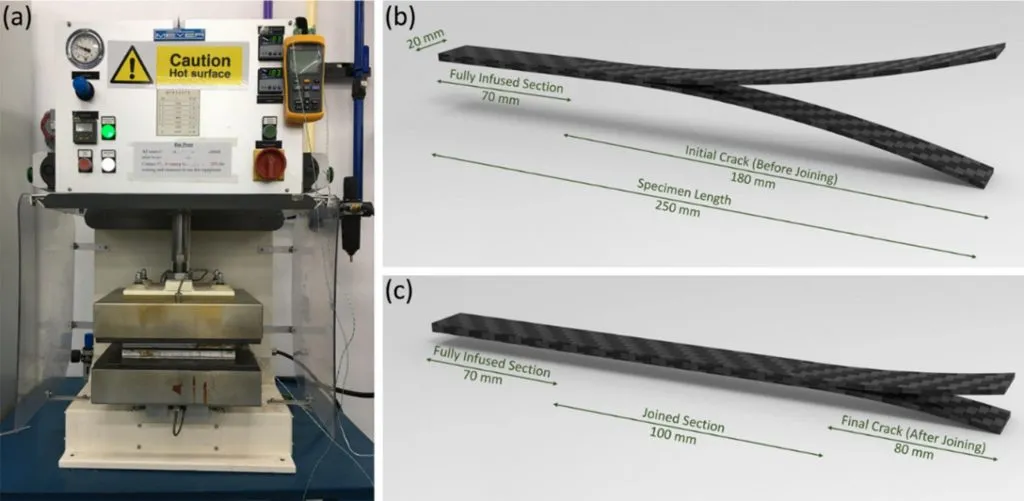
In the ever-evolving world of advanced materials, a recent study published in the Wasit Journal of Engineering Sciences (translated from Arabic as “The Iraqi Journal of Engineering Sciences”) is making waves, promising to reshape how we think about composite materials and their applications in the energy sector. The research, led by Ali Baqer, delves into the intriguing world of self-healing composites and the role of nanofillers in enhancing their mechanical performances.
Composite materials, known for their superior strength and lightweight properties, are the backbone of many modern structures, from aircraft wings to wind turbine blades. However, these materials are not immune to damage. Micro- and meso-cracks can form under load, compromising their integrity and reducing their lifespan. This is where the concept of self-healing composites comes into play.
Baqer’s research explores how the addition of nanomaterials can influence the mechanical properties and self-healing capabilities of composite materials. “The presence of nanoparticles can significantly alter the mechanical performance of composite materials,” Baqer explains. This is a game-changer for industries that rely on these materials, particularly the energy sector.
Imagine a wind turbine blade that can autonomously heal minor cracks, extending its lifespan and reducing maintenance costs. Or a pipeline that can self-repair, minimizing downtime and potential environmental impacts. These scenarios are not far-fetched; they are the promising potential of self-healing composites.
The study reviews various self-healing processes and their mechanisms, focusing on how these materials respond to different forces like impact, flexural, and tensile stress. By understanding these mechanisms, industries can better harness the power of self-healing composites to enhance the reliability and endurance of their structures.
The commercial implications are substantial. In the energy sector, where structures are often subjected to harsh conditions and remote locations, self-healing composites could revolutionize maintenance strategies and improve overall efficiency. “This research opens up new avenues for developing smart materials that can adapt and heal, reducing the need for frequent repairs and replacements,” Baqer notes.
As we look to the future, the integration of nanofillers into composite materials could pave the way for more resilient and sustainable structures. This research not only advances our understanding of self-healing composites but also sets the stage for innovative applications that could transform the energy sector and beyond.
In the quest for more durable and efficient materials, Baqer’s work is a beacon of progress, illuminating the path towards a future where materials can heal themselves, ensuring longevity and reliability in even the most demanding environments. The journey has just begun, and the possibilities are as vast as they are exciting.