
In the quest for sustainable and effective soil remediation techniques, a team of researchers from Tongji University and the Kunming Prospecting Design Institute of China Nonferrous Metals Industry Co, Ltd. have shed new light on the role of pH in microbial-induced calcite precipitation (MICP) for treating cadmium-contaminated tailings. Their findings, published in ‘Yantu gongcheng xuebao’ (translated to ‘Rock and Soil Mechanics’), offer promising insights for the energy sector, where contaminated soil management is a critical challenge.
The study, led by JIANG Zhaoming and his colleagues, explores how varying pH levels impact the effectiveness of MICP in immobilizing cadmium (Cd) in both aqueous solutions and solid tailings. “We found that while Cd2+ immobilization occurs across a wide pH range, the optimal pH for this process is 9,” JIANG explains. This is a significant finding, as it suggests that fine-tuning the pH of remediation solutions could greatly enhance the efficiency of MICP treatments.
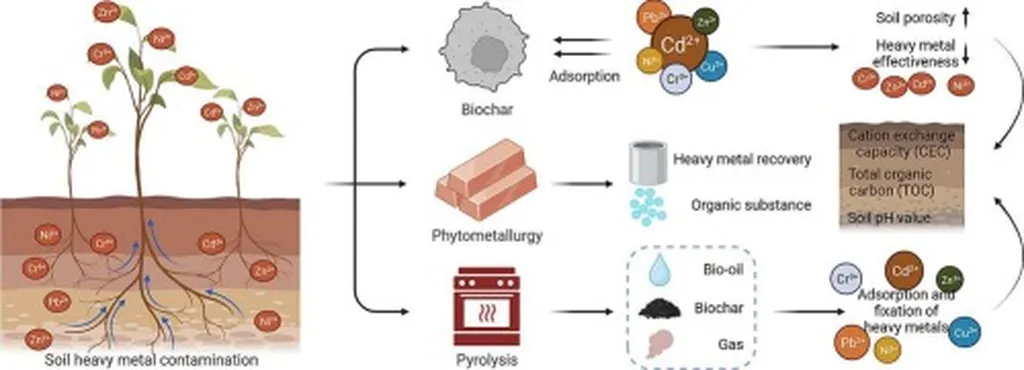
The research also reveals that MICP transforms the acid-soluble fraction of Cd in tailings into more stable, reducible, and residual states. This transformation is positively correlated with the rate of carbonate generation, a process that not only immobilizes heavy metals but also strengthens the soil structure. “The MICP method accomplishes the immobilization of heavy metal ions through a combination of biosorption, calcium carbonate adsorption, ion exchange, and co-precipitation processes,” JIANG adds. This multi-faceted approach could provide a robust solution for soil remediation in the energy sector, where heavy metal contamination is a common issue.
Moreover, the study’s analytical characterization of biomineralization precipitation offers valuable insights into the micro-mechanisms of heavy metal fixation and soil solidification. The MICP method enhances the friction angle of soil particles and promotes cohesion among them, which could lead to more stable and safer tailings management practices.
The commercial implications of this research are substantial. For the energy sector, where the management of contaminated soil and tailings is a significant cost and environmental concern, the MICP method offers a sustainable and effective alternative to traditional remediation techniques. By optimizing pH levels and understanding the micro-mechanisms of MICP, companies could reduce remediation costs, improve site safety, and minimize environmental impact.
As the energy sector continues to grapple with the challenges of contaminated soil management, this research provides a promising path forward. By harnessing the power of microorganisms and fine-tuning the remediation process, we may soon see a shift towards more sustainable and efficient soil treatment practices. The work of JIANG and his team is a testament to the power of interdisciplinary research and its potential to drive innovation in the energy sector.