
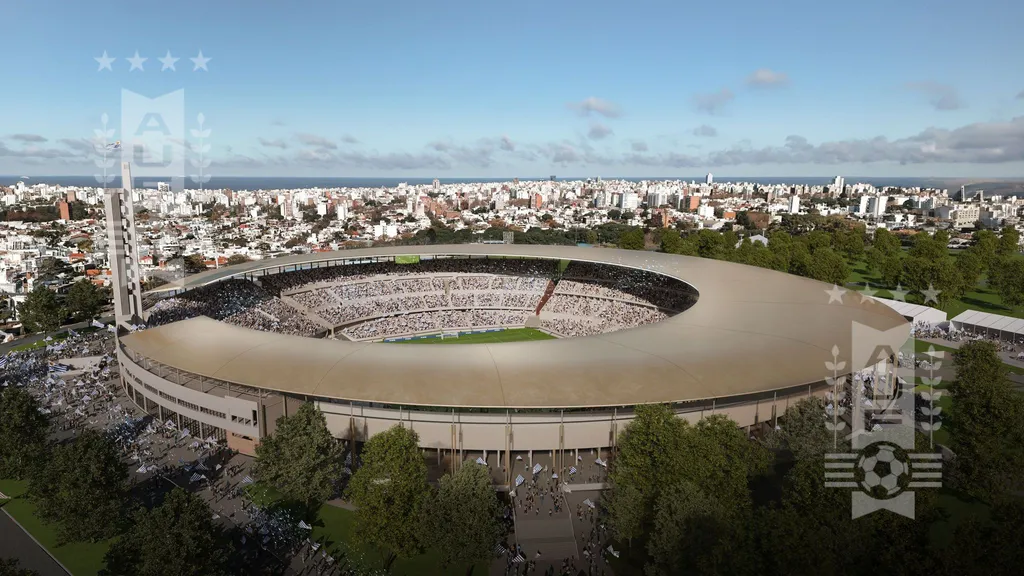
In the quiet city of Rivera, Uruguay, a silent sentinel of local pride and passion stands tall—the Atilio Paiva Olivera stadium. Built in stages, with its first tribune erected in 1966 and the rest following in 1994, this concrete colossus has weathered decades of cheers, jeers, and the relentless march of time. However, recent observations of structural lesions have raised concerns, prompting the Intendencia de Rivera to collaborate with the Universidad de la República’s Faculty of Architecture, Design, and Urbanism (FADU) to assess the stadium’s condition. The research, led by Gianella Mussio from FADU’s Institute of Technologies, offers a blueprint for preserving not just a stadium, but a community’s heritage.
The study, published in ‘Informes de la Construccion’ (translated to ‘Construction Reports’), employed a meticulous methodology to evaluate the stadium’s reinforced concrete structure. Mussio and her team characterized materials and components, identified lesions, and conducted structural analyses to provide a comprehensive diagnosis. “Our goal was to provide actionable insights that would enable the Intendencia to make informed decisions about the stadium’s usage and future,” Mussio explained. This approach not only ensures safety but also extends the stadium’s lifespan, potentially saving significant resources that would otherwise be spent on premature repairs or reconstruction.
The findings of this research have far-reaching implications for the construction and energy sectors. Understanding the degradation patterns of reinforced concrete structures can lead to more efficient maintenance strategies and innovative design approaches that prioritize durability and sustainability. For instance, the energy sector, which often involves the construction of large-scale infrastructure, can benefit from these insights to enhance the longevity of its assets, reducing long-term maintenance costs and environmental impact.
Moreover, the methodology employed in this study can be adapted to other aging structures, both in Uruguay and beyond. As Mussio noted, “The techniques we used are not limited to stadiums. They can be applied to any reinforced concrete structure, providing valuable data for preservation efforts.” This adaptability makes the research particularly relevant in a world grappling with aging infrastructure and the need for sustainable solutions.
The commercial impacts of this research are substantial. By prolonging the life of existing structures, businesses and governments can defer the substantial costs associated with new construction. Additionally, the insights gained can inform the development of new materials and techniques that are more resistant to degradation, opening up new markets and opportunities for innovation.
As the Atilio Paiva Olivera stadium continues to stand as a testament to Rivera’s spirit, the research conducted by Mussio and her team serves as a beacon for the future. It highlights the importance of proactive maintenance and the potential for technological advancements to shape the way we preserve our built environment. In an era where sustainability and cost-efficiency are paramount, this research offers a roadmap for the construction and energy sectors to navigate the challenges ahead.