
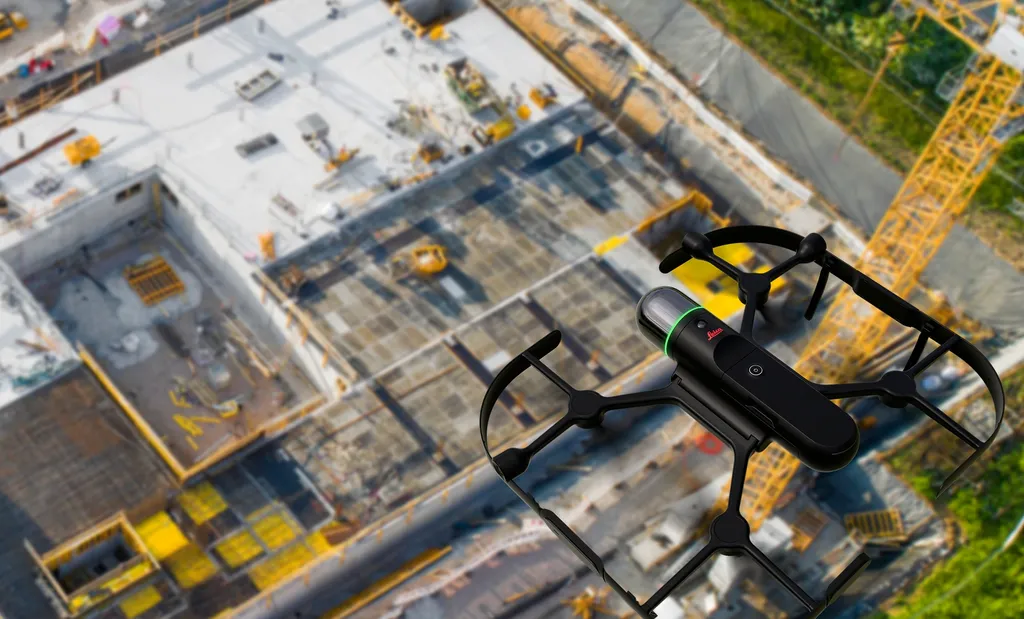
In the rapidly evolving world of unmanned transport vehicles, a shift from public mobility to specialized applications is underway, and the construction industry is poised to benefit significantly. This is the key finding from a recent study published in the journal *Механика машин, механизмов и материалов*, which translates to *Mechanics of Machines, Mechanisms and Materials*. The research, led by Alexander V. Belevich of the Joint Institute of Mechanical Engineering of the National Academy of Sciences of Belarus, explores the promising directions in unmanned technologies, with a particular focus on agriculture, mining, and construction.
The study highlights that while agriculture is transitioning from automatic driving systems to full autonomy, the mining industry has already demonstrated successful industrial implementation of unmanned systems with proven economic efficiency. “In mining, we see a clear example of how autonomous transport can enhance safety and productivity,” Belevich notes. “This sets a precedent for other industries, including construction, where the potential is substantial.”
One of the most compelling aspects of the research is its focus on the integration of robotic complexes with Building Information Modeling (BIM) technologies in construction. This integration could revolutionize the way construction projects are managed, improving efficiency and reducing costs. “The synergy between robotic complexes and BIM technologies presents a unique opportunity for the construction industry,” Belevich explains. “It’s not just about automating tasks; it’s about creating a smarter, more connected workflow.”
However, the path to widespread adoption of autonomous transport in construction is not without challenges. Legal and infrastructural limitations remain significant hurdles. The study emphasizes the need for targeted efforts in developing robotic complexes for restricted environments, which could represent a strategic interest for the development of domestic mechanical engineering.
The research outcomes suggest that focusing on applications in controlled environments could be the key to unlocking the full potential of unmanned transport vehicles. This could have profound implications for the energy sector, where construction and logistics are critical components. As the industry moves towards greater automation, the insights from this study could shape future developments and drive innovation.
In conclusion, the study by Belevich and his team offers a comprehensive analysis of the current state and future prospects of unmanned transport vehicles in specialized sectors. By highlighting the successes in mining and the potential in construction, the research provides a roadmap for the industry to follow. As the construction sector continues to evolve, the integration of autonomous technologies could well be the next big leap forward.