
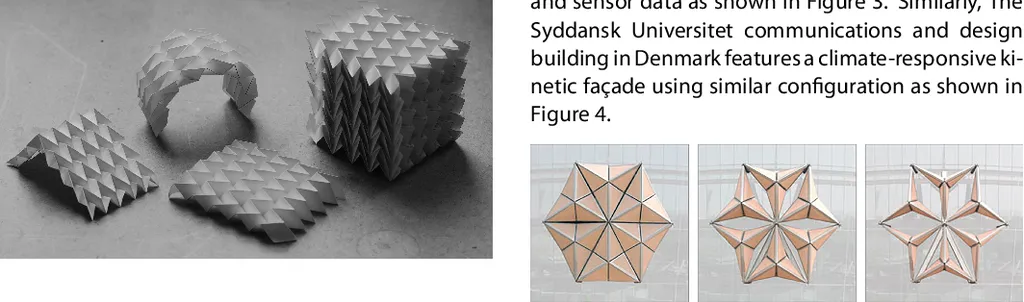
In the heart of Sarajevo, a groundbreaking study is unfolding that could redefine the future of building design and energy efficiency. Irma Orsić-Princip, a leading researcher from the Faculty of Architecture at the University of Sarajevo, is exploring how the ancient art of origami can inspire the next generation of kinetic façade systems. Published in the journal *Architecture, Engineering, and Globalization* (AGG+), her work delves into the potential of modular, dynamic structures that respond to environmental changes, offering a promising avenue for sustainable architecture.
The traditional role of a building’s façade has long been limited to providing protection and reducing energy consumption. However, advances in software and material sciences are transforming these static structures into active regulators of energy use. Orsić-Princip’s research focuses on the application of origami principles to create modular geometric structures that can dynamically respond to environmental conditions. These systems, composed of interconnected, homogeneous elements, can effectively regulate daylight penetration and thermal energy accumulation, particularly in areas exposed to direct external influences.
“By designing origami patterns with specific geometric and mechanical characteristics, we can address the structural and technical challenges of kinetic façade systems,” Orsić-Princip explains. Her study evaluates the actuation mechanisms that control the movement of these geometric modules, aiming to integrate kinetic façade systems into contemporary architectural practice. The goal is to develop sustainable, adaptive, and energy-efficient building envelopes that can significantly impact the energy sector.
The potential commercial implications of this research are vast. Buildings equipped with kinetic façades could reduce energy consumption by dynamically adjusting to environmental conditions, leading to lower operational costs and a smaller carbon footprint. This innovation could be particularly beneficial in urban areas, where energy efficiency and sustainability are increasingly prioritized.
As the world grapples with the challenges of climate change and the need for sustainable development, Orsić-Princip’s work offers a glimpse into a future where architecture and technology converge to create more efficient and adaptive buildings. Her research, published in AGG+, not only contributes to the academic discourse but also provides practical insights for architects, engineers, and energy sector professionals.
In the words of Orsić-Princip, “The integration of kinetic façade systems into contemporary architectural practice is not just a theoretical exercise; it’s a necessary step towards achieving sustainable and energy-efficient buildings.” Her work is a testament to the power of interdisciplinary research and the potential of ancient arts like origami to inspire modern innovations. As the construction industry continues to evolve, the principles explored in this study could shape the future of building design, offering new opportunities for energy savings and environmental sustainability.