
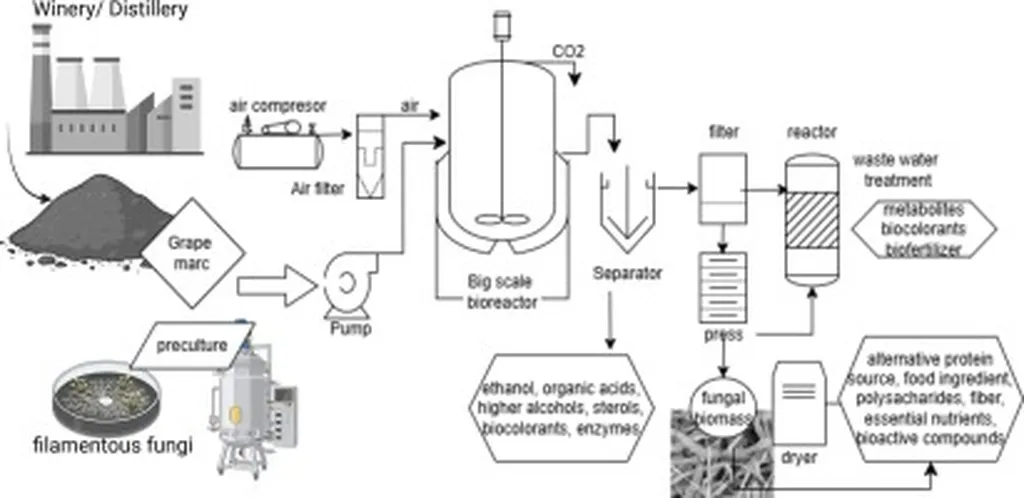
In a groundbreaking study published in the journal *eXPRESS Polymer Letters* (which translates to *Polymer Letters* in English), researchers have unlocked a novel method for producing bacterial cellulose (BC) using grape pomace, a byproduct of winemaking. This innovative approach not only addresses waste management in the agricultural sector but also paves the way for sustainable, bio-based materials with significant commercial potential.
The research, led by Isabel Milagros Gavilan-Figari, demonstrates the feasibility of producing BC through spontaneous fermentation of grape pomace supplemented with sucrose. Unlike traditional methods that rely on commercial strains or nitrogen supplements, this process uses grape pomace as the sole carbon source, nutrient substrate, and microbial inoculum. “This method is not only cost-effective but also aligns with circular economic principles, making it adaptable to rural contexts,” says Gavilan-Figari.
The fermentation process, conducted under static conditions, yielded biofilms with stable structural characteristics and BC production of up to 14.1 g/L. The resulting films exhibited well-organized polymeric networks, with thermal stability ranging from 159 to 266 °C and mechanical resistance comparable to or higher than conventional biopolymers. “The films showed reproducible chemical profiles and measurable variations in mechanical performance, with a tensile strength ranging from 0.0001 to 105 MPa and an elongation at break of 15±5%,” explains Gavilan-Figari.
The implications for the energy sector are profound. As the world shifts towards sustainable and renewable resources, the development of bio-based materials like BC offers a promising alternative to traditional petroleum-based products. The ability to produce BC from agro-industrial residues under simple, low-input conditions opens up opportunities for scalable valorization in functional and sustainable materials.
“This research highlights a resource-efficient and sustainable pathway that could revolutionize the way we think about waste and material production,” says Gavilan-Figari. The study not only demonstrates the potential of BC as a sustainable material but also underscores the importance of innovative, low-cost processes in driving the circular economy forward.
As the world continues to grapple with the challenges of climate change and resource depletion, the development of sustainable, bio-based materials like BC offers a beacon of hope. With further research and development, this innovative approach could shape the future of the energy sector, paving the way for a more sustainable and circular economy.