
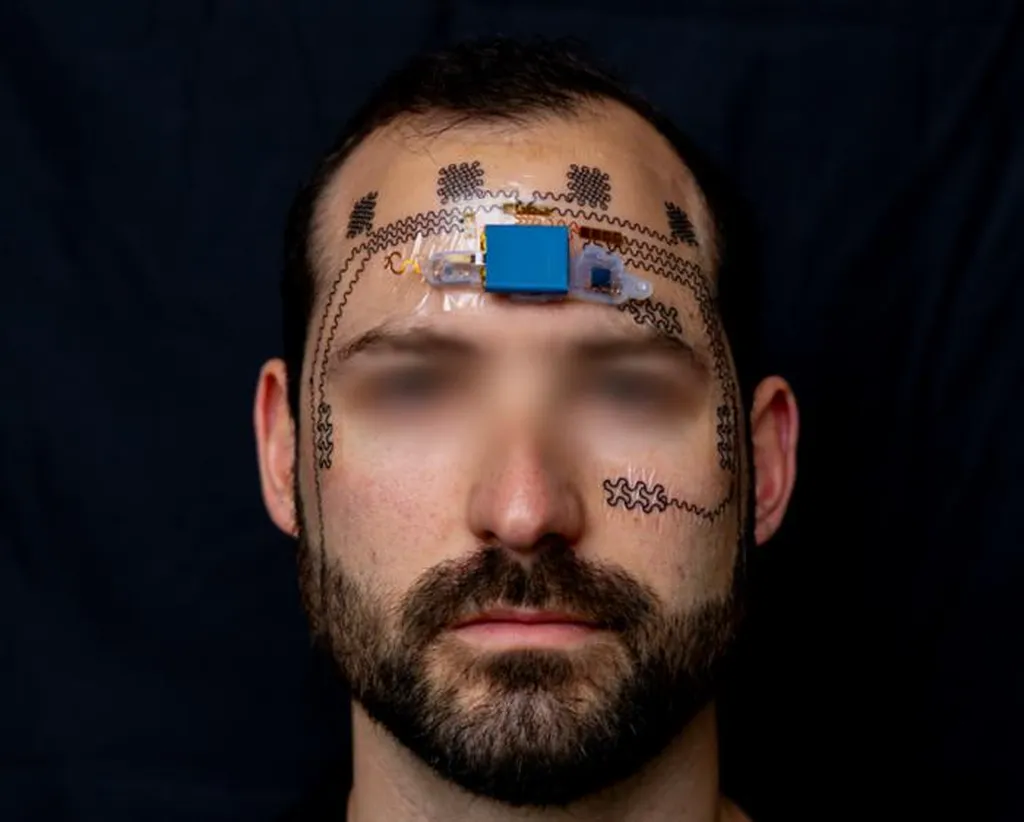
In a groundbreaking development that could redefine wearable technology and healthcare monitoring, researchers have unveiled the potential of electronic tattoos (e-tattoos) as next-generation wearable electronics. These ultrathin, skin-conformal devices promise real-time health monitoring with unprecedented sensitivity and comfort. The research, led by Anoop Singh from the Department of Physics at Government College for Women in Jammu, India, was recently published in ECS Sensors Plus, a journal focused on advanced sensor technologies.
E-tattoos represent a significant leap from traditional wearables, offering seamless integration with the human body. “The distinct advantage of e-tattoos lies in their ability to adhere reliably to the skin while providing high-quality signal acquisition,” explains Singh. This innovation is poised to revolutionize various sectors, including healthcare, sports performance tracking, and environmental sensing.
The study delves into the fundamental principles and material requirements for fabricating these tattoo-like electronics. Soft substrates, biocompatible interfaces, breathable architectures, and functional nanomaterials are key components that enable the e-tattoos’ unique properties. The research highlights the importance of ultrathin, stretchable, and low-impedance designs for reliable epidermal adhesion and high-quality signal acquisition.
The fabrication processes explored in the study include printing, transfer procedures, vacuum deposition, 3D printing, and roll-to-roll manufacturing. These methods pave the way for scalable production, making e-tattoos a viable option for commercial applications. “The versatility of fabrication techniques allows us to tailor e-tattoos for specific applications, from biochemical monitoring to soft human-machine interfaces,” Singh adds.
Beyond design and fabrication, the review examines the diverse range of applications made possible by e-tattoos. These include biochemical monitoring, sports performance tracking, environmental sensing, soft human-machine interfaces, physiological sensing, and wireless health diagnostics. The potential for these devices to enhance human-machine interaction and improve health outcomes is immense.
However, the study also addresses critical challenges such as data security, mechanical durability, long-term biocompatibility, and thermal management. Innovative solutions involving hybrid device architectures, advanced materials, and enhanced wireless communication techniques are proposed to overcome these hurdles.
The commercial implications for the energy sector are particularly noteworthy. E-tattoos could enable real-time monitoring of human physiological parameters, leading to more efficient and personalized energy management systems. For instance, these devices could optimize energy consumption in smart homes by adjusting heating, cooling, and lighting based on the occupants’ physiological needs.
As the research continues to evolve, e-tattoos are expected to play a pivotal role in shaping the future of wearable electronics and healthcare. The insights provided by Singh and his team offer a comprehensive view of the current state and future potential of this transformative technology. With the publication in ECS Sensors Plus, the scientific community now has a valuable resource to guide further advancements in the field.
In conclusion, the development of electronic tattoos represents a significant step forward in wearable technology. As Anoop Singh and his colleagues continue to push the boundaries of this innovative field, the potential applications and commercial impacts are vast and promising. The journey towards seamless human-device integration has only just begun, and the future looks brighter than ever.