
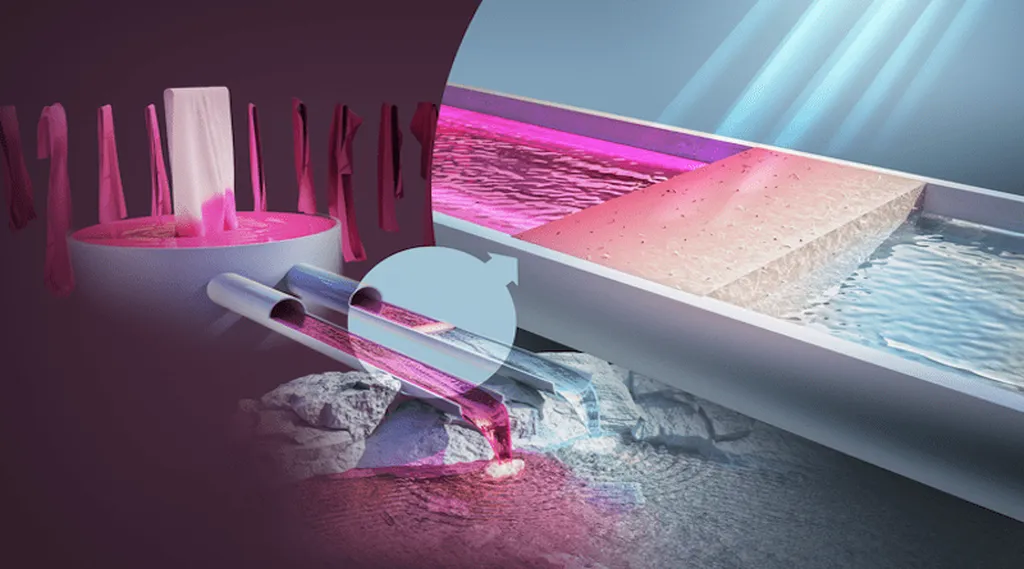
In the heart of Vietnam, a team of researchers has developed a promising new material that could revolutionize the way we treat dye-contaminated wastewater. Led by Le Thi Thanh Nhi from the Center for Advanced Chemistry at Duy Tan University in Danang City, the team has synthesized a biodegradable hydrogel that shows remarkable potential for removing organic dyes from water.
The hydrogel, known as nAg-CS/PVA, is a combination of chitosan, polyvinyl alcohol (PVA), and silver nanoparticles. What sets it apart is its synthesis process, which uses a dual gamma irradiation technique. This method not only ensures the successful immobilization of silver nanoparticles into the PVA polymer network but also enhances the hydrogel’s gelation and swelling properties.
“The strong interaction between the functional groups of chitosan and PVA, combined with the superior complexation ability of silver, contributes significantly to these enhanced properties,” Nhi explains. This interaction is confirmed through various analyses, including Fourier-transform infrared spectroscopy (FTIR), differential scanning calorimetry (DSC), and field emission scanning electron microscopy (FESEM).
The hydrogel’s effectiveness was put to the test using methylene blue (MB), a common organic dye. Under optimal conditions, the hydrogel demonstrated a maximum adsorption capacity of 285.71 mg g⁻¹. This means it can absorb a significant amount of dye, making it a highly efficient treatment option.
Moreover, the use of neutron activation confirmed the successful immobilization of silver nanoparticles, ensuring minimal release of silver ions into the environment. This is a crucial factor, as it makes the hydrogel not only effective but also environmentally friendly.
The implications of this research are far-reaching, particularly for the energy sector. The textile industry, a significant consumer of water, often discharges dye-contaminated wastewater. Efficient treatment methods like this hydrogel could help mitigate the environmental impact of this industry.
As Nhi puts it, “Our findings highlight the potential of nAg-CS/PVA hydrogel as an efficient and environmentally friendly material for the treatment of dye-contaminated wastewater.” This research, published in the journal ‘Materials Research Express’ (translated to English as “Materials Research Express”), opens up new avenues for developing sustainable and effective wastewater treatment methods.
The future of dye treatment looks promising, with this hydrogel paving the way for more innovative and eco-friendly solutions. As the world grapples with increasing water pollution, such advancements are not just welcome but necessary. They offer hope for a cleaner, healthier future, where industry and environment can coexist harmoniously.