
In the wake of devastating hurricanes, power outages can cripple communities, halting businesses and disrupting daily life. A recent study published in the journal *Resilient Cities and Structures* (translated as “Resilient Cities and Structures”) offers a novel approach to predicting power restoration patterns using data from an unlikely source: Facebook. Led by Tasnuba Binte Jamal from the University of Central Florida, this research could revolutionize how utility companies and emergency managers prepare for and respond to hurricane-induced power outages.
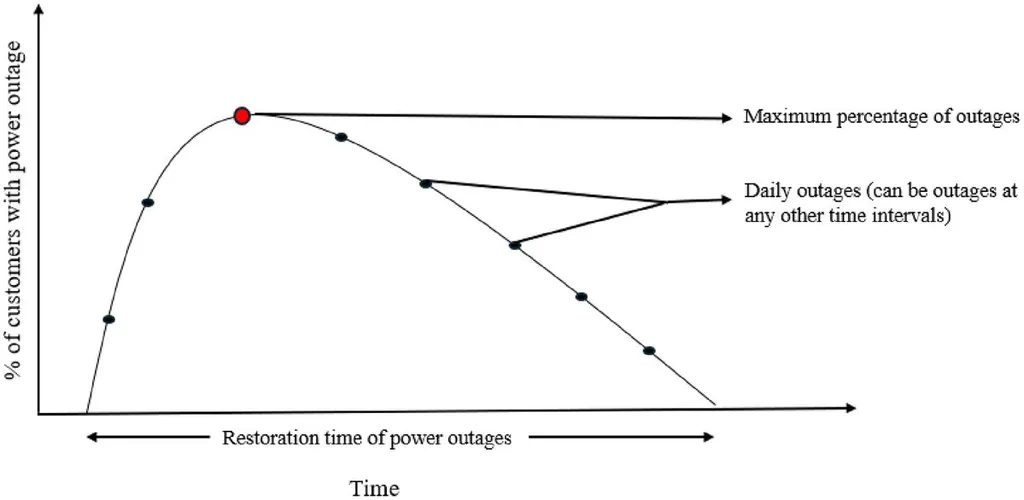
The study, which analyzed data from Hurricanes Ida and Ian, demonstrates a strong correlation between population activity on Facebook and power outage restoration times at the ZIP code level. “We found that Facebook data can explain 59% of the variance in power outages at a daily level and 65% of the variance in restoration times,” says Jamal. This finding is a game-changer for the energy sector, as it provides a readily accessible, high-resolution data source that can be used to model and predict power outage restoration patterns.
The implications for the energy sector are significant. Traditionally, utility companies have relied on proprietary data to model power outages and restoration times. However, this data is often not readily available to researchers or smaller utility companies. By leveraging Facebook data, utility companies can gain valuable insights into power outage restoration patterns without needing access to proprietary data. “This study can aid researchers to choose alternative data for power outage analysis and help emergency managers and utility companies gain data-driven insights enhancing their decision-making for an impending hurricane,” Jamal explains.
The study also highlights the potential for data-driven models to improve emergency response and resource allocation. By accurately predicting power outage restoration times, utility companies can better allocate resources, reducing downtime and minimizing the economic impact on businesses and residents. This is particularly important in the commercial sector, where power outages can result in significant financial losses.
The research also opens up new avenues for future studies. As Jamal notes, “This is just the beginning. There’s so much more we can do with this data.” Future research could explore the use of social media data to predict other types of infrastructure disruptions, such as water or transportation outages. It could also investigate the use of machine learning algorithms to improve the accuracy of power outage restoration predictions.
In conclusion, this study is a significant step forward in the field of disaster response and recovery. By leveraging the power of social media data, utility companies and emergency managers can gain valuable insights into power outage restoration patterns, improving their decision-making and reducing the economic impact of hurricanes. As we face increasingly severe weather events, this research offers a promising tool for building more resilient communities.