
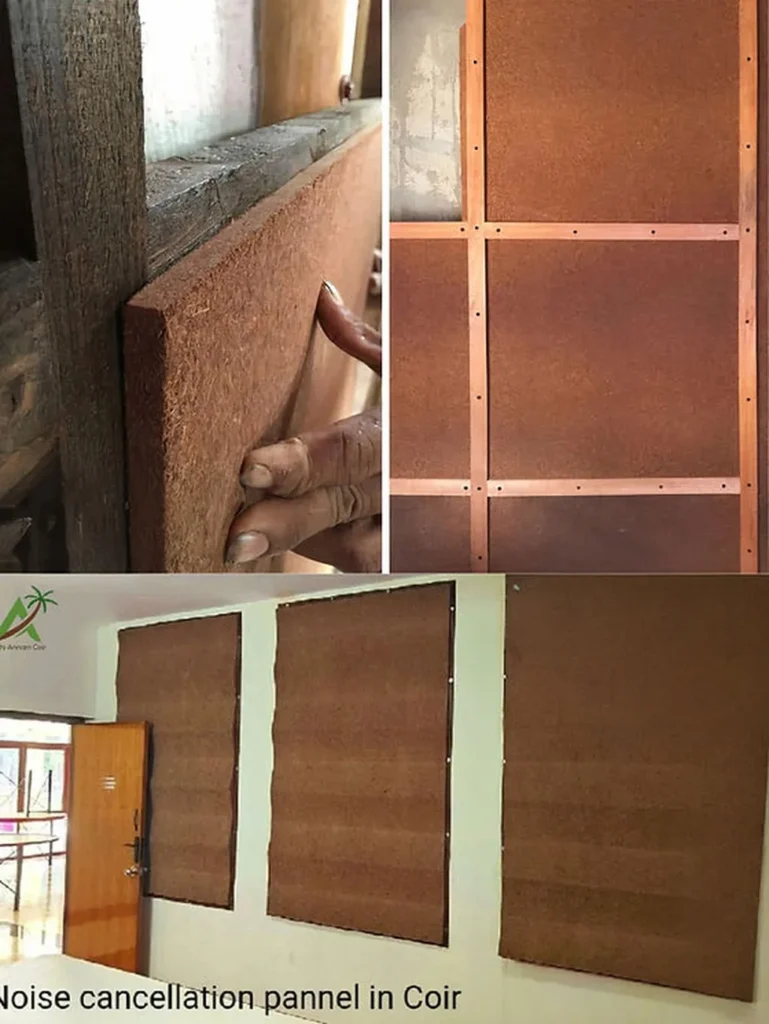
In a groundbreaking development that could revolutionize sustainable construction, researchers have successfully integrated agricultural waste materials into adobe bricks, enhancing their strength and durability. This innovative approach, detailed in a recent study published in the RMUTL Engineering Journal (also known as the Rajamangala University of Technology Lanna Engineering Journal), opens new avenues for eco-friendly building materials, particularly for earthen houses.
Lead author Chusak Kererat, whose affiliation is not specified, spearheaded the research, focusing on the potential of banana leaves fiber and coir as additives to traditional adobe bricks. The study aimed to address the need for sustainable and cost-effective construction materials, especially in regions where agricultural waste is abundant.
The research team experimented with varying proportions of banana leaves fiber and coir, replacing parts of the soil-sand mixture typically used in adobe brick production. “We found that incorporating 3% banana leaves fiber significantly improved the compressive and flexural strength of the bricks,” Kererat explained. “This enhancement makes them a viable alternative to conventional adobe bricks, which often lack the necessary strength for modern construction standards.”
The study’s findings are particularly noteworthy for the energy sector, as the development of stronger, more durable adobe bricks could lead to more energy-efficient buildings. Earthen houses, which are naturally insulated and require less energy for heating and cooling, could become a more viable option for sustainable housing. “This research not only promotes the use of agricultural waste but also contributes to the development of energy-efficient construction materials,” Kererat added.
The compressive strength of the enhanced adobe bricks increased by 8.02%, while the flexural strength saw a remarkable 50% improvement. These properties were compared to bricks containing rice husk, produced by the Sufficiency Economy Learning Center, Khao Kling Temporary Prison. The density of the new bricks was also found to be comparable to those made by the center, ensuring their practicality for construction purposes.
The implications of this research extend beyond the immediate benefits of stronger adobe bricks. By utilizing agricultural waste, the construction industry can reduce its environmental footprint and promote a circular economy. This approach could inspire similar innovations in other regions, where local agricultural byproducts could be repurposed for construction.
As the world grapples with the challenges of climate change and resource depletion, the development of sustainable construction materials becomes increasingly critical. Kererat’s research offers a promising solution, demonstrating how traditional building techniques can be enhanced with modern innovations. “This is just the beginning,” Kererat noted. “We hope to see further advancements in this field, leading to more sustainable and energy-efficient construction practices.”
The study’s publication in the RMUTL Engineering Journal underscores its significance within the academic and professional communities. As the construction industry continues to evolve, the integration of agricultural materials into building practices could become a cornerstone of sustainable development. This research not only highlights the potential of banana leaves fiber and coir but also sets a precedent for future innovations in eco-friendly construction.