
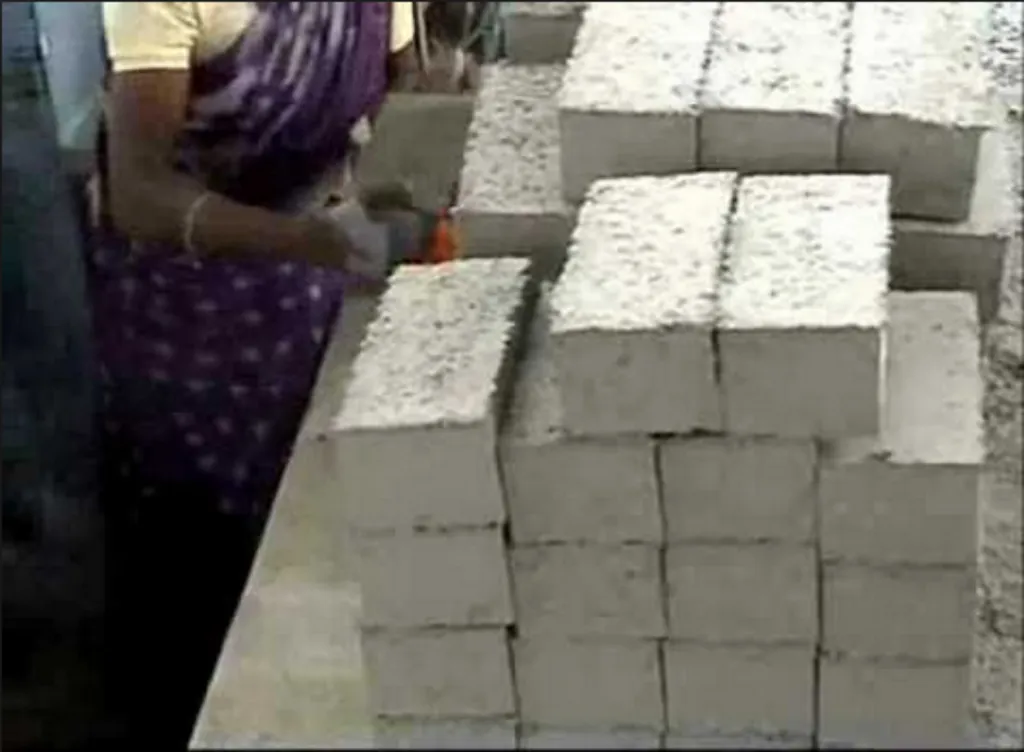
In a groundbreaking study published in the RMUTL Engineering Journal (formerly known as the Rajamangala University of Technology Lanna Engineering Journal), researchers have uncovered a promising method to repurpose waste from power plants into a valuable construction material. The research, led by Thitibhorn Phantachang, explores the potential of coal and biomass ashes to partially replace Portland cement in the production of interlocking compressed bricks.
The study focuses on the compressive strength, unit weight, and water absorption of bricks made with varying ratios of cement to ash, collected from power plants in Lampang and Lampun provinces. The findings reveal that as the percentage of ash increases, the unit weight of the bricks decreases, leading to a more environmentally friendly and cost-effective construction material.
“Our research shows that the compressive strength of these bricks is adequate, even with a significant portion of the cement replaced by ash,” said Phantachang. “This not only reduces the dead weight of structures but also encourages the construction industry to utilize industrial by-products, enhancing their environmental credibility.”
The implications for the energy sector are substantial. By finding a productive use for coal and biomass ashes, power plants can reduce their waste output and potentially generate additional revenue streams. Moreover, the construction industry stands to benefit from a more sustainable and economical building material.
As the world grapples with the challenges of climate change and resource depletion, innovative solutions like this one become increasingly vital. The research conducted by Phantachang and his team offers a glimpse into a future where waste is minimized, and sustainability is at the forefront of industrial practices.
“This study is a step towards a more circular economy, where waste from one industry becomes a resource for another,” Phantachang noted. “It’s a win-win situation for both the energy and construction sectors.”
The findings published in the RMUTL Engineering Journal could pave the way for further advancements in the field, encouraging other researchers to explore the potential of industrial by-products in construction. As the world moves towards more sustainable practices, such innovations will be crucial in shaping the future of various industries.