
In the realm of advanced materials, a recent study has shed light on the potential of yttrium-doped calcium tungstate (CaWO4) to revolutionize scintillation technology, a critical component in various industries, including energy and medical imaging. The research, led by Reza Irankhah from the Faculty of Materials and Metallurgical Engineering at Semnan University in Iran, delves into the optical and scintillation properties of Y-doped CaWO4, offering promising insights for commercial applications.
Scintillators are specialized materials that convert high-energy radiation into visible light, playing a pivotal role in radiation detection and measurement. Traditional CaWO4 has been a staple in this field, but the introduction of yttrium as a dopant has opened new avenues for enhancement. “The principal emphasis of this investigation is directed towards the fabrication of CaWO4 powder and the influence of yttrium doping on its optical characteristics,” Irankhah explains.
The study employed a co-precipitation technique to synthesize CaWO4 powder using calcium nitrate and sodium tungstate as precursors. Yttrium chloride was introduced as a dopant to enhance the properties of CaWO4. The synthesized powders were then subjected to a series of analyses, including XRD, FESEM, UV-Vis spectroscopy, PL spectroscopy, and Alpha spectroscopy, to examine their microstructural characteristics, optical properties, and scintillation performance.
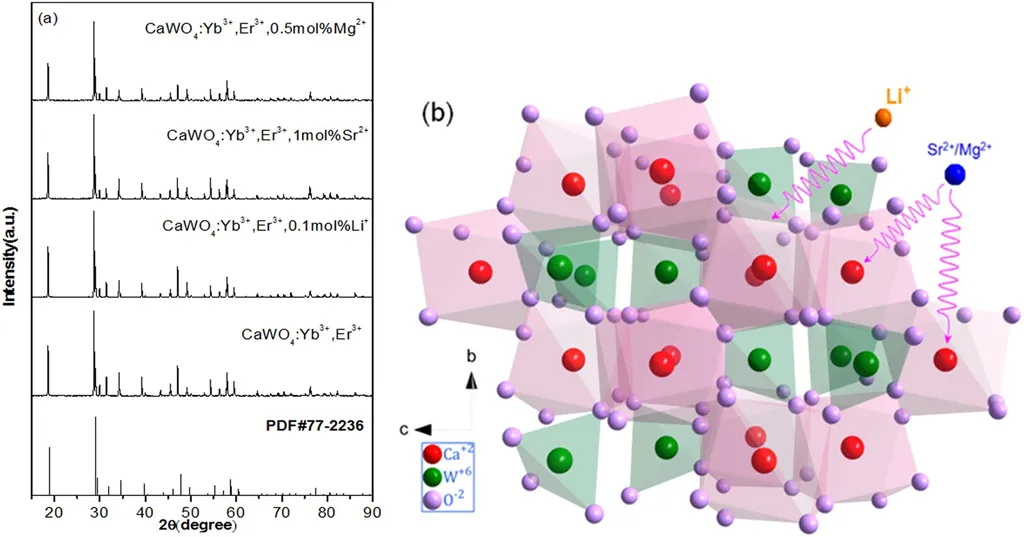
The results were promising. XRD analysis confirmed the high purity of the synthesized powders and the successful incorporation of Y ions into the CaWO4 crystal lattice. Morphological examination revealed a predominantly spherical configuration with dimensions of approximately 500-600 nm. The band gap energy, derived from the absorption spectrum, was found to be 5.6eV for pure CaWO4 and 5.8eV for Y-doped CaWO4. Luminescence characterization indicated that the emission spectra of the samples fell within the range of 350-550 nm.
Perhaps the most significant finding was the scintillation properties of the samples. Pulse height spectrum analysis revealed that the Y-doped CaWO4 sample exhibited a significantly higher scintillation count rate intensity compared to its undoped counterpart. This enhancement in scintillation performance could have profound implications for the energy sector, particularly in areas such as radiation detection, nuclear power plants, and medical imaging.
The study, published in the Journal of Advanced Materials in Engineering (translated to English as ‘Journal of Advanced Materials in Engineering’), highlights the potential of Y-doped CaWO4 to shape future developments in the field of scintillation technology. As Irankhah notes, “The scintillation properties of the samples, as assessed through pulse height spectrum analysis, revealed that the Y-doped CaWO4 sample exhibited a significantly higher scintillation count rate intensity compared to its undoped counterpart.”
The commercial impacts of this research are substantial. Enhanced scintillation materials can lead to more efficient and accurate radiation detection systems, improving safety and operational efficiency in the energy sector. Moreover, the potential for cost-effective synthesis methods, such as the co-precipitation technique used in this study, could make these advanced materials more accessible for widespread commercial use.
As the energy sector continues to evolve, the demand for advanced materials that can enhance detection and measurement capabilities will only grow. The research led by Reza Irankhah offers a glimpse into the future of scintillation technology, paving the way for innovations that could transform the industry.