
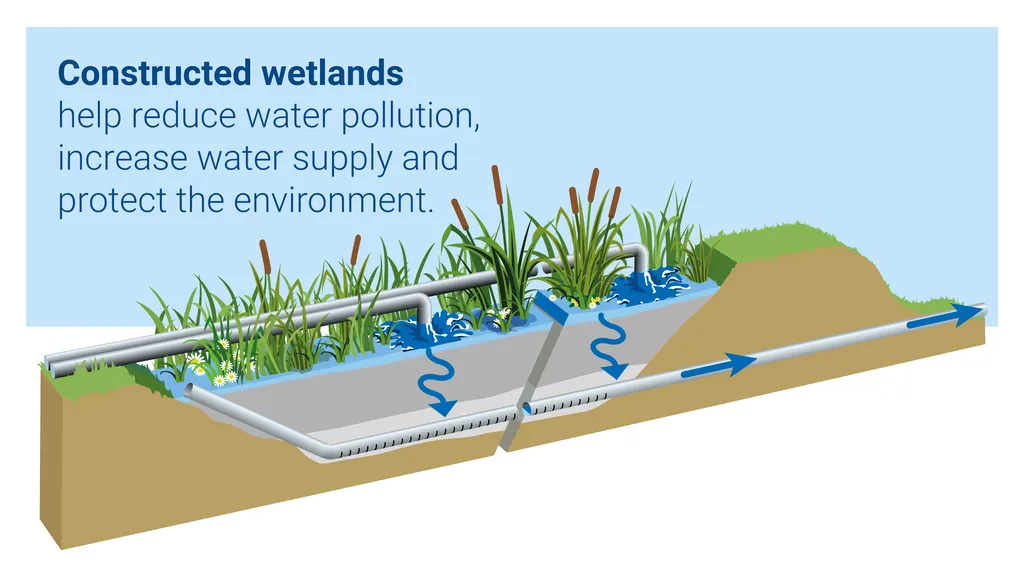
In the heart of southern Africa, a city grappling with sanitation challenges is becoming a beacon of hope for sustainable waste-water management. Bulawayo, Zimbabwe, is at the center of a groundbreaking study that could redefine how developing countries approach waste-water treatment. The research, led by Happison Muzioreva from the University of Johannesburg, South Africa, and published in *Acta Structilia* (which translates to *Structural Journal*), introduces a framework for adopting decentralised waste-water treatment systems, with a focus on constructed wetlands (CWs).
Muzioreva’s study highlights the pressing need for innovative solutions in developing countries, where traditional waste-water infrastructure often falls short due to high costs and maintenance challenges. “The growing sanitation crisis in urban areas demands a shift in perspective,” Muzioreva explains. “Decentralised systems like constructed wetlands offer a cost-effective and environmentally sustainable alternative.”
The research involved a comprehensive survey of 120 professionals, including civil engineers, planners, and local authority officials, to identify key factors influencing the adoption of CWs. The findings reveal three principal dimensions that shape the adoption process: institutional and public health factors, financing, regulation, and technical capacity, and human and contextual conditions.
One of the most compelling aspects of Muzioreva’s framework is its replicability. By integrating PESTLE factors (Political, Economic, Social, Technological, Legal, and Environmental), stakeholder roles, and procedural steps, the framework provides a blueprint for other developing urban contexts. “This is not just about Bulawayo,” Muzioreva emphasizes. “It’s about creating a model that can be adapted and implemented in similar settings worldwide.”
The implications for the energy sector are significant. Decentralised waste-water treatment systems can reduce the energy demands associated with traditional, centralized treatment plants. By leveraging natural processes, CWs offer a more sustainable and energy-efficient solution, aligning with global trends towards green infrastructure.
Muzioreva’s research also underscores the importance of community engagement and institutional reform. “Successful adoption requires a holistic approach,” he notes. “It’s not just about the technology; it’s about the people and the policies that support it.”
As the world grapples with the challenges of urbanization and climate change, Muzioreva’s framework offers a timely and practical solution. By providing a roadmap for the adoption of decentralised waste-water treatment systems, the study paves the way for more sustainable and resilient urban infrastructure.
In the words of Muzioreva, “This is a call to action for policymakers, planners, and communities to embrace innovative solutions that can transform our cities into healthier, more sustainable places to live.” With the framework developed in this study, the vision of sustainable urban living is one step closer to becoming a reality.