
In the rapidly evolving world of smart buildings, a groundbreaking study led by Prabhu Rajaram from the School of Electrical Engineering at Vellore Institute of Technology, Chennai, India, is set to redefine how we approach energy management and sustainability. Published in the journal *Frontiers in Built Environment* (which translates to *Frontiers in the Built Environment*), the research introduces a novel framework that combines Federated Learning (FL) and Digital Twin (DT) technologies to create privacy-preserving, real-time occupancy detection systems.
The study addresses a critical challenge in modern building automation: the need to balance data privacy with the demand for real-time, data-driven decision-making. Traditional centralized machine learning models often require sensitive sensor data to be aggregated in a central server, raising significant privacy concerns and limiting responsiveness. Rajaram’s research offers a solution by employing a Long Short-Term Memory (LSTM) model to capture temporal patterns in sensor data, all while keeping raw data localized.
“Our framework ensures that raw data never leaves local devices, addressing privacy concerns head-on,” Rajaram explains. The study uses the Federated Averaging (FedAvg) algorithm for collaborative model training across distributed client devices, followed by a personalized fine-tuning stage to enhance performance under varied data conditions.
One of the standout features of this research is the integration of a Streamlit-based digital twin platform. This platform enables real-time visualization of occupancy states, sensor behavior, and model predictions, including rolling forecasts, confidence estimates, and error diagnostics. “The digital twin interface provides continuous situational awareness, supporting timely decision-making and system-level transparency,” Rajaram adds.
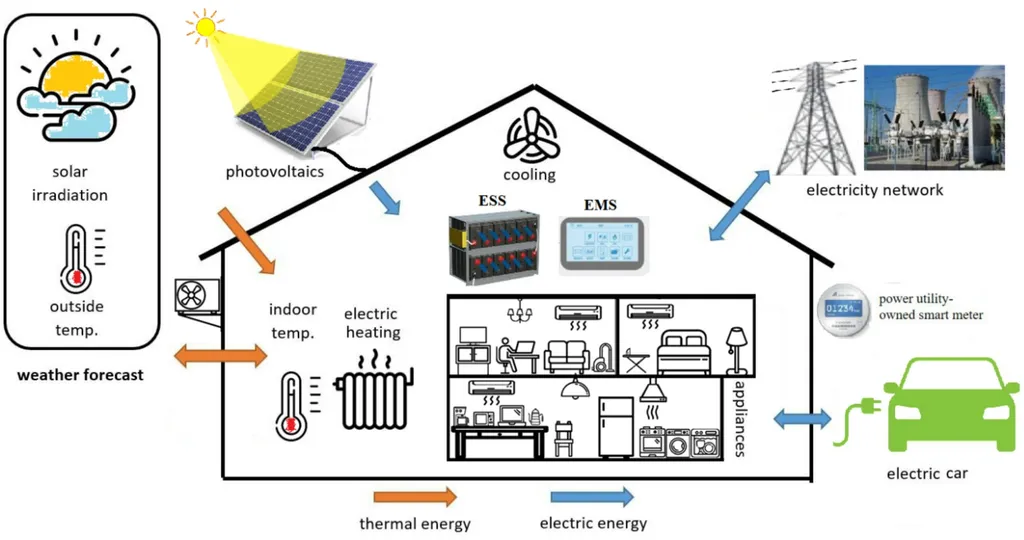
The implications for the energy sector are profound. By enabling accurate and privacy-preserving occupancy detection, the framework supports proactive energy management, a key factor in achieving sustainability goals. The study’s results demonstrate that combining federated temporal learning with digital twin technology effectively addresses privacy, scalability, and operational challenges in smart building systems.
As the built environment continues to evolve, this research paves the way for scalable, secure, and sustainability-aware smart building infrastructures. The integration of FL and DT technologies not only enhances occupancy detection but also opens doors to more interactive system monitoring and energy management strategies. This could lead to significant energy savings and reduced carbon footprints, making it a game-changer for the energy sector.
In a world where data privacy and real-time decision-making are paramount, Rajaram’s research offers a compelling vision for the future of smart buildings. As the industry continues to grapple with these challenges, this study provides a roadmap for leveraging advanced technologies to create more efficient, sustainable, and secure built environments.