
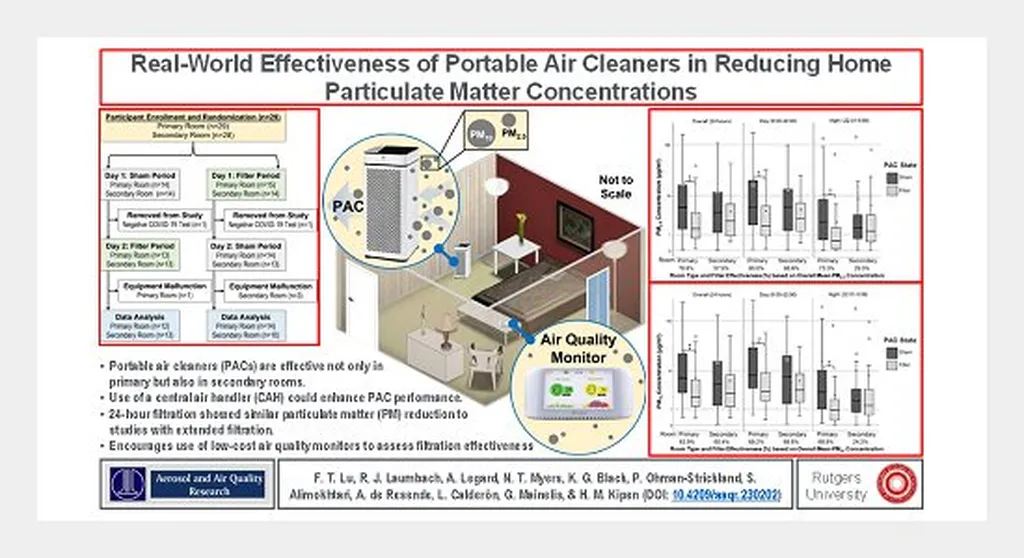
In the wake of the COVID-19 pandemic, the importance of indoor air quality (IAQ) has surged to the forefront of public consciousness, particularly in schools where the health and academic performance of students and staff are at stake. A recent study published in the journal *Indoor Air Environments* (translated from Danish as *Indoor Environments*) sheds light on the practical implementation and educator perceptions of low-cost, do-it-yourself air purifiers in a Connecticut public school district. The research, led by Jessica P. Hollenbach of the University of Connecticut Health Center and Connecticut Children’s Medical Center, offers valuable insights that could reshape how schools and other institutions approach indoor air quality.
The study focused on the distribution of 200 Corsi-Rosenthal (C-R) box air purifiers, a low-cost and effective solution for improving IAQ. At the end of the 2021–2022 academic year, educators were surveyed to gauge their experiences with these purifiers. The results were largely positive, with a significant majority finding the boxes quiet (60%), easy to move (90%), and durable (71%). However, the study also revealed some nuanced feedback that could guide future developments in air purification technology.
One notable finding was that 31% of educators reported turning off the C-R boxes during instruction time to reduce interference with their voices. This was particularly prevalent among lower-grade educators, who were significantly more likely than high school educators to report sound as an issue. “We found that the noise level was a concern for some educators, especially those teaching younger students,” Hollenbach noted. “This highlights the need for quieter air purification solutions that do not disrupt the learning environment.”
Despite these concerns, the overall sentiment was positive. Only one-third of educators believed the C-R boxes were a distraction, and many expressed interest in learning more about their effectiveness. “The feedback suggests that educators are open to using air purifiers but want more information on how they work and their benefits,” Hollenbach added. “This presents an opportunity for manufacturers and educators to collaborate on developing more effective and user-friendly solutions.”
The study also underscored the importance of addressing misconceptions about the effectiveness of air purifiers. Nearly half of the educators surveyed were unsure about the C-R boxes’ effectiveness, indicating a need for better education and communication. “There is a clear demand for objective tools and data to increase engagement and address concerns around maintenance,” Hollenbach explained. “This could involve providing clear guidelines, training, and regular updates on the performance of air purifiers.”
The findings have significant implications for the energy sector, particularly in the development and commercialization of air purification technologies. As schools and other institutions seek cost-effective and efficient solutions to improve IAQ, the demand for innovative and user-friendly air purifiers is likely to grow. Manufacturers can leverage these insights to design products that are not only effective but also quiet and easy to maintain, addressing the key concerns highlighted in the study.
Moreover, the study’s emphasis on educator perceptions and feedback underscores the importance of involving end-users in the design and implementation of air purification solutions. By understanding the needs and preferences of educators, manufacturers can create products that are more likely to be adopted and used effectively. This collaborative approach could lead to the development of air purifiers that are tailored to the specific requirements of different educational settings, from elementary schools to high schools.
In conclusion, the research led by Jessica P. Hollenbach offers valuable insights into the practical implementation and educator perceptions of low-cost air purifiers in schools. The findings highlight the need for quieter, more effective, and easier-to-maintain air purification solutions, as well as the importance of educating users about their benefits. As the demand for improved IAQ continues to grow, this study provides a roadmap for manufacturers and educators to collaborate on developing innovative solutions that enhance the health and well-being of students and staff. With the study published in *Indoor Air Environments*, the stage is set for a new era of air purification technology that is both practical and effective.