
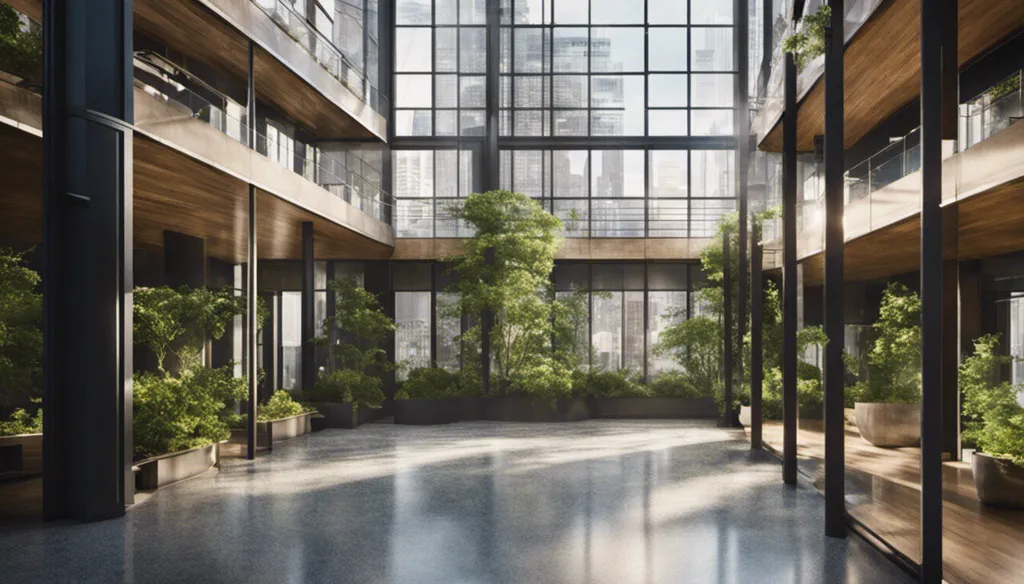
In the heart of bustling cities, where skyscrapers touch the clouds and office buildings sprawl across city blocks, a silent disconnect is brewing. Despite cutting-edge design and rigorous adherence to industry standards, many office workers feel trapped, confined, and disconnected from nature. A recent study published in the journal *Indoor Environments* (translated from English) sheds light on this paradox, revealing that technical benchmarks alone may not be enough to ensure occupant satisfaction and well-being.
Elizabeth L. McCormick, a researcher from North Carolina State University and the University of North Carolina Charlotte, led a mixed-methods study that delved into the experiences of office workers in four U.S. cities: Atlanta, Charlotte, Durham, and Washington, DC. The findings, published in *Indoor Environments*, challenge the notion that meeting industry standards for indoor air quality (IAQ), daylight, greenery, and outdoor access is sufficient to create a satisfying workplace environment.
The study found that while the buildings met or exceeded industry standards—with average IAQ index values ranging from 34 to 50, CO₂ levels averaging 454–557 ppm, and PM₂.₅ concentrations rarely exceeding 15 μg/m³—occupants frequently expressed feelings of being “trapped,” “confined,” or “stuck in a cold box.” This disconnect highlights a critical gap between technical compliance and sensory satisfaction.
McCormick’s research reveals that outdoor terraces, intended to foster a connection to nature, are often underutilized. When they are used, they function more as recreational or social spaces rather than productive work environments. Factors such as glare, noise, poor ergonomics, and a lack of supportive infrastructure limit their effectiveness as workspaces.
“Technical benchmarks, while necessary, are insufficient to ensure well-being,” McCormick emphasizes. “More effective workplace strategies must move beyond narrowly defined performance metrics to embrace environmental diversity, occupant perception, and cultivate more porous boundaries between the indoors and nature.”
The implications for the energy sector are significant. As companies strive to create healthier, more sustainable workplaces, they must consider not just the technical aspects of building design but also the sensory and perceptual experiences of occupants. This shift could drive demand for innovative solutions that integrate natural elements into indoor environments, such as advanced filtration systems, dynamic glazing, and biophilic design features.
The study’s findings suggest that the future of workplace design lies in creating environments that are not only technically sound but also perceptually rich and diverse. By addressing the sensory needs of occupants, companies can enhance productivity, satisfaction, and overall well-being, ultimately contributing to a more sustainable and energy-efficient built environment.
As McCormick’s research demonstrates, the path to a healthier, more satisfying workplace lies not just in meeting industry standards but in rethinking the very nature of indoor environments. The energy sector, in particular, has a crucial role to play in this transformation, driving innovation and shaping the future of sustainable, occupant-centered design.