
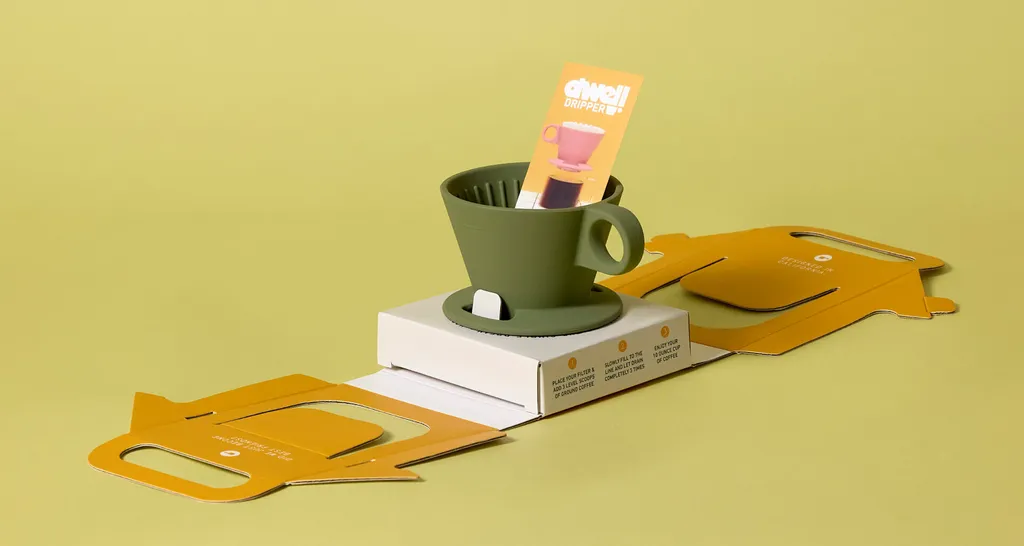
In the bustling world of disposable coffee cups, a humble yet significant redesign is brewing, promising to shake up the industry and potentially ripple into other sectors. Teodora-Nicoleta Ivascu, a researcher affiliated with an undisclosed institution, has turned her attention to the often-overlooked coffee cup holder, aiming to transform it from a mere functional item into a sensory and quality-driven experience.
The current design of disposable coffee cup holders, Ivascu argues, is largely driven by financial efficiency and mass production, often at the expense of user experience and quality. “The focus has been on making them cheap and easy to produce, but not necessarily enjoyable or ergonomic to use,” she explains. This oversight presents an opportunity for innovation, one that Ivascu has seized in her research published in the *Journal of Industrial Design and Engineering Graphics* (or, in English, the *Journal of Industrial Design and Engineering Graphics*).
Ivascu’s redesign approach is twofold: integrating sensory design elements and employing quality tools to enhance the design process. The result is a cup holder with an innovative shape, crafted from high-quality materials, and boasting a user interface that is both pleasant to the touch and visually appealing. The redesign considers the user’s needs, offering a more comfortable and enjoyable experience.
The implications of this research extend beyond the coffee industry. In a world where user experience is increasingly valued, the principles applied to the coffee cup holder redesign could be translated to other products and industries. For instance, the energy sector, which is increasingly focusing on user-centric design in products like portable energy solutions, could benefit from this approach.
“The energy sector is all about portability and user interface these days,” says an industry insider. “If we can make energy solutions more enjoyable and ergonomic to use, we’re not just selling a product; we’re enhancing the user’s daily life.”
Ivascu’s research also highlights the importance of quality tools in the design process. By using these tools, designers can ensure that their products meet high standards of quality and functionality, leading to increased user satisfaction and potentially, commercial success.
As the world continues to evolve, so too does the demand for products that are not only functional but also enjoyable to use. Ivascu’s research serves as a reminder that even the smallest of items, like a coffee cup holder, can have a significant impact on our daily lives. And with the principles she’s applied, the future of design looks not just functional, but also sensory and user-centric.