
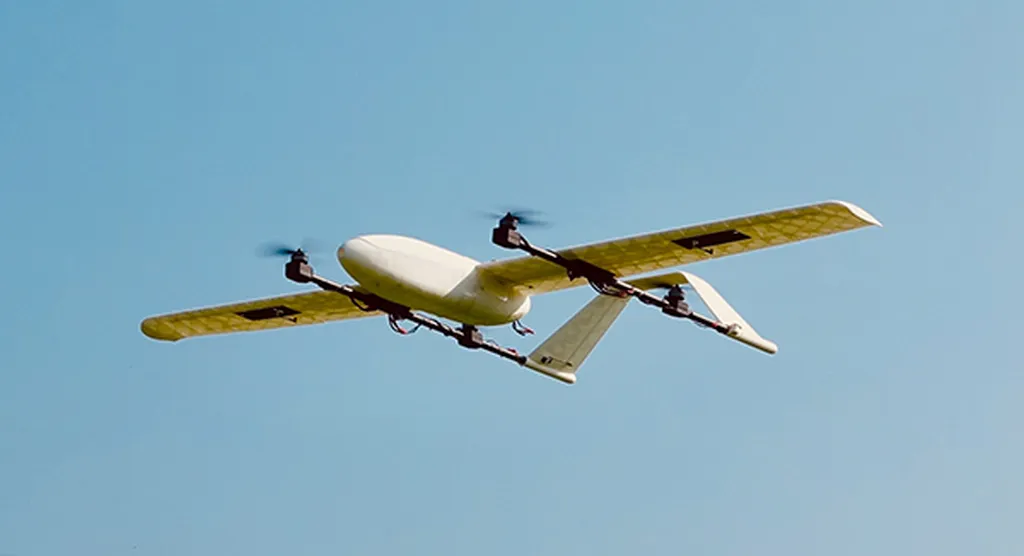
In the rapidly evolving landscape of medical logistics, a groundbreaking study published in the *Journal of Industrial Design and Engineering Graphics* (translated from Romanian as *Journal of Industrial Design and Engineering Graphics*) is set to redefine how essential supplies reach remote and underserved communities. Led by Alexandra Alexe-Ionescu, this research delves into the intricate process of selecting electronic components for a 3D-printed medical drone designed for autonomous flight. The study not only highlights the technical challenges but also underscores the importance of cost-effectiveness and sustainability in medical delivery systems.
Alexe-Ionescu’s work is a beacon of innovation in the field of drone design and additive manufacturing. The prototype drone, intended to transport medical consumables to remote regions, represents a significant leap forward in autonomous flight technology. “The goal was to identify components that balance performance with affordability,” Alexe-Ionescu explains. “This balance is crucial for creating a sustainable solution that can be widely adopted by medical units operating in challenging environments.”
The selection process for electronic components involved a meticulous evaluation of various factors, including weight, power consumption, and reliability. The drone’s design leverages 3D printing technology, which allows for rapid prototyping and customization, further enhancing its adaptability to different medical logistics scenarios. “3D printing has been a game-changer,” Alexe-Ionescu notes. “It enables us to iterate quickly and optimize the drone’s design for specific missions.”
The implications of this research extend beyond the medical sector. The principles of component selection and autonomous flight can be applied to other industries, including energy, where drones are increasingly used for inspections, maintenance, and data collection. “The energy sector stands to benefit greatly from advancements in drone technology,” says Alexe-Ionescu. “Autonomous drones can enhance safety, reduce costs, and improve efficiency in monitoring and maintaining energy infrastructure.”
As the world continues to grapple with the challenges of delivering medical supplies to remote areas, Alexe-Ionescu’s research offers a promising solution. The prototype drone, with its carefully selected electronic components and 3D-printed design, represents a significant step toward a more efficient and sustainable future for medical logistics. “This is just the beginning,” Alexe-Ionescu concludes. “The potential for drones in medical delivery is vast, and we are excited to explore further innovations in this field.”
Published in the *Journal of Industrial Design and Engineering Graphics*, this research is poised to shape the future of drone technology, not only in the medical sector but also in energy and beyond. As industries continue to seek innovative solutions to complex problems, the insights from Alexe-Ionescu’s work will undoubtedly play a pivotal role in driving progress and fostering a more connected and efficient world.