
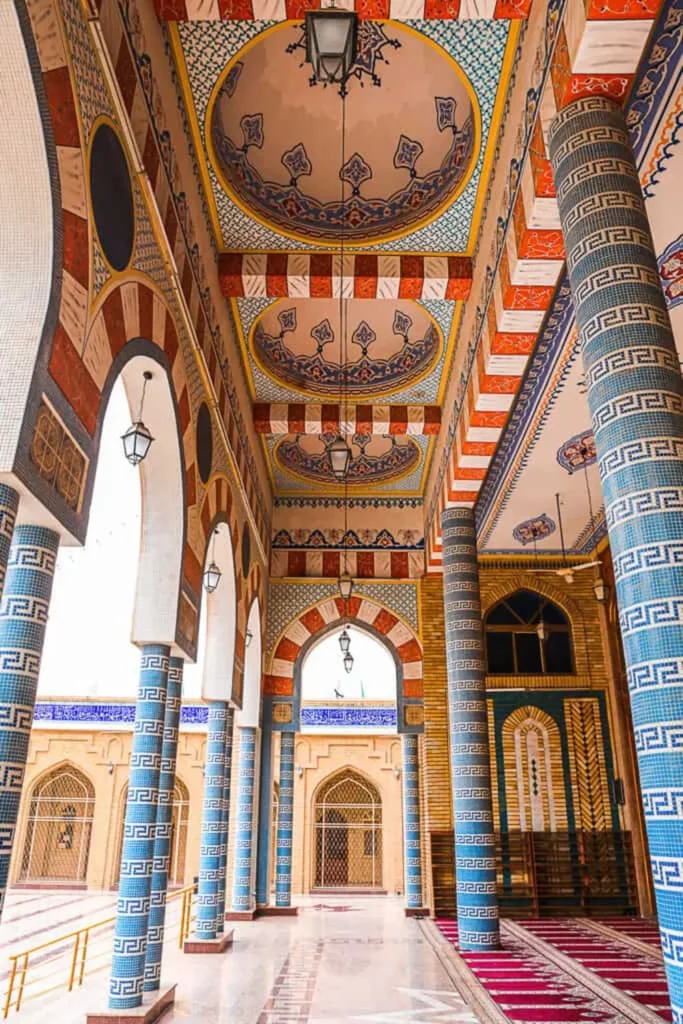
In the heart of Erbil, the capital of the Kurdistan Region in Iraq, a silent architectural revolution is taking place. As the cityscape evolves, so do its mosques, blending tradition with innovation in a dance of cultural identity and technological advancement. A recent study, led by Kasim Hassan Mahmood from the Department of Architecture at the University of Mosul, delves into the effects of materials, structural characteristics, and construction technology on the identity of contemporary mosques in Erbil, offering insights that could resonate far beyond the region’s borders.
Erbil’s skyline has been transforming since 1991, with mosques serving as a barometer of this change. Mahmood’s study, published in the journal ‘Production Engineering Archives’ (known in English as ‘Arhiva za Proizvodni Inženjering’), compares traditional mosques (built before 2002) with their contemporary counterparts (built between 2003 and 2023). The research reveals a shift from brickwork and load-bearing walls to reinforced concrete frames, with materials like marble, GRC panels, and synthetic claddings now adorning these spiritual havens.
“The symbolic identity of Erbil’s traditional mosque was shaped by the influence of traditional Erbil architecture, which remains deeply rooted in people’s memories,” Mahmood explains. This shift in materials and construction technology not only alters the aesthetic and structural identity of the mosques but also impacts their durability and maintenance profiles.
The study highlights that while traditional mosques were characterized by their brickwork, vaults, and domes, contemporary mosques exhibit a hybrid of Islamic, rationalist, and modern architectural styles. This evolution presents both opportunities and challenges for the construction industry. On one hand, new materials and technologies can enhance structural performance and reduce construction time. On the other, they introduce new maintenance requirements and potential durability issues, such as cladding separation and reinforcement corrosion.
For the energy sector, these findings could be particularly relevant. The shift towards modern materials and construction technologies could influence energy efficiency and sustainability in building design. As Mahmood notes, “Industrializing the building process changes implementation requirements and deterioration profiles.” This could open avenues for innovation in energy-efficient building materials and construction practices, aligning with global trends towards sustainable development.
The research underscores the need for tailored operational and conservation guidelines for both traditional and contemporary mosques, considering their distinct material-structural characteristics and projected life cycles. This approach could serve as a model for other regions grappling with similar architectural evolution and preservation challenges.
As Erbil continues to grow and modernize, its mosques stand as testament to the city’s rich cultural heritage and its embrace of the future. Mahmood’s study not only sheds light on this architectural transformation but also offers valuable insights for the construction and energy sectors, paving the way for more sustainable and culturally sensitive urban development.