
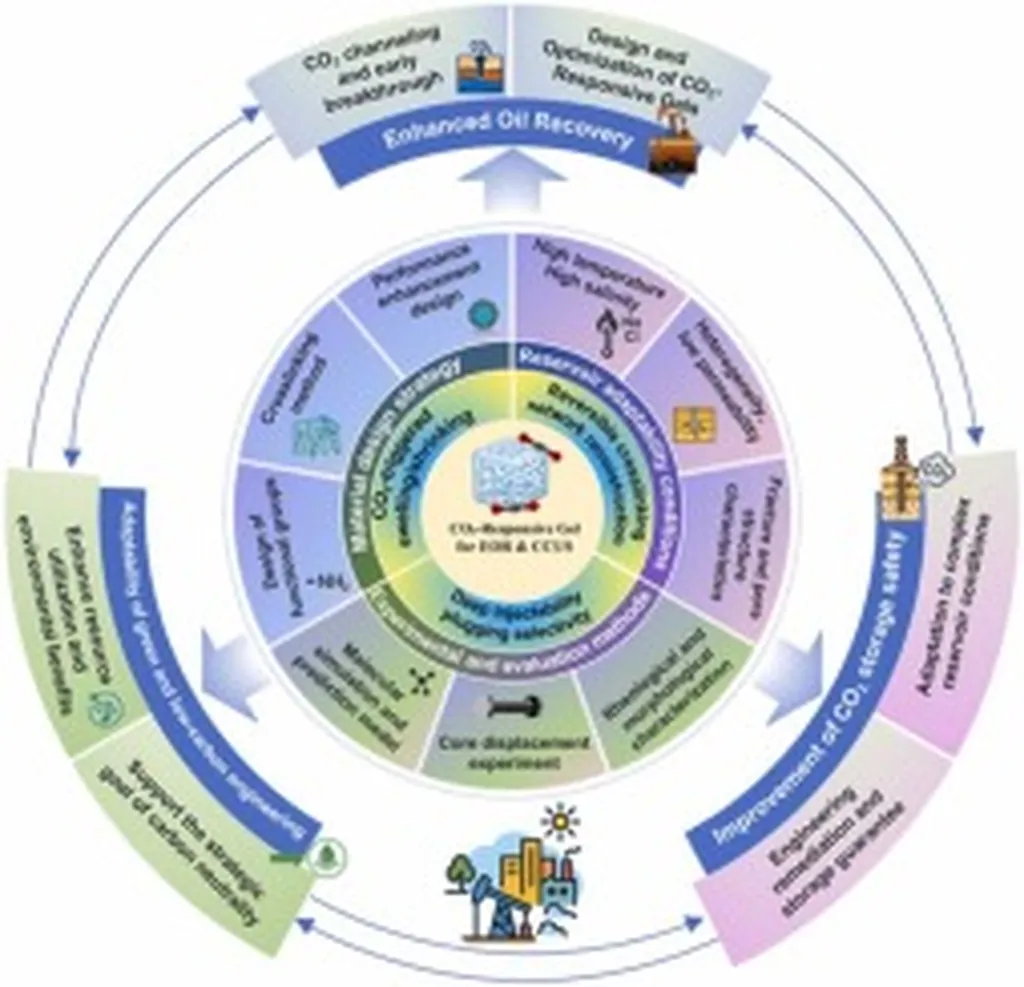
In the quest to mitigate greenhouse gas emissions, carbon capture and storage (CCS) stands out as a promising technique, but it’s not without its challenges. A recent study published in the journal “Deep Underground Science and Engineering” (translated from its original title “Deep Underground Science and Engineering”) sheds light on innovative solutions to enhance the safety and efficiency of CO2 storage. The research, led by Funsho Afolabi from the Centre of Reservoir Dynamics at Universiti Teknologi PETRONAS in Malaysia, focuses on the use of gels and other sealants to prevent CO2 leakages, a critical issue for the energy sector.
CO2 leakage can occur through various pathways, such as injection wellbores, heterogeneous or fractured storage sites, and inadequate sealing cap rocks. Traditional cementous materials have been used to plug these pathways, but the industry is increasingly turning to more advanced sealants like organic gels and resins for better performance. Afolabi’s study provides a comprehensive evaluation of these sealants, considering factors like CO2 presence, pH, brine salinity and hardness, rock mineralogy, pressure, temperature, and injectivity.
“The most cost-effective and timely way to reduce the risk of leakages is by plugging the pathways,” Afolabi states, emphasizing the importance of effective sealants in CCS operations. The study suggests best practices for applying these sealants, both in laboratory testing and field deployment, which could significantly impact the energy sector’s approach to CO2 storage.
One of the key findings is the influence of external factors on the performance of sealants. For instance, the presence of CO2 can alter the pH, affecting the gelation process and the long-term stability of the sealants. Similarly, brine salinity and hardness can impact the injectivity and the effectiveness of the sealants. Understanding these interactions is crucial for optimizing the use of sealants in CO2 storage projects.
The research also highlights the potential of augmented sealants like organic gels and resins. These materials offer advantages over traditional cementous materials, such as better conformance control and improved resistance to CO2-induced degradation. By leveraging these advanced sealants, the energy sector can enhance the safety and efficiency of CO2 storage, paving the way for more robust and reliable CCS technologies.
As the world continues to grapple with the challenges of climate change, innovative solutions like those presented in Afolabi’s study are more important than ever. By addressing the critical issue of CO2 leakage, this research could shape future developments in the field, ultimately contributing to a more sustainable energy sector. The study’s insights into the behavior and performance of sealants under various conditions provide valuable guidance for researchers and practitioners alike, fostering a more informed and strategic approach to CO2 storage.