
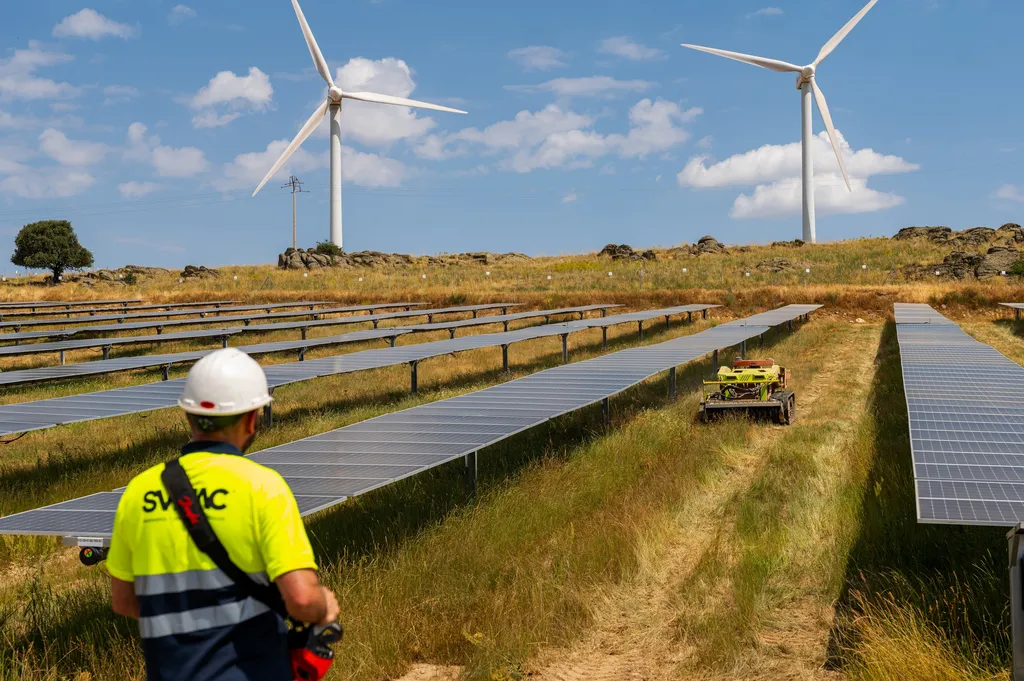
In the heart of Spain’s solar energy boom, a researcher from the University of Oviedo is shedding light on a critical, yet often overlooked, component of photovoltaic (PV) panel installations: the humble bolt. Miguel Muñiz-Calvente, from the Department of Construction and Manufacturing Engineering, has been delving into the fatigue behavior of hot-dip galvanized prestressed bolted joints, aiming to bolster the resilience of solar farms against the relentless forces of wind.
Muñiz-Calvente’s research, published in the Journal of Mechanical Engineering (known in Spanish as “Revista de Ingeniería Mecánica”), addresses a significant gap in the industry’s understanding of these joints. “While these joints are praised for their corrosion resistance and cost-effectiveness, their fatigue behavior under dynamic wind loading remains poorly defined in design standards,” Muñiz-Calvente explains. This lack of clarity, he argues, hampers the correct dimensioning of joints, potentially compromising the longevity and safety of PV installations.
The implications for the solar generation industry are substantial. As the world pivots towards renewable energy, the demand for large-scale PV installations is surging. Yet, these expansive solar farms are increasingly exposed to dynamic wind loads, which can exert fluctuating stresses on bolted joints over time. Muñiz-Calvente’s work seeks to provide empirical data to guide engineers in designing more robust joints, thereby enhancing the durability and reliability of solar installations.
The research is particularly relevant given the industry’s shift towards hot-dip galvanized joints. These joints offer excellent resistance to atmospheric corrosion, a critical advantage in outdoor applications like solar farms. Moreover, their ease of assembly and maintenance translates to lower costs, a compelling proposition for developers and operators.
However, the fatigue behavior of these joints—how they respond to repeated stress cycles—has not been sufficiently experimentally verified. Muñiz-Calvente’s study aims to fill this void, providing much-needed data to inform design standards and best practices.
The commercial impacts of this research are far-reaching. By improving the understanding of fatigue behavior, Muñiz-Calvente’s work could lead to more accurate dimensioning of bolted joints, reducing the risk of failures and extending the lifespan of solar installations. This, in turn, could lower maintenance costs and enhance the overall return on investment for solar projects.
Moreover, the research could influence future developments in the field. As Muñiz-Calvente notes, “Understanding the fatigue behavior of these joints is not just about improving current designs; it’s about paving the way for more innovative and resilient solar installations in the future.” This forward-looking perspective underscores the potential of the research to shape the next generation of solar energy infrastructure.
In the dynamic world of renewable energy, every component matters. And as Muñiz-Calvente’s research demonstrates, even the smallest parts—like bolts—can have a significant impact on the big picture. As the solar industry continues to evolve, the insights gleaned from this study could prove invaluable in driving progress and ensuring the long-term success of solar energy projects.