
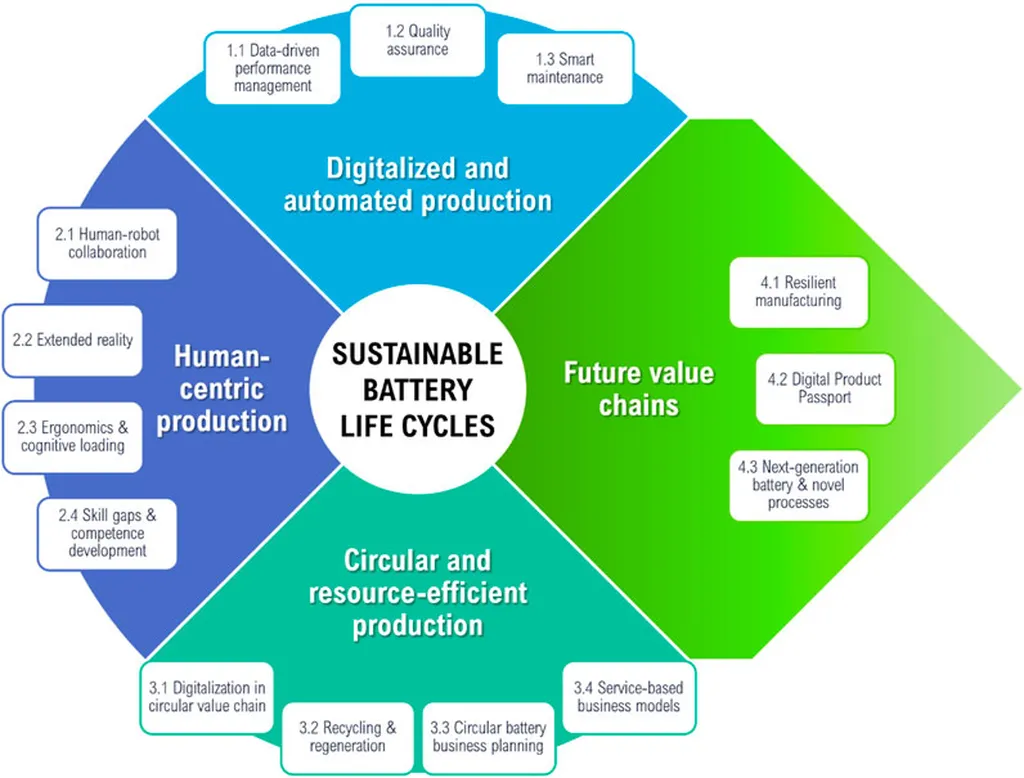
In the heart of Chicago, researchers are unraveling the intricate tapestry of automation’s evolution within production engineering, offering a beacon of insight for industries hungry for efficiency and sustainability. Parankush Koul, a leading voice from the Department of Mechanical and Aerospace Engineering at the Illinois Institute of Technology, has spearheaded a comprehensive review that promises to reshape our understanding of automation’s role in modern manufacturing.
Koul’s research, published in the esteemed journal *Advances in Mechanical and Materials Engineering* (which translates to *Advances in Mechanical and Materials Engineering* in English), delves into the historical development of automation, showcasing a panorama of methodologies and applications that have propelled production engineering into the digital age. The study is not merely a retrospective; it is a roadmap for the future, highlighting industrial challenges and proposing pathways for innovation.
The review underscores the transformative potential of automation tools such as robotics, artificial intelligence (AI), and the Internet of Things (IoT). These technologies are not just enhancing production efficiency; they are revolutionizing resource management, a critical factor for industries like energy that grapple with the dual demands of increasing output and reducing environmental impact.
“Automation is not just about replacing manual labor; it’s about creating smarter, more responsive systems that can adapt to changing demands and conditions,” Koul explains. This adaptability is particularly relevant in the energy sector, where the ability to optimize production processes can lead to significant cost savings and reduced carbon footprints.
One of the most compelling aspects of Koul’s research is its examination of cyber-physical systems (CPS) within automated environments. These systems, which integrate computational and physical processes, are at the heart of Industry 4.0. However, their implementation comes with challenges, particularly in terms of security. Koul’s work emphasizes the need for robust security measures to protect these systems from cyber threats, a concern that resonates deeply within the energy sector, where infrastructure security is paramount.
The study also explores the role of digitalization and robotic process automation (RPA) in streamlining operations. By automating routine tasks, companies can free up human resources for more complex and creative work, driving innovation and productivity. This shift is not just about technological advancement; it’s about redefining the human role in the production process.
For industry professionals, Koul’s research offers a wealth of insights and practical applications. It provides a framework for understanding how automation can boost productivity and sustainability, offering a blueprint for future developments. As the energy sector continues to evolve, the lessons from this review could be instrumental in shaping more efficient, secure, and sustainable production systems.
In an era where industries are under increasing pressure to do more with less, Koul’s work serves as a reminder that the future of production engineering lies in the intelligent integration of technology and human expertise. By embracing automation and Industry 4.0 principles, companies can not only enhance their operational efficiency but also contribute to a more sustainable future.
As Koul aptly puts it, “The key to success in the digital age is not just about adopting new technologies but about understanding how they can be integrated into existing systems to create value.” This philosophy is at the core of his research and offers a guiding light for industries navigating the complexities of the modern production landscape.