
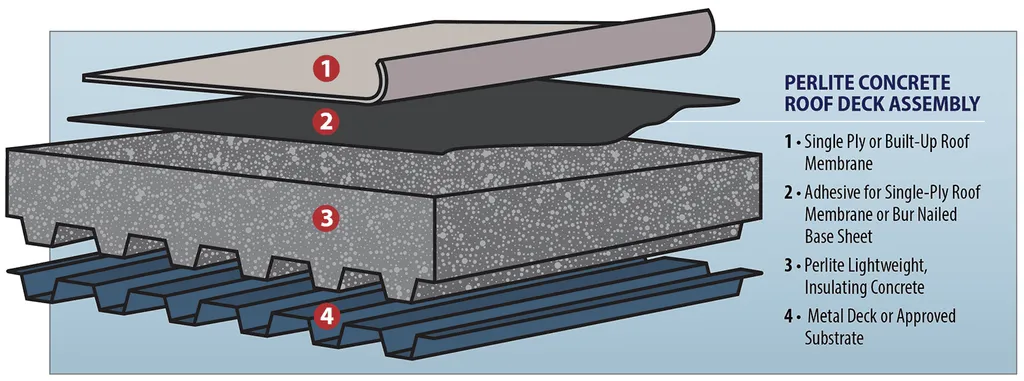
In a groundbreaking study that could reshape the construction industry, researchers have explored the potential of expanded perlite and polyurethane waste as aggregates for lightweight concrete. The research, led by Fatih Özalp from Istanbul Medeniyet University, delves into the mechanical behavior and permeability properties of these innovative materials, offering promising insights for the energy sector and beyond.
The study, published in the Van Yüzüncü Yıl Üniversitesi Mühendislik Fakültesi Dergisi (Van Yüzüncü Yıl University Journal of Engineering Faculty), investigates the use of expanded perlite as a concrete aggregate and the feasibility of incorporating polyurethane waste into lightweight concrete. Özalp and his team prepared various mixtures, including those with only expanded perlite aggregate, a combination of perlite and polyurethane waste, and solely polyurethane waste aggregate. To enhance the mechanical properties of these mixtures, steel and synthetic fibers were added separately.
The results were striking. The highest bending and splitting tensile strength values, 5.30 MPa and 3.05 MPa respectively, were achieved in samples containing only perlite aggregate with 1% steel fiber. Conversely, the lowest values, 1.00 MPa and 0.50 MPa, were observed in samples with only polyurethane aggregate and no fibers. “These findings highlight the potential of expanded perlite in producing structurally sound lightweight concrete,” Özalp noted. “However, the mechanical strengths of mixtures with polyurethane waste alone may not be suitable for structural applications.”
The study also examined the permeability properties of these concretes through water absorption and sorptivity tests. Due to the powdery nature of polyurethane aggregate, mixtures containing it required significantly more water and exhibited higher permeability values compared to those with perlite aggregate. This insight is crucial for the energy sector, as it underscores the importance of material selection in creating energy-efficient and durable structures.
The research suggests that expanded perlite aggregates can indeed be used to produce structural lightweight concrete, while polyurethane waste may require additional treatment or combination with other materials to meet structural standards. “This study opens up new avenues for sustainable construction practices,” Özalp remarked. “By repurposing waste materials, we can reduce environmental impact and potentially lower production costs.”
The implications of this research are far-reaching. As the construction industry increasingly prioritizes sustainability and energy efficiency, the findings could drive the development of new materials and techniques. The use of expanded perlite and polyurethane waste not only offers environmental benefits but also presents economic opportunities for companies willing to innovate.
In conclusion, Özalp’s study provides a compelling case for the adoption of expanded perlite in lightweight concrete production and highlights the need for further research into the treatment and application of polyurethane waste. As the industry continues to evolve, these insights will be invaluable in shaping the future of construction and energy efficiency.