
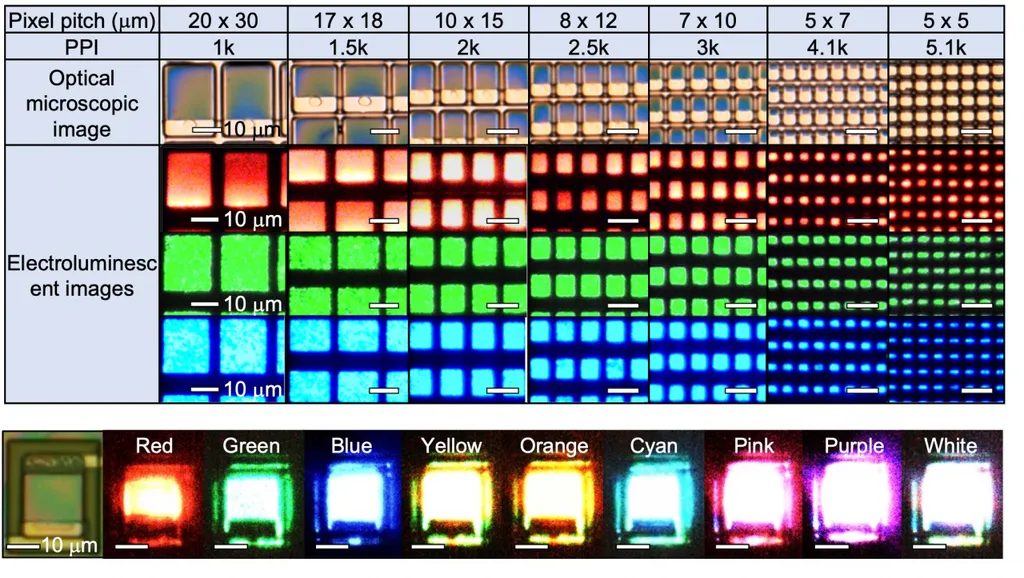
In the quest for next-generation displays, micro-LEDs have emerged as a promising technology, offering unparalleled brightness, efficiency, and durability. However, the path to widespread commercialization has been fraught with challenges, particularly in achieving the extremely high production yields necessary for industrial-scale deployment. A recent review published in the *International Journal of Extreme Manufacturing* (translated to English as “International Journal of Extreme Manufacturing”) sheds light on the technological hurdles and potential solutions in micro-LED assembly, with a focus on pushing yields to near-perfect levels.
Led by Seong Woo Hong from the Department of Electronic Engineering at Hanyang University in Seoul, South Korea, the review delves into six key transfer methods for assembling micro-LED displays: elastomeric transfer, roll-to-roll printing, electrostatic and electromagnetic assembly, laser transfer, microvacuum assembly, and fluidic self-assembly. Each method presents unique advantages and challenges, with the ultimate goal of achieving yields as high as 99.9999%.
“Achieving such high yields is crucial for the commercial success of micro-LED displays,” Hong emphasized. “Even the slightest defects can significantly impact the overall yield, making it essential to address these challenges head-on.”
The review highlights recent advancements in each transfer method, with a particular focus on strategies to overcome yield challenges. For instance, elastomeric transfer has shown promise in achieving high precision, while roll-to-roll printing offers the potential for large-scale, cost-effective production. Electrostatic and electromagnetic assembly methods provide unique advantages in terms of speed and accuracy, while laser transfer and microvacuum assembly offer high precision and flexibility. Fluidic self-assembly, on the other hand, presents an innovative approach to achieving high yields through self-organization.
The implications of this research extend beyond the display industry, with potential applications in the energy sector. Micro-LEDs’ superior efficiency and brightness make them ideal for energy-efficient lighting solutions, which could significantly reduce energy consumption and carbon emissions. As Hong noted, “The development of high-yield micro-LED assembly methods could pave the way for a new era of energy-efficient lighting and display technologies.”
By framing yield as the central metric, the review provides a comprehensive roadmap for overcoming bottlenecks in micro-LED assembly. The insights and strategies presented in this research could shape future developments in the field, driving the commercialization of micro-LED displays and unlocking their transformative potential for various industries, including the energy sector.
As the demand for energy-efficient and high-performance displays continues to grow, the findings of this review offer a beacon of hope for the future of micro-LED technology. With continued innovation and collaboration, the vision of near-perfect yield in micro-LED assembly may soon become a reality, revolutionizing the way we light up our world.