
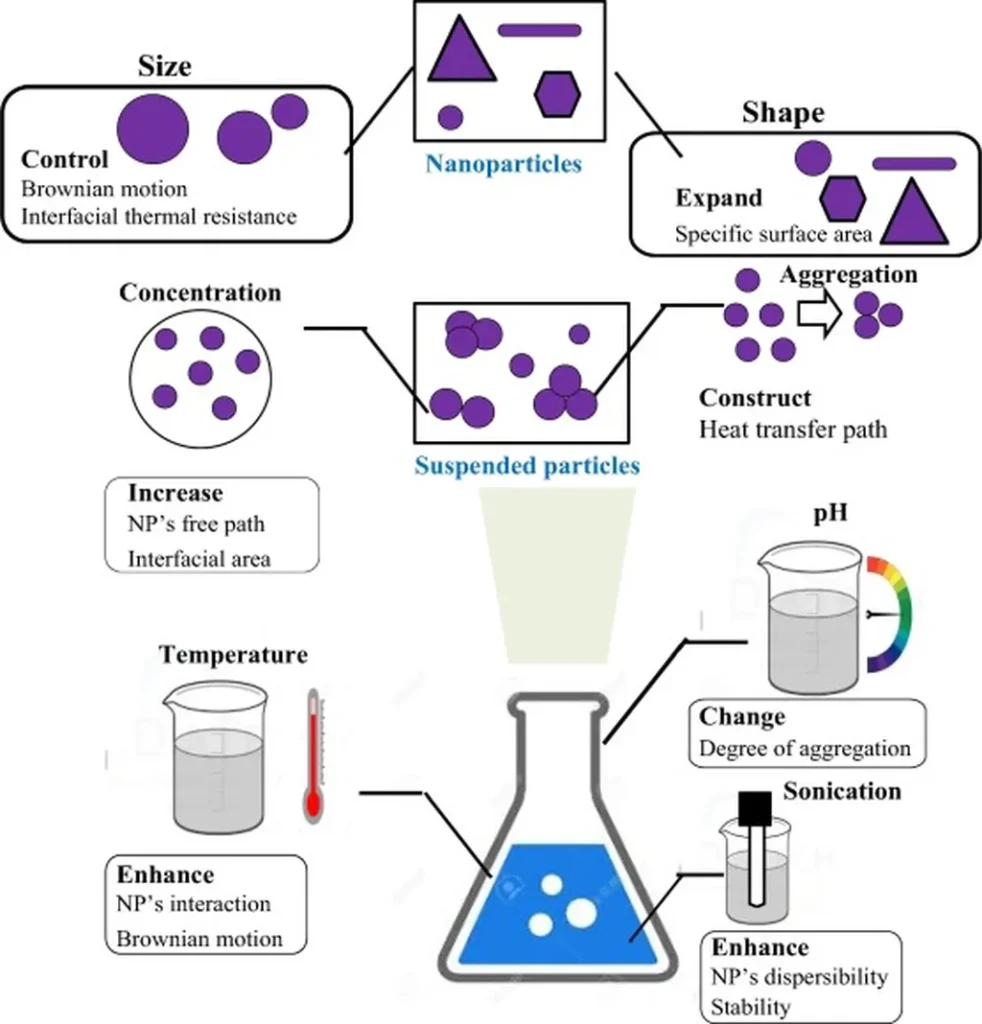
In the quest for more efficient energy systems, researchers have turned to nanotechnology, and a recent study published in the journal “Advances in Mechanical and Materials Engineering” (which translates to “Advances in Mechanical and Materials Engineering”) offers promising insights. The research, led by Devireddy Sandhya from the Department of Mechanical, Bioresource and Biomedical Engineering at the University of South Africa, explores the thermal performance of transformer oil enhanced with multi-walled carbon nanotubes (MWCNTs) in a plate-fin heat exchanger.
Transformer oil, a critical component in the energy sector, is used primarily for cooling and insulating power transformers. However, its thermal performance can be a limiting factor in the overall efficiency of energy systems. Sandhya and her team investigated whether adding MWCNTs to transformer oil could enhance its heat dissipation capabilities.
The study found that adding MWCNTs up to a concentration of 0.008% significantly boosted the thermal performance of the oil. The overall heat transfer coefficient (UHTC) increased by up to 34%, depending on the mean bulk temperature of the nano-fluid and the mass flow rate. Moreover, the convective heat transfer coefficient (CHTC) saw a 20% enhancement, particularly at higher flow rates.
“This improvement in thermal performance is substantial,” Sandhya explained. “It means that transformer oil can dissipate heat more effectively, which can lead to more efficient and reliable energy systems.”
However, the study also highlighted some drawbacks. The nanofluids exhibited a 3.8% increase in friction factor at low Reynolds numbers, leading to a 4.5% extra pumping power requirement compared to the base fluid. But even with this increase, the overall benefits in thermal performance make MWCNT-enhanced transformer oil a promising avenue for future developments.
The potential commercial impacts for the energy sector are significant. More efficient heat dissipation can lead to improved performance and longevity of transformers, reducing downtime and maintenance costs. Additionally, the enhanced thermal performance could allow for the design of more compact and efficient cooling systems, which could be particularly beneficial in urban areas where space is at a premium.
“This research opens up new possibilities for the energy sector,” Sandhya noted. “By leveraging nanotechnology, we can enhance the performance of existing systems and pave the way for more innovative and efficient energy solutions.”
The study’s findings could shape future developments in the field, encouraging further research into the use of nanofluids in various industrial applications. As the energy sector continues to evolve, the integration of nanotechnology could play a crucial role in meeting the growing demand for efficient and sustainable energy solutions.
In the meantime, the research published in “Advances in Mechanical and Materials Engineering” serves as a testament to the potential of nanotechnology in transforming the energy landscape, offering a glimpse into a future where more efficient and reliable energy systems are the norm.