
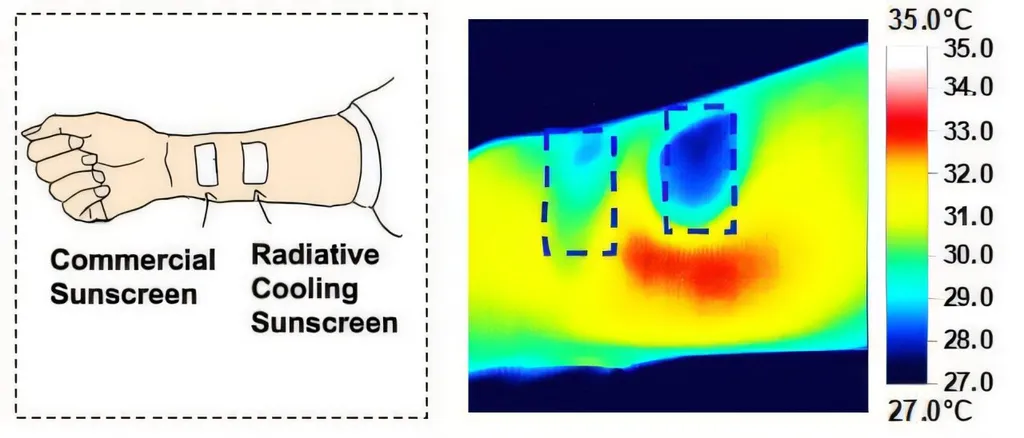
In the quest for more efficient energy systems, researchers are turning to an unlikely ally: titanium dioxide, a compound commonly found in sunscreens and white paint. A recent review published in the journal *Advances in Mechanical and Materials Engineering* (which translates to *Advances in Mechanical and Materials Engineering* in English) sheds light on the promising potential of TiO2-based nanofluids in the automotive industry, with implications that could ripple across the broader energy sector.
Dr. Devireddy Sandhya, a researcher at the University of South Africa, has been delving into the world of nanofluids—tiny particles suspended in a fluid—to understand how they can revolutionize heat transfer. “Nanofluids have shown remarkable properties in thermal convection, conduction, stability, and heat transfer,” Sandhya explains. “Their superior dispersibility, chemical stability, and non-toxic nature make them particularly attractive for real-world applications.”
The review focuses on TiO2-based nanofluids, which are gaining traction due to their unique thermal and physical characteristics. TiO2, in its natural state, comes in three crystalline forms: anatase, brookite, and rutile. Researchers have employed various techniques, including both single-step and two-step methods, to prepare these nanofluids. The challenge, however, lies in achieving stable nanofluid preparation for direct application in heat transfer scenarios.
So, why does this matter for the energy sector? Efficient heat transfer is crucial for improving the performance of energy systems, from power plants to automotive engines. Nanofluids like TiO2-based ones could enhance heat transfer rates, leading to more efficient energy conversion and reduced energy losses. This could translate into significant cost savings and environmental benefits, as energy systems become more efficient and less wasteful.
The review highlights the exponential surge in research concerning the thermo-physical properties and potential advantages of nanofluids. However, the sheer volume of literature makes it challenging to provide a comprehensive summary. Sandhya’s work offers a selective yet thorough overview of the research progress in the heat transfer applications of TiO2-based nanofluids.
As the energy sector continues to evolve, the insights from this review could shape future developments. “Understanding the heat transfer characteristics of TiO2-based nanofluids is a step towards unlocking their potential in various applications,” Sandhya notes. This could pave the way for more innovative and efficient energy systems, ultimately contributing to a more sustainable future.
In the ever-evolving landscape of energy technology, TiO2-based nanofluids are emerging as a promising avenue for enhancing heat transfer efficiency. As researchers like Dr. Devireddy Sandhya continue to unravel their potential, the energy sector stands to benefit from more efficient, cost-effective, and environmentally friendly solutions. The journey towards a sustainable energy future is complex, but with advancements like these, the path forward is becoming increasingly clear.