
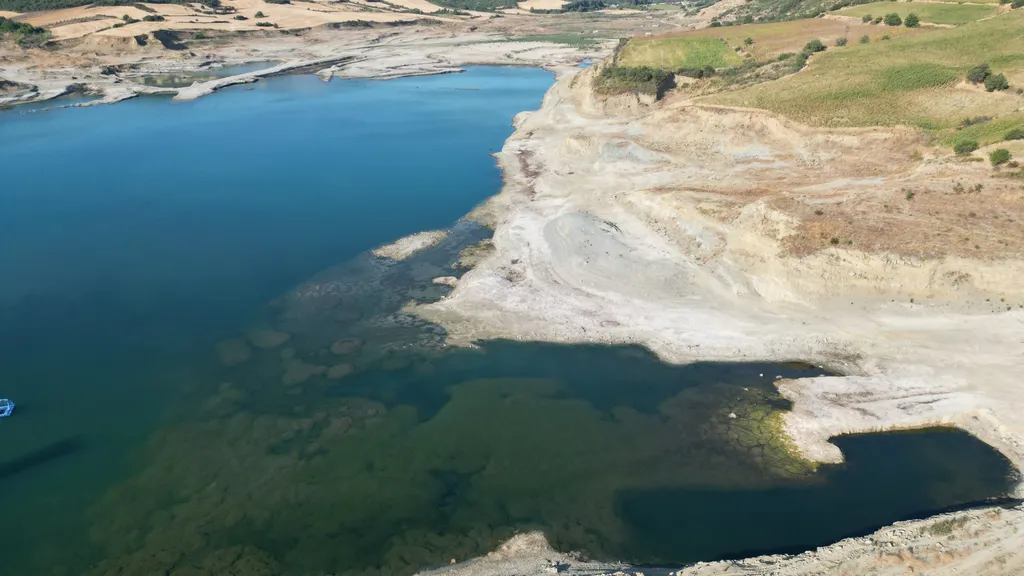
In the heart of Turkey, the Ceyhan Basin, a critical hub for energy infrastructure, is under the microscope as researchers delve into the intricacies of flood frequency analysis. Yasin Paşa, a leading expert from Istanbul Gelisim University, has recently published a groundbreaking study in the *Van Yüzüncü Yıl Üniversitesi Mühendislik Fakültesi Dergisi* (translated as *Van Yüzüncü Yıl University Journal of Engineering Faculty*), shedding light on how understanding flood patterns can revolutionize the energy sector.
The Ceyhan Basin, with its strategic location and extensive energy infrastructure, is no stranger to the risks posed by flooding. Yasin Paşa’s research focuses on analyzing flood frequencies using data from Flow Observation Stations (AGİ) around the basin. By employing statistical methods and various distribution models—including Normal, Generalized Extreme Value (GEV), and Pearson families—Paşa has calculated flow rates for different return periods, ranging from 50 to 500 years.
“Our findings indicate that the GEV distribution is the most suitable model for predicting flood frequencies in the Ceyhan Basin,” Paşa explained. This insight is crucial for the energy sector, as it allows for more accurate and economical design and evaluation of hydraulic structures. The study also revealed that the Normal distribution (N) provided the lowest flow values, while the Lognormal (LN) and Pearson 3 (P3) distributions yielded the highest.
The implications of this research are far-reaching. By understanding the frequency and magnitude of potential floods, energy companies can better prepare and protect their infrastructure, minimizing downtime and avoiding costly damages. “This research is a game-changer for the energy sector,” Paşa noted. “It provides a robust framework for assessing flood risks and ensuring the resilience of critical infrastructure.”
The study also employed the Kolmogorov-Smirnov (K-S) test and Probability Plot Correlation Coefficient (PPCC) test to validate the distribution models. The results confirmed that the GEV and Lognormal 3 (LN3) distributions were the most appropriate for the annual peak flow data from the stations in the Ceyhan Basin.
As the energy sector continues to evolve, the need for accurate flood frequency analysis becomes increasingly apparent. Yasin Paşa’s research not only advances our understanding of flood patterns in the Ceyhan Basin but also sets a precedent for similar studies in other regions. By leveraging these insights, energy companies can make informed decisions, optimize their investments, and ensure the long-term sustainability of their operations.
In an era where climate change is exacerbating extreme weather events, this research couldn’t be more timely. It underscores the importance of data-driven approaches in mitigating risks and building resilient infrastructure. As the energy sector navigates these challenges, Yasin Paşa’s work serves as a beacon, guiding the way towards a more secure and sustainable future.