
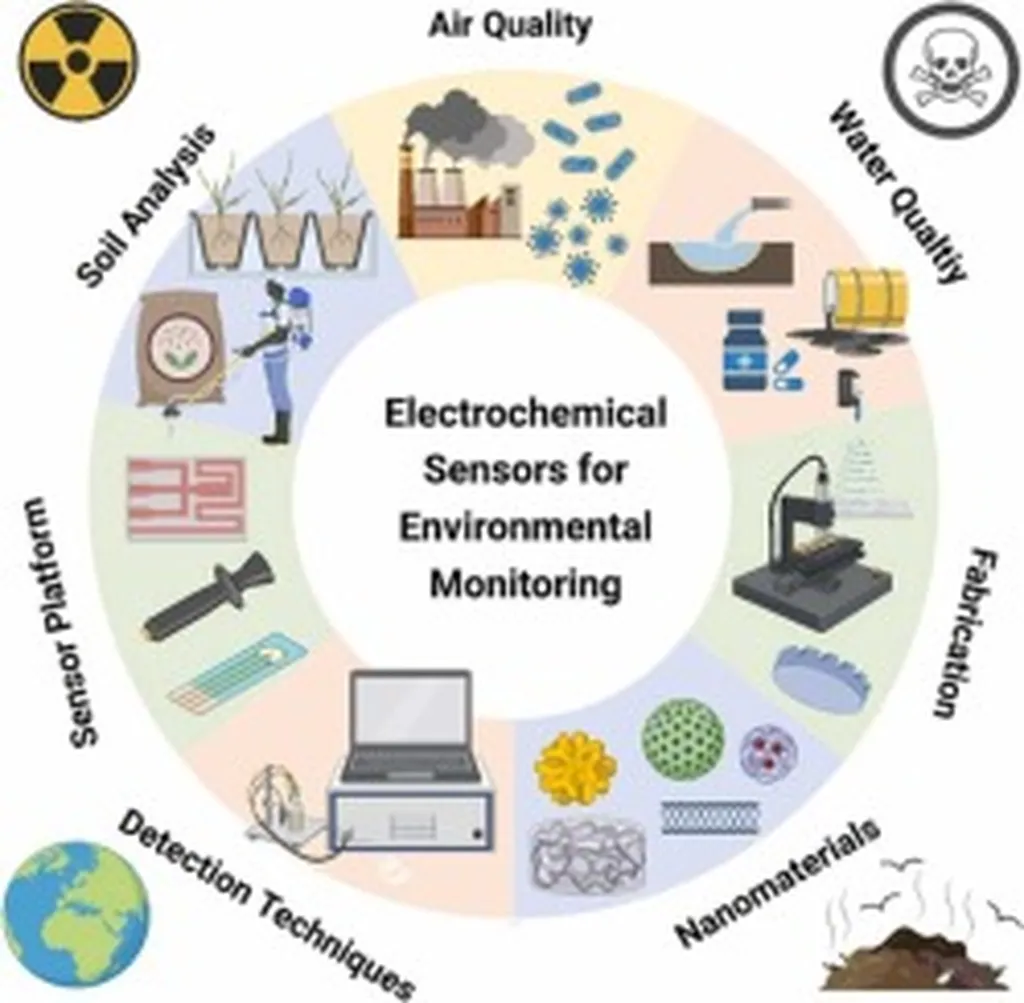
In the ever-evolving world of electrochemical sensing, a new review published in *ECS Sensors Plus* (translated to *Electrochemical Sensors Plus*) is shedding light on the historical journey of electrodes and their pivotal role in shaping the future of energy and environmental monitoring. Led by Pramod K. Kalambate from the Department of Chemistry & Waterloo Institute for Nanotechnology at the University of Waterloo, this comprehensive study delves into the transformative impact of electrode design and materials on electrochemical sensing and biosensing technologies.
The review begins by highlighting the early days of mercury-based dropping mercury electrodes (DMEs), which, despite their reproducibility and broad potential windows, were eventually phased out due to toxicity concerns. “The shift from mercury-based electrodes to solid electrodes marked a significant turning point,” notes Kalambate. “Glassy carbon, carbon paste, and noble metals offered higher stability and conductivity, making them more suitable for a wider range of applications.”
The evolution continued with the introduction of screen-printed and pencil graphite electrodes, which brought about a new era of low-cost, disposable, and portable sensing devices. These innovations have been particularly impactful in the energy sector, where real-time monitoring and portable analytics are crucial for optimizing performance and ensuring safety.
More recently, the advent of flexible substrates, 3D-printed devices, and nanostructured materials has opened up new possibilities for wearable technologies and ultra-sensitive detection. “These advancements are not just about improving sensitivity and selectivity; they are about making electrochemical sensing more accessible and adaptable to diverse environments,” explains Kalambate.
However, the review also identifies current gaps in scalability, commercialization, and sustainability. Despite significant progress in laboratory research, translating these innovations into practical, widely accessible devices remains a challenge. The integration of artificial intelligence (AI), machine learning (ML), and the Internet of Things (IoT) is seen as a promising avenue for optimizing electrode design and enabling large-scale data analysis.
As the energy sector continues to evolve, the demand for reliable, safe, and cost-effective sensing technologies will only grow. This review serves as a roadmap for future developments, highlighting the importance of historical insights in shaping the next generation of electrochemical sensing technologies. By addressing current challenges and leveraging emerging technologies, the field is poised to make significant strides in energy monitoring, environmental protection, and beyond.
For professionals in the energy sector, this research underscores the critical role of electrode innovation in driving forward the development of advanced sensing technologies. As Kalambate aptly puts it, “The future of electrochemical sensing lies in our ability to adapt, innovate, and translate laboratory breakthroughs into real-world solutions.” With the insights provided in this review, the path forward is clearer than ever.