
In the heart of India’s coastal plains, a silent struggle is taking place beneath the sugarcane fields of Odisha. The culprit? Sulphur deficiency in the soil, a stealthy adversary that’s been chipping away at sugarcane yields and, by extension, the sugar industry’s bottom line. But a recent study, led by Rajanikanta Majhi from the Department of Soil Science and Agricultural Chemistry at Odisha University of Agriculture and Technology, is shining a light on this issue and offering a promising solution.
Majhi and his team conducted a three-year experiment to optimize sulphur management in these sulphur-deficient Inceptisols. The results, published in ‘Frontiers in Soil Science’ (translated as ‘Frontiers in Soil Science’), reveal that a strategic application of sulphur can significantly enhance soil fertility and nutrient uptake, ultimately boosting sugarcane yields.
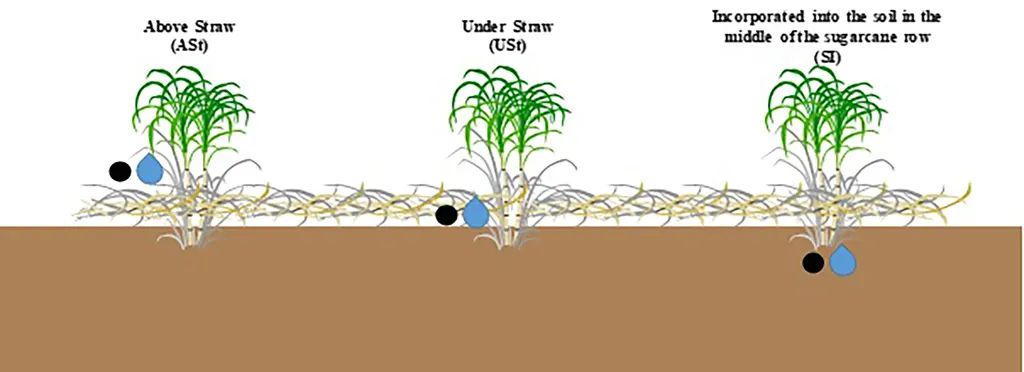
The study found that applying 60 kg of sulphur per hectare, split into three applications, led to the highest nitrogen and sulphur concentrations in the sugarcane trash. “The split application of sulphur at basal, 40 days after sowing, and 80 days after sowing enhanced the soil fertility,” Majhi explained. This method also improved microbial activity and organic carbon status in the soil, creating a more robust environment for sugarcane growth.
The implications for the sugar industry are substantial. Sugarcane is a critical crop for the sugar industry, and any improvement in yield can have a significant commercial impact. By optimizing sulphur management, farmers can enhance their crop’s quality and quantity, leading to increased profits. Moreover, improved soil fertility can lead to more sustainable farming practices, benefiting both the environment and the industry in the long run.
This research could also have broader implications for the energy sector. Sugarcane is not just used for sugar production; it’s also a vital source of biofuel. As the world shifts towards renewable energy, the demand for biofuel is expected to rise. Therefore, any advancements in sugarcane cultivation can have a ripple effect on the energy sector, contributing to a more sustainable and secure energy future.
Looking ahead, Majhi’s research could pave the way for further studies on nutrient management in sugarcane cultivation. It also underscores the importance of soil health in agricultural productivity, a factor that’s often overlooked in the pursuit of higher yields. As Majhi puts it, “Soil is not just a medium for plant growth; it’s a living, dynamic ecosystem that needs to be nurtured and managed sustainably.”
In the face of climate change and increasing food demand, such insights are invaluable. They remind us that the solutions to some of our most pressing challenges may lie not in radical innovations, but in understanding and optimizing the natural processes that have sustained us for centuries.