
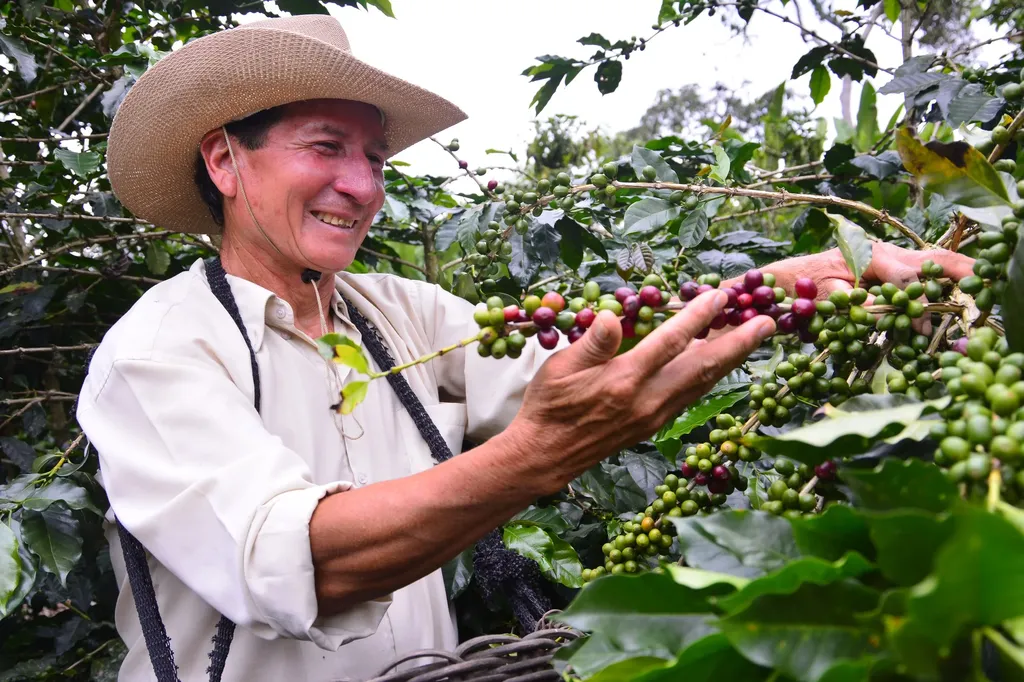
In the heart of the Peruvian Amazon, where coffee plantations thrive amidst mountainous terrain, a groundbreaking study is reshaping how farmers approach fertilization. Sharon Mejía Maita, a researcher from the Dirección de Servicios Estratégicos Agrarios at the Instituto Nacional de Innovación Agraria (INIA) in Lima, Peru, has pioneered a method that combines geostatistics and multivariate analysis to create tailored fertilization strategies for coffee crops. Published in *Frontiers in Soil Science* (translated to English as *Frontiers in Soil Science*), this research could revolutionize precision agriculture, particularly in regions with high soil variability.
Mejía Maita’s study focuses on the spatial variability of soils in high-yield coffee plantations, an aspect often overlooked in traditional fertilization practices. “Fertilization practices in coffee plantations often overlook the spatial variability of soils, particularly in mountainous regions with acidic conditions,” she explains. By integrating principal component analysis (PCA) and ordinary kriging, Mejía Maita and her team were able to map nutrient distributions and identify differentiated fertilization zones. This approach not only enhances crop yield but also promotes more efficient nutrient use, reducing fertilization needs by up to 30% in areas with high fertility potential.
The research involved collecting 70 soil samples from three districts in the Peruvian high jungle, measuring physical and chemical properties, altitude, and crop age. The team applied Spearman correlations to assess associations with yield, PCA to identify fertility gradients, and geostatistical models with cross-validation. The PCA identified two main gradients: PC1, associated with cation exchange capacity (CEC) and organic matter, and PC2, linked to the availability of potassium (K) and phosphorus (P) and crop age. Cross-validation confirmed high accuracy in the spatial prediction of available P and K across the study areas.
Kriging maps revealed zones with high available K (>150 mg kg−1) and P (>20 mg kg−1), which were associated with yields exceeding 1.5 t ha−1. “The integration of PCA and geostatistics enabled the delineation of management zones with differentiated nutrient requirements,” Mejía Maita notes. This method not only optimizes fertilization strategies but also reduces costs and environmental impact, making it a sustainable solution for coffee farmers.
The implications of this research extend beyond the coffee industry. Precision agriculture, soil zoning, and applied geostatistics are becoming increasingly important in various sectors, including energy. As the demand for sustainable and efficient agricultural practices grows, this study provides a solid methodological basis for implementing precision fertilization strategies in tropical coffee systems. By promoting more efficient nutrient use and greater production sustainability, Mejía Maita’s work could shape future developments in the field, offering a blueprint for other crops and regions with similar challenges.
In a world where resource efficiency and sustainability are paramount, this research offers a compelling example of how data-driven approaches can transform traditional practices. As Mejía Maita’s findings gain traction, they could inspire similar innovations across the agricultural and energy sectors, paving the way for a more sustainable future.