
In the realm of road infrastructure and safety, a groundbreaking study has emerged that could revolutionize how we detect and manage waterlogging on roads, particularly in rural areas. Led by K. N. Ghogale from the Centre for Development of Advanced Computing (C-DAC) in Pune, Maharashtra, India, this research leverages the power of deep learning to identify waterlogging issues, offering a rapid, cost-efficient, and scalable solution.
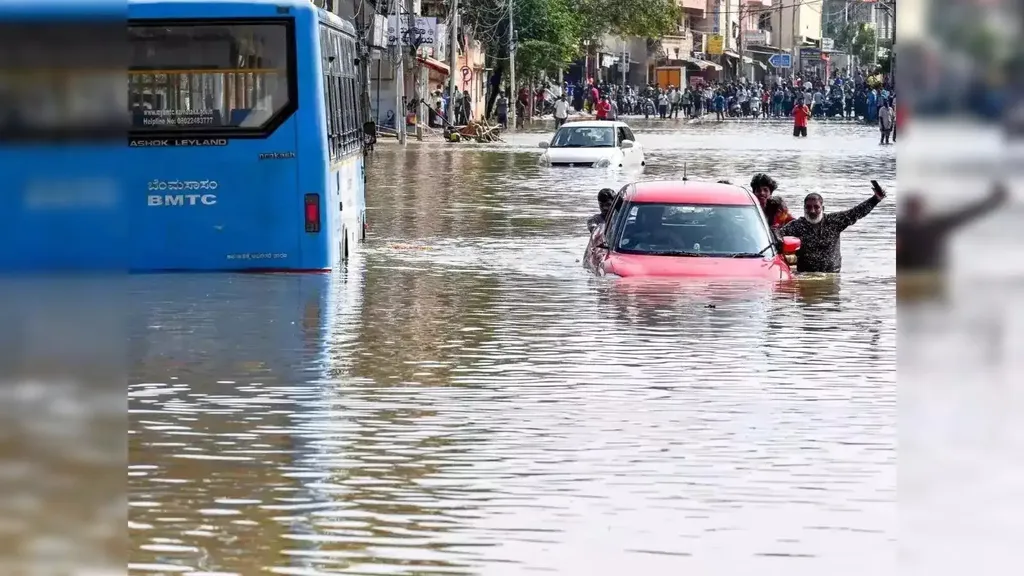
Waterlogging on roads is a pervasive problem that significantly impacts transportation safety. Inadequate drainage systems, blocked drainage channels, and poor road design and construction often lead to increased accidents and traffic disruptions. Traditional methods of identifying waterlogging from field photographic images are challenging due to poor illumination, reflective distortions, transparent surfaces, and low resolution. Ghogale’s study aims to address these challenges using a deep learning-based semantic segmentation approach.
The research, published in the ISPRS Annals of the Photogrammetry, Remote Sensing and Spatial Information Sciences (which translates to the International Society for Photogrammetry and Remote Sensing Annals), utilized the YOLOv11 model, trained and tested on the CDAC PARAM Siddhi-AI High Performance Computing (HPC) platform. The dataset comprised 1000 photographic images sourced from the Pradhan Mantri Gram Sadak Yojana (PMGSY), India’s flagship program for rural road development.
The model’s effectiveness was evaluated using key metrics including precision, recall, F1-score, accuracy, and Intersection-over-Union (IoU). The results were impressive: a precision of 91.27%, recall of 85.95%, F1-score of 87.58%, accuracy of 96.20%, and IoU of 80.06%. “Training the Deep Neural Network (DNN) model on a GPU-accelerated HPC platform significantly improves both accuracy and processing speed,” Ghogale noted. This advancement is particularly suitable for waterlogging detection, offering a swift and efficient solution.
The implications of this research are far-reaching. For the energy sector, which often relies on extensive road networks for transportation and logistics, this technology could be a game-changer. By ensuring safer and more reliable roads, energy companies can minimize disruptions and optimize their operations. “The output model can be utilized for deployment in national programs such as the PMGSY National GIS, offering a rapid, cost-efficient, and scalable solution for waterlogging detection on roads,” Ghogale explained.
This study not only highlights the potential of deep learning in infrastructure management but also underscores the importance of high-performance computing in achieving accurate and timely results. As we look to the future, the integration of such advanced technologies into national and international infrastructure programs could pave the way for smarter, safer, and more resilient transportation networks. The research by Ghogale and his team is a significant step in this direction, offering a glimpse into the transformative power of artificial intelligence in the field of civil engineering and beyond.