
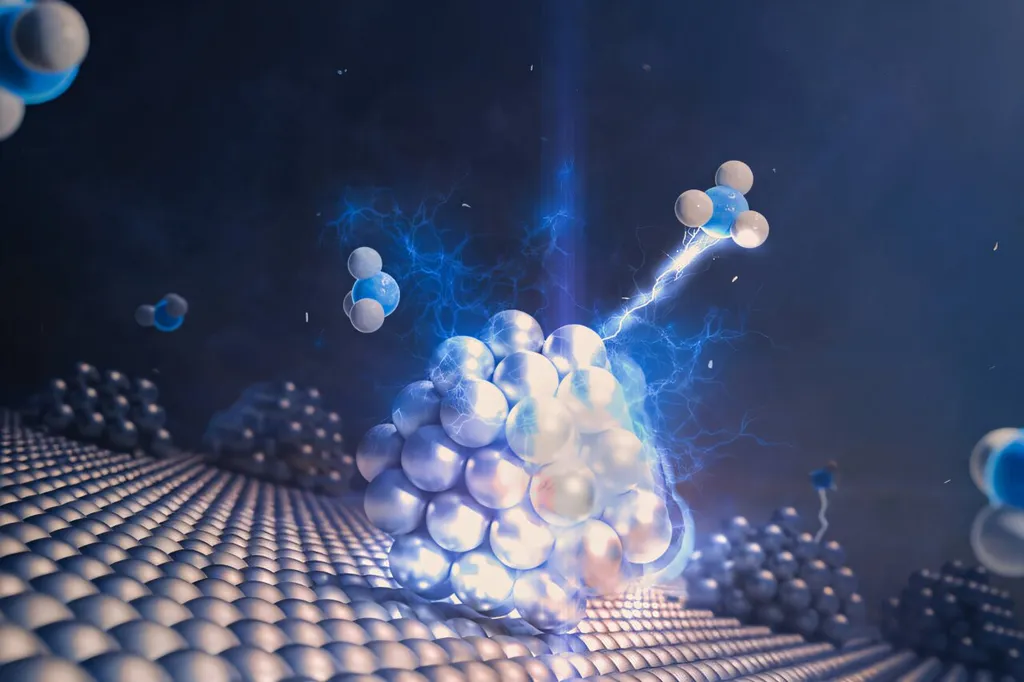
In a significant stride towards enhancing catalytic materials for the energy sector, researchers from the National Technological Institute of Mexico, specifically the Technological Institute of Orizaba, have unveiled a novel approach to boost the acidic and catalytic properties of zirconia (ZrO2). The study, led by Alberto Hernández-Zapién and published in the journal *Advances in Materials Science and Engineering* (which translates to *Advances in Materials Science and Engineering* in English), explores the impact of molybdenum doping on ZrO2, a material widely used in catalytic processes.
The research team synthesized zirconium hydroxide (Zr(OH)4) and modified it with varying concentrations of molybdenum (5, 10, and 15 weight percent). After a series of drying and calcination processes, they obtained stabilized oxides that exhibited promising properties. “The incorporation of molybdenum species on the ZrO2 support significantly enhances its acidic properties,” Hernández-Zapién explained. This enhancement is crucial for catalytic applications, particularly in the energy sector, where efficient catalysts are in high demand.
The physical and chemical characterization of the materials was conducted using X-ray diffraction and nitrogen physisorption, along with potentiometric acid titration and temperature-programmed desorption of n-butylamine. The results were compelling. The potentiometric acid titration revealed that molybdenum doping promoted the acid properties of ZrO2. Furthermore, the temperature-programmed desorption (TPD) analysis showed a clear trend in total acidity: 10Mo/ZrO2 > 15Mo/ZrO2 > 5Mo/ZrO2 > ZrO2. This indicates that the incorporation of molybdenum creates stronger acid sites on the ZrO2 surface, which are essential for catalyzing reactions such as methanol dehydration.
The catalytic performance of the modified ZrO2 was evaluated in the methanol dehydration reaction, a process that converts methanol into dimethyl ether, a valuable chemical in the energy sector. The enhanced acidity of the molybdenum-doped ZrO2 resulted in a predominant selectivity towards dimethyl ether, highlighting the potential of this material for industrial applications.
The implications of this research are far-reaching. Enhanced catalytic materials can lead to more efficient and cost-effective processes in the energy sector, contributing to the development of sustainable and clean energy solutions. As Hernández-Zapién noted, “The deposition of MoOx species on the surface of ZrO2 generates stronger acid sites, which can significantly improve the catalytic performance in various industrial processes.”
This study not only advances our understanding of catalytic materials but also paves the way for future developments in the field. By optimizing the properties of ZrO2 through molybdenum doping, researchers can potentially develop more effective catalysts for a wide range of applications, from energy production to environmental remediation. The findings published in *Advances in Materials Science and Engineering* offer a glimpse into the future of catalytic technology, where innovative materials and processes can drive progress and innovation in the energy sector.