
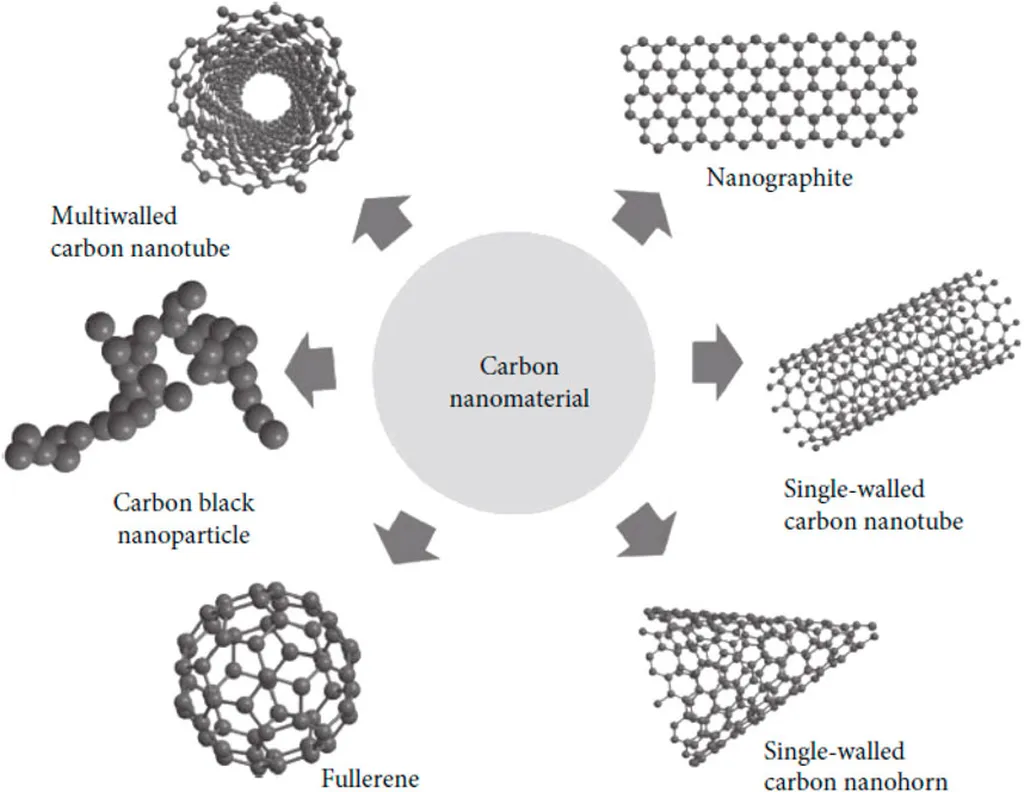
In the quest for advanced materials that can revolutionize the energy sector, a team of researchers led by Bo Meng from the Key Laboratory of Applied Physical Chemistry of Qinghai Province has made significant strides. Their work, published in the journal *Nanomaterials and Nanotechnology* (translated from Chinese as “纳米材料与纳米技术”), focuses on the synthesis of novel carbon nanomaterials using concentrated salt systems. This innovative approach could potentially reshape the landscape of energy storage and conversion technologies.
Traditional methods for producing carbon nanomaterials often involve complex and energy-intensive processes. However, Meng and his team have discovered a more efficient and controllable route. By leveraging the interaction between surfactants and concentrated salts, they have successfully synthesized a variety of carbon nanostructures, including nanospheres, nanoframes, nanorods, nanoblocks, and even complex octadecahedrons. “The key advantage of our method is the controllable construction of diverse carbon nanostructures,” explains Meng. “This level of precision is crucial for tailoring materials to specific applications in the energy sector.”
The implications of this research are far-reaching. Carbon nanomaterials are known for their exceptional electrical conductivity, mechanical strength, and large surface area, making them ideal candidates for applications such as supercapacitors, batteries, and fuel cells. The ability to synthesize these materials in a controlled manner opens up new possibilities for enhancing the performance of energy storage devices. “Imagine a world where energy storage is not only more efficient but also more sustainable,” says Meng. “Our research brings us one step closer to that reality.”
The team’s findings also highlight the potential for cost savings and environmental benefits. By using concentrated salt systems, the synthesis process becomes more energy-efficient and less reliant on hazardous chemicals. This aligns with the growing demand for green technologies that minimize environmental impact. “We are not just developing new materials; we are also contributing to a more sustainable future,” Meng emphasizes.
As the energy sector continues to evolve, the need for advanced materials that can meet the demands of next-generation technologies becomes increasingly critical. The research conducted by Bo Meng and his team represents a significant step forward in this direction. Their work not only advances our understanding of carbon nanomaterial synthesis but also paves the way for innovative solutions in energy storage and conversion.
The journal *Nanomaterials and Nanotechnology* has been a valuable platform for disseminating cutting-edge research in the field of nanotechnology. The publication of Meng’s work in this esteemed journal underscores the significance of their findings and their potential impact on the scientific community. As the world looks towards a future powered by clean and renewable energy, the contributions of researchers like Bo Meng will be instrumental in shaping the technologies that will drive this transition.