
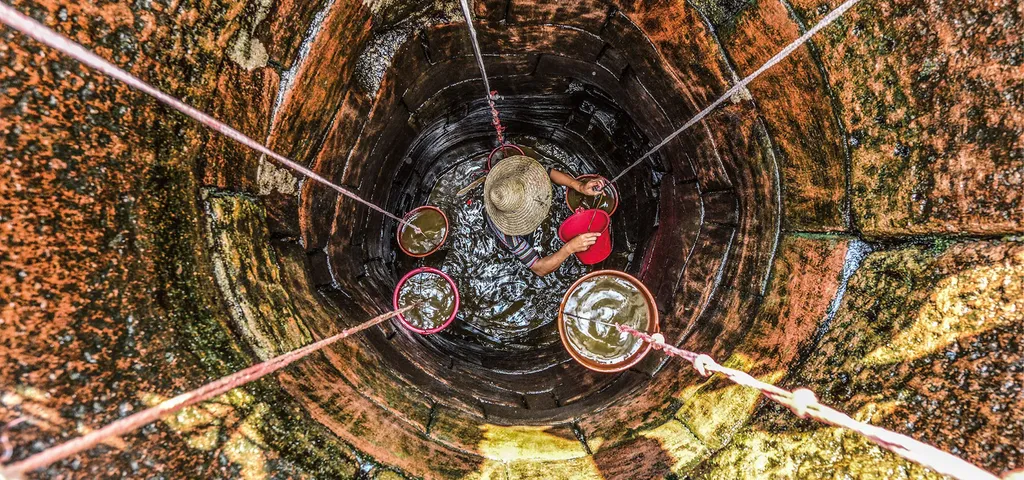
In the heart of China’s rich history lies a timeless solution to a modern problem: ensuring access to safe drinking water. A recent study published in the journal *Cleaner Water* (translated from Chinese as “Pure Water”) by Haojie Xu, a researcher from the Department of Rheumatology and Immunology at Peking University People’s Hospital in Beijing, delves into the ancient practices of water well construction, offering valuable insights for today’s water management challenges.
The study, a historical analysis spanning from the Song Dynasty (960–1279 AD) to the modern era, examines visual documentation and records to identify effective features in safe water well practices. One such feature, the construction of raised well edges, has been found to significantly reduce surface contamination, ensuring cleaner water for communities.
“By looking back at historical practices, we can uncover low-cost, sustainable solutions that have stood the test of time,” Xu explains. The study highlights the painting *Along the River During the Qingming Festival* and records from the 1930s ‘Dingxian Model’ public health intervention, demonstrating the enduring relevance of these ancient techniques.
The implications for the energy sector are substantial. As water scarcity becomes an increasingly pressing issue, the need for sustainable water management practices grows. This research underscores the importance of integrating historical knowledge with modern technology to develop innovative solutions.
Dr. Chih-Chien Chen, a renowned expert in public health, emphasizes the significance of this study. “Understanding the past can help us navigate the future,” Chen says. “This research provides a blueprint for developing cost-effective, sustainable water management strategies that can benefit communities worldwide.”
The study’s findings offer a compelling case for the energy sector to invest in research and development that draws on historical practices. By doing so, companies can contribute to global water security efforts while also enhancing their own sustainability credentials.
As we face the challenges of climate change and water scarcity, the lessons from the past become increasingly valuable. This research serves as a reminder that the solutions to our most pressing problems may already exist, waiting to be rediscovered and adapted for the modern world.