
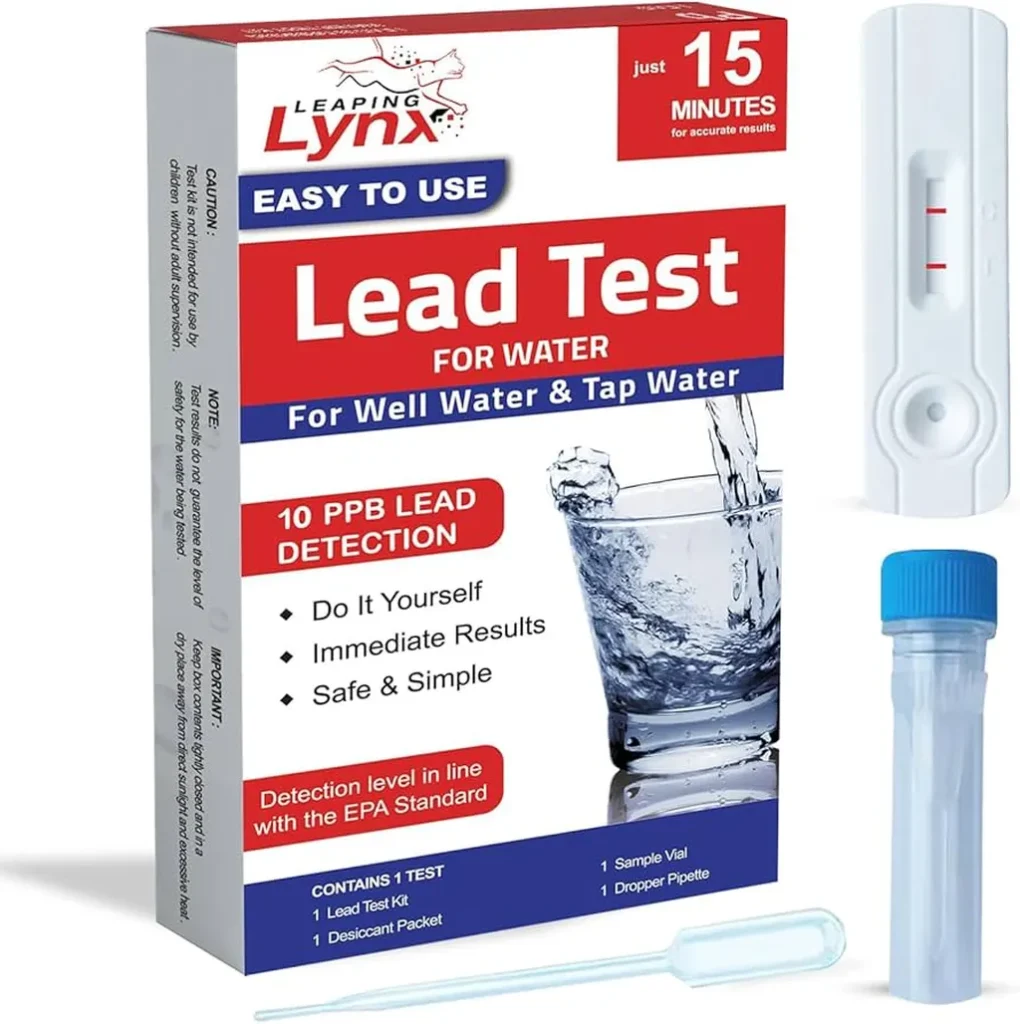
In the ongoing battle against lead contamination in drinking water, a new study offers a promising solution that could revolutionize how we detect and measure this hazardous substance. Elizabeth R. Jacobia, a researcher from Duke University’s Civil & Environmental Engineering department, has published a groundbreaking study in the journal *ECS Sensors Plus* (which translates to *ECS Sensors Plus* in English), titled “Evaluation of Solvents for Dissolution and Electrochemical Detection of Common Lead Forms in Test Drinking Water.” This research could have significant implications for the energy sector, particularly in ensuring the safety of water used in various industrial processes.
Lead contamination is a global health concern, and current methods for detecting it are often time-consuming and require extensive sample preparation. Jacobia’s study explores a faster, safer, and more accurate alternative: square wave stripping voltammetry using a bismuth-coated electrode. This method has been proposed as a viable option for point-of-use sensors, but until now, it has been limited by the lack of effective lead dissolution techniques.
Jacobia and her team investigated the effectiveness of different solvents in dissolving various forms of lead commonly found in drinking water. They tested nitric acid at pH 2, hydrochloric acid at pH 2, and acetate buffer at pH 4.5, using lead nitrate as a benchmark. The solvents were also used as electrolyte solutions, and the measurements were verified using inductively coupled plasma-mass spectrometry.
The results were striking. Nitric acid and hydrochloric acid proved to be highly effective in dissolving lead and enabling accurate sensing. “We found that nitric acid and hydrochloric acid had comparable lead dissolution and sensing capabilities for lead forms common in drinking water and real tap water samples,” Jacobia explained. “The acids achieved low limits of detection, with nitric acid at 1.38 μg l^−1 and hydrochloric acid at 6.06 μg l^−1.”
The implications of this research are far-reaching. For the energy sector, ensuring the safety of water used in industrial processes is paramount. This new method could enable real-time monitoring of lead contamination, allowing for quicker responses and more effective mitigation strategies. “This research has the potential to shape future developments in the field of environmental sensing,” Jacobia noted. “By providing a faster and more accurate method for detecting lead, we can better protect public health and ensure the safety of our water supplies.”
The study, published in *ECS Sensors Plus*, represents a significant step forward in the fight against lead contamination. As Jacobia’s research continues to gain traction, it could pave the way for new technologies and methods that make our water safer and our industries more efficient.