
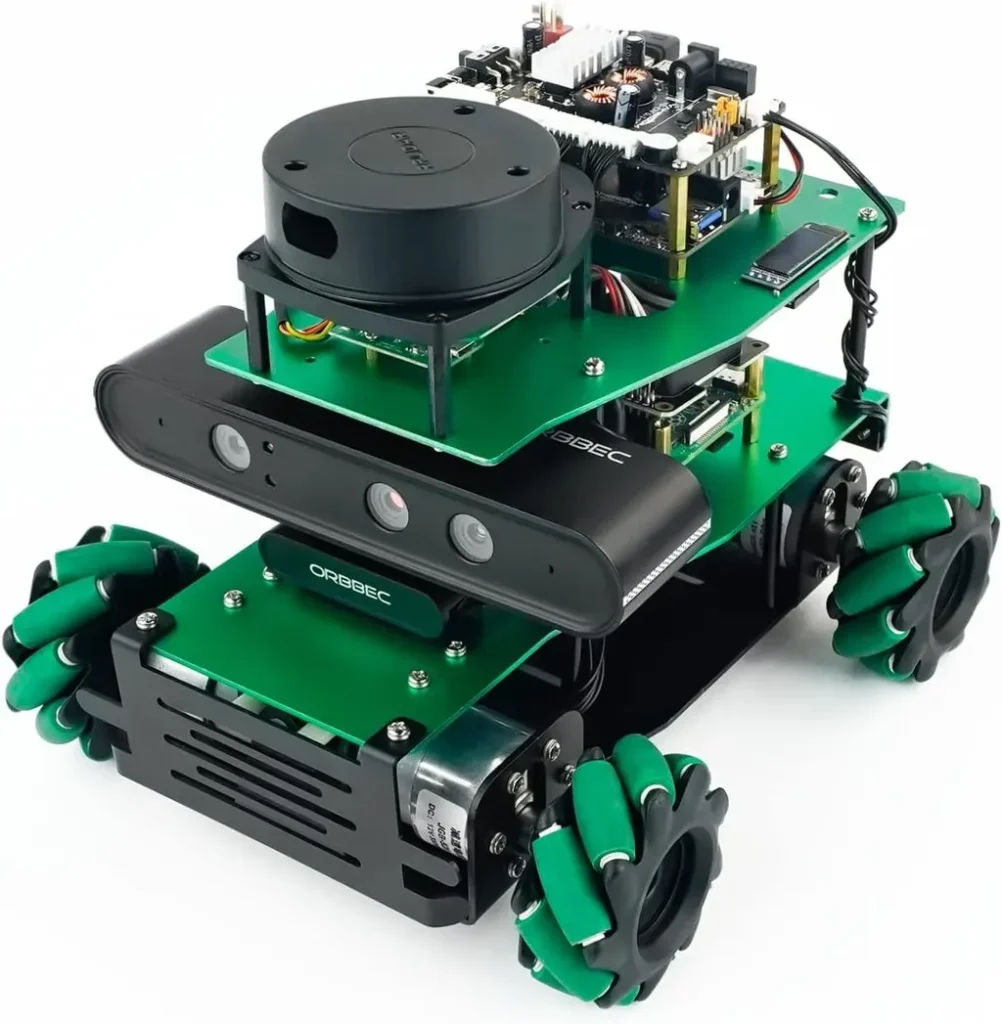
In the realm of mobile robotics, a significant stride has been made that could reshape how we approach navigation in confined spaces, particularly in industries like energy where precision and efficiency are paramount. Researchers, led by ZHANG Zhen, have developed an improved time elastic band (TEB) algorithm specifically tailored for Mecanum wheel mobile robots, addressing the challenges of local path planning in tight environments.
Mecanum wheel mobile robots are known for their omnidirectional mobility, a feature that makes them highly versatile in various industries, including energy, where they can navigate complex environments such as power plants or offshore platforms. However, their potential has been limited by the constraints of traditional path planning algorithms. The conventional TEB algorithm, for instance, imposes unidirectional velocity constraints, which do not fully leverage the unique capabilities of Mecanum wheel robots.
ZHANG Zhen and his team have tackled this issue head-on. “We decomposed the conventional unidirectional velocity constraints into independent velocity constraints along the X and Y axes,” ZHANG explains. This modification allows the robot to move more freely and efficiently in any direction. But the innovation doesn’t stop there. The researchers also incorporated angular acceleration constraints of the four wheels into the TEB algorithm’s optimization function, further enhancing the robot’s performance.
The results are impressive. The improved algorithm significantly boosts the robot’s driving efficiency in narrow environments, mitigates wheel slippage, and ensures stable velocity outputs during motion. This means that in industries like energy, where robots might need to navigate tight spaces or complex layouts, these robots can now do so with greater precision and speed.
The implications of this research are far-reaching. As ZHANG Zhen puts it, “Our algorithm generates trajectories that satisfy the kinematic and dynamic constraints of Mecanum wheel mobile robots, paving the way for more efficient and reliable robotic navigation in confined spaces.” This could lead to advancements in automated inspection, maintenance, and even disaster response in the energy sector.
The study was recently published in the journal Jixie chuandong, which translates to “Mechanical Transmission” in English. This research not only advances the field of mobile robotics but also opens up new possibilities for industries that rely on precise and efficient navigation in challenging environments. As we look to the future, the improved TEB algorithm could become a cornerstone in the development of more capable and versatile mobile robots, driving innovation and progress in the energy sector and beyond.