
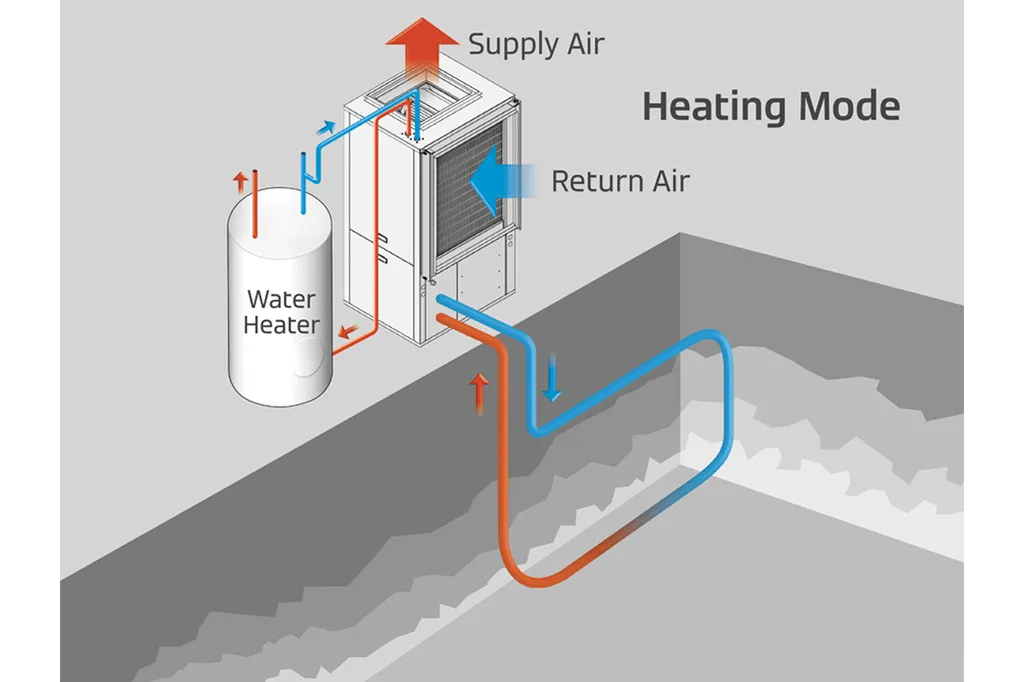
In the quest for more efficient and sustainable heating solutions, a team of researchers led by Niu Jianhui has made a significant breakthrough with a novel air-source heat pump system. This innovative system combines waterless floor heating with a hot water supply, promising to revolutionize the way we heat our homes and buildings. The study, published in *Zhileng xuebao* (translated to *Building Science Journal*), offers a glimpse into the future of heating technology.
The research introduces a new type of air-source heat pump system that directly condenses refrigerant in buried floor pipes for heating, while simultaneously producing domestic hot water through an outer coil water heater. This dual-functionality is a game-changer, as it addresses both space heating and hot water needs with a single, efficient system.
During the experimental phase, the prototype was tested in three different modes: single-floor heating, dual supply, and single water heater. The results were impressive. The surface temperature of the floor was maintained between 25 and 33°C, while the air temperature remained comfortably between 18 and 22°C, regardless of the mode. “The heat storage effect of the capillary floor is particularly noteworthy,” said Niu Jianhui, the lead author of the study. “It ensures that the room temperature stays above 18°C for a significant period even after the heat flow to the room is stopped.”
One of the most compelling findings was the system’s performance at low ambient temperatures. At -5°C, the water temperature of the water heater rose to 45°C after just 572.3 minutes. The system’s heating capacity and energy efficiency ratio (EER) were equally impressive, with a minimum heating capacity of 2.70 kW and an EER of 3.55.
The commercial implications of this research are substantial. As the energy sector continues to seek more efficient and sustainable solutions, this dual-supply air-source heat pump system offers a promising alternative. It not only reduces energy consumption but also provides a more comfortable and consistent heating experience.
“This technology has the potential to significantly impact the heating industry,” said Niu Jianhui. “It addresses the growing demand for energy-efficient and sustainable heating solutions, making it a viable option for both residential and commercial applications.”
The study, published in *Zhileng xuebao*, underscores the importance of continued research and innovation in the field of heating technology. As we move towards a more sustainable future, such advancements will play a crucial role in shaping the energy sector and improving our quality of life.
The research team’s work is a testament to the power of innovation and the potential it holds for transforming the way we heat our homes and buildings. As the energy sector continues to evolve, this breakthrough offers a glimpse into the future of heating technology, one that is more efficient, sustainable, and comfortable.