
In the quest to enhance energy storage solutions, researchers have made a significant stride in improving the efficiency of hydrate-based cold storage systems. A recent study published in *Zhileng xuebao* (translated to *Journal of Refrigeration*) explores how surfactants can dramatically boost the performance of HCFC-141b hydrates, offering promising implications for the energy sector.
The research, led by Shen Junhao and Sun Zhigao, focuses on the challenges of slow growth rates and low cold storage density in refrigerant hydrates. By introducing surfactants—specifically, polyoxyethylene castor oil (EL) surfactants with varying hydrophilic-lipophilic balance (HLB) values—the team discovered a marked improvement in hydrate formation. “The micelles formed by the EL surfactants provide more nucleation sites, which accelerate hydrate formation,” explained Shen Junhao, highlighting a key finding of the study.
The experiments revealed that a 1.5% mass fraction of EL-20 surfactant reduced the hydrate nucleation induction time to just 73 minutes, the shortest observed in the study. This surfactant also achieved the highest cold storage density of 246.48 kJ/kg and the fastest growth rate of 5.06 kJ/(kg·min). The researchers attributed this performance to EL-20’s optimal HLB value, which balanced hydrophilicity and lipophilicity to enhance hydrate formation.
One of the most intriguing aspects of the study was the “memory” effect observed during hydrate formation and dissociation cycles. The system with 1.5% EL-20 maintained stable temperature increases even after seven cycles, suggesting long-term reliability. “This stability is crucial for commercial applications, where consistent performance over multiple cycles is essential,” noted Sun Zhigao.
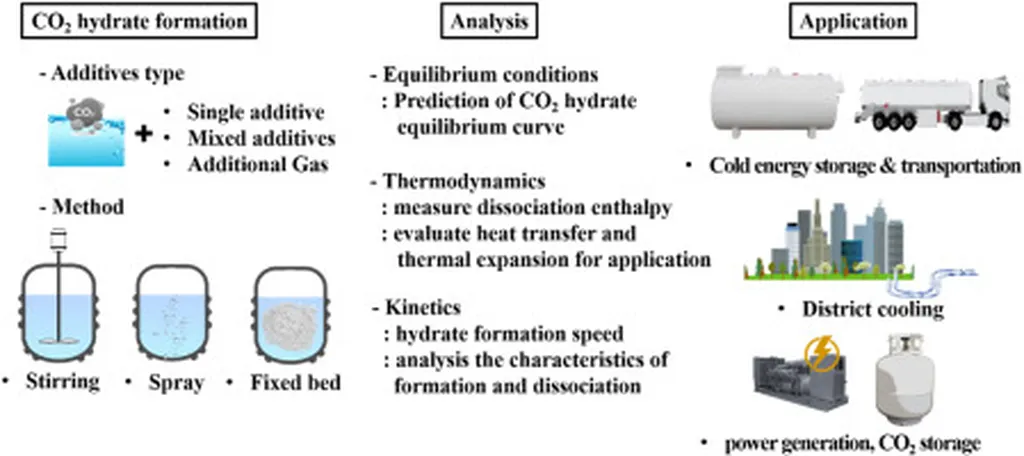
The implications for the energy sector are substantial. Hydrate-based cold storage systems are increasingly seen as a viable solution for energy storage, particularly in industries requiring efficient thermal management. The findings could lead to more compact and efficient cold storage systems, reducing energy costs and improving sustainability.
As the world seeks innovative ways to store and manage energy, this research offers a compelling step forward. By leveraging surfactants to enhance hydrate performance, the study paves the way for more efficient and reliable energy storage solutions, potentially reshaping the future of thermal management in various industries. The publication of these findings in *Zhileng xuebao* underscores the growing global interest in advancing hydrate technology, positioning it as a key player in the energy sector’s future.