
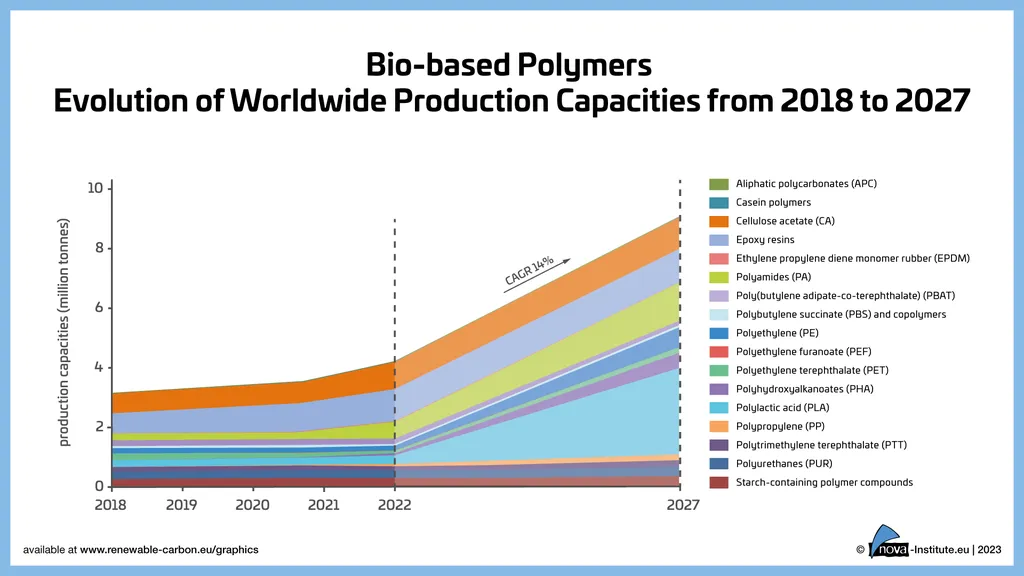
In the quest for sustainable and eco-friendly materials, a team of researchers has made a significant stride in the world of polymers. Evangelia Balla, the lead author of a study published in the journal *Express Polymer Letters* (translated to English as “Express Polymer Letters”), has explored the potential of non-isocyanate polyurethanes (NIPUs) derived from bio-based sources. This research could have profound implications for the energy sector, particularly in applications requiring durable, biodegradable, and non-toxic materials.
Polyurethanes (PUs) are ubiquitous in various industries, from construction to automotive, due to their versatility and durability. However, traditional PUs are synthesized using isocyanates, which are classified as hazardous and toxic compounds by the European Union. This classification has spurred the search for safer alternatives, and NIPUs have emerged as a promising candidate.
Balla and her team focused on synthesizing NIPUs using aliphatic dicarboxylic acids of varying chain lengths. The process involved a two-step polyaddition reaction with glycerol carbonate and diamine, resulting in fully bio-based NIPUs. The key innovation here is the ability to tailor the physicochemical properties of NIPUs by controlling the structure of the diacid used.
“The beauty of this approach lies in its simplicity and versatility,” Balla explained. “By varying the chain length of the diacid, we can fine-tune the properties of the resulting NIPUs to meet specific application requirements.”
The researchers conducted a thorough structural and thermal characterization of the synthesized NIPUs. They found that the glass transition temperature (Tg), molecular weight, surface wettability, and enzymatic degradability of the NIPUs were strongly dependent on the diacid chain length. Short-chain diacids yielded NIPUs with rapid hydrolytic degradation, while longer-chain analogs were hydrophobic and thermally stable. Contact angle measurements ranged from 75° to 85°, confirming these trends.
These findings position the materials as strong candidates for biomedical applications, where biodegradability and biocompatibility are crucial. However, the implications extend beyond the medical field. In the energy sector, for instance, the ability to tailor the properties of NIPUs could lead to the development of more sustainable and efficient materials for energy storage, insulation, and other applications.
“The tunable properties of these NIPUs make them highly adaptable to various industrial needs,” Balla noted. “This research opens up new avenues for developing eco-friendly materials that can meet the demands of different sectors, including energy.”
The study’s findings were published in *Express Polymer Letters*, a peer-reviewed journal that focuses on cutting-edge research in polymer science. The research not only advances our understanding of NIPUs but also paves the way for future developments in sustainable materials science.
As the world continues to grapple with environmental challenges, the quest for eco-friendly and sustainable materials has never been more critical. Balla’s research offers a glimpse into a future where materials are not only high-performing but also kind to the planet. The energy sector, in particular, stands to benefit from these advancements, as the demand for sustainable and efficient materials continues to grow.
In the words of Balla, “This is just the beginning. The potential applications of these materials are vast, and we are excited to explore them further.” With such promising research on the horizon, the future of sustainable materials science looks brighter than ever.