
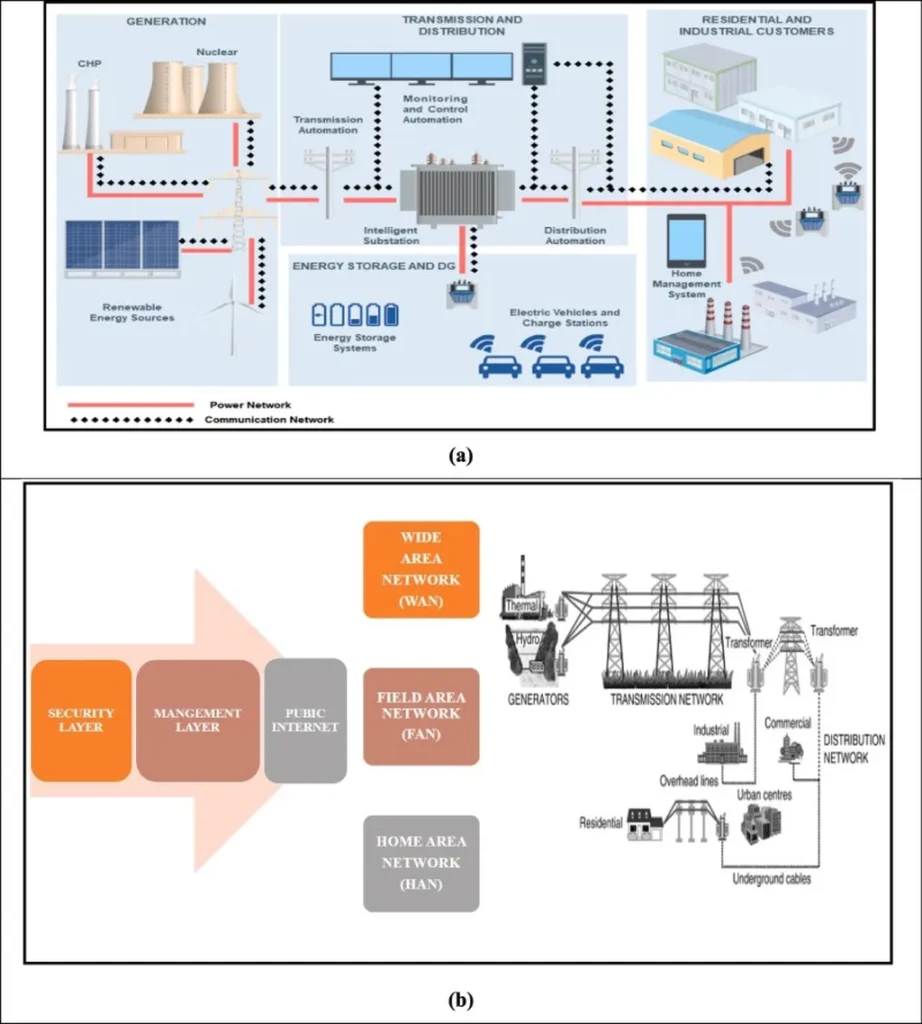
In the ever-evolving energy landscape, the integration of new energy sources and energy storage systems into distribution networks is becoming increasingly crucial. A recent study led by Longtian Zhang from the School of Electrical Engineering at Southwest Jiaotong University in Chengdu, China, sheds light on how these integrations can enhance the load capacity of distribution networks, ultimately benefiting the energy sector commercially.
The research, published in the *IET Renewable Power Generation* (which translates to *IET Renewable Power Generation* in English), explores the impact of new energy sources and energy storage on the load-carrying capacity of distribution networks. Zhang and his team proposed a novel method for evaluating this capacity by improving the GA-BWO algorithm with voltage adaptive control. This approach considers the integration of new energy and energy storage, providing a comprehensive evaluation indicator system that includes safety, flexibility, and economy.
“By constructing a distribution network load-carrying capacity evaluation indicator system, we can better understand the impact of load increases on the distribution network’s status,” Zhang explained. The team utilized the AHP-EWM method to calculate indicator weights and built an evaluation function based on objective functions and constraint conditions. This model adaptively controls the balance factor and development stage of the Beluga algorithm using bus voltage, introducing the mutation process of the Genetic algorithm to solve load-carrying capacity issues.
The study’s findings are significant for the energy sector, particularly in regional planning and construction. By evaluating distribution networks with new energy and energy storage, the research demonstrates the positive impact of these integrations on load-carrying capacity. This could lead to more efficient and stable distribution networks, ultimately benefiting consumers and energy providers alike.
“The integration of new energy and energy storage can suppress the fluctuations caused by the uncertainty of new energy, promoting the stable load absorption of the distribution networks,” Zhang noted. This stability is crucial for the commercial viability of renewable energy sources, as it ensures a consistent and reliable power supply.
As the energy sector continues to evolve, research like Zhang’s provides valuable insights into the future of distribution networks. By enhancing load-carrying capacity through the integration of new energy sources and energy storage, the sector can move towards a more sustainable and efficient future. This study not only offers a theoretical basis for regional planning and construction but also paves the way for innovative solutions in the energy industry.