
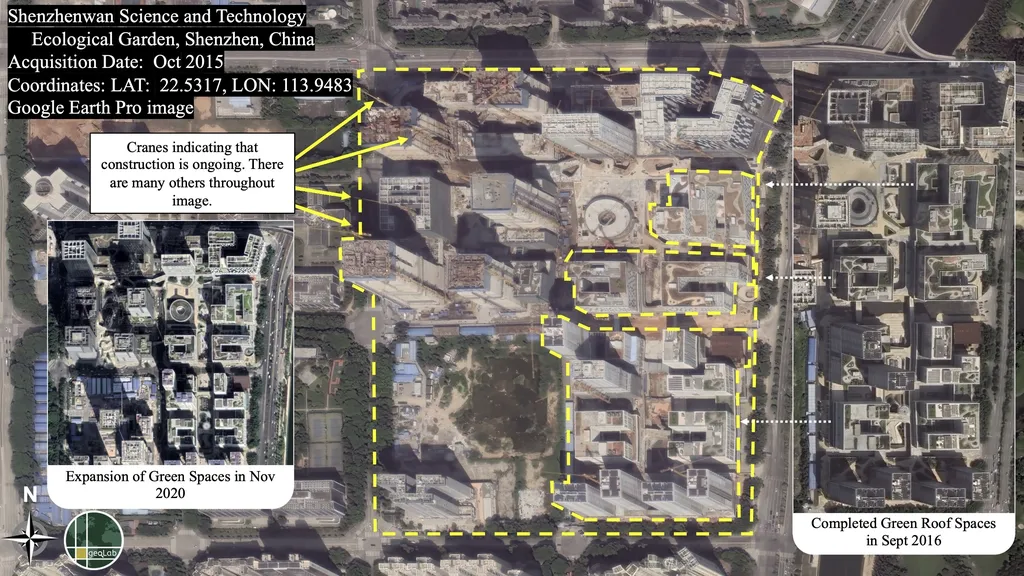
In the heart of China’s technological ambition lies a blueprint for the future of industrial innovation, and a recent study published in the *Journal of Asian Architecture and Building Engineering* (Asian Architecture and Building Engineering Journal) is shedding light on how high-tech industrial parks can become the engines of this transformation. Led by Jinglei Wang from Southwest University, the research delves into the intricate workings of future industries and their potential to reshape the global competitive landscape.
At the core of this study is the concept of future industries, which Wang describes as “the key driver of the new technological revolution and industrial transformation.” These industries are not just about cutting-edge technology; they are about national strategic security and global competitiveness. High-tech industrial parks, with their unique mission and functional capabilities, are poised to play a pivotal role in this evolution.
The research constructs a theoretical framework for understanding future industrial innovation, focusing on four critical subsystems: policy support, technological innovation, human capital, and financial services. Wang and his team argue that these subsystems must work in harmony, driven by application scenario approaches, to create a robust innovation ecosystem.
One of the most compelling aspects of the study is its case analysis of Zhongguancun Science Park, a beacon of innovation in China. This real-world example validates the operational mechanisms and effectiveness of future industrial innovation systems, providing a tangible model for other high-tech industrial parks to follow.
The study offers several recommendations for fostering future industrial innovation. These include building a diverse and collaborative innovation ecosystem, promoting the open sharing of basic research resources, overcoming the “first mile” barriers in technology transfer, and establishing a new government-university-enterprise collaborative model for talent cultivation and recruitment.
The implications for the energy sector are profound. As future industries drive technological advancements, they can catalyze breakthroughs in energy efficiency, renewable energy technologies, and smart grid systems. High-tech industrial parks, with their focus on innovation and collaboration, can become hubs for developing and commercializing these technologies, ultimately shaping the future of the energy sector.
Wang’s research is a call to action for policymakers, industry leaders, and academics to collaborate and create an environment where future industries can thrive. As the world grapples with the challenges of the new technological revolution, this study offers a roadmap for harnessing the power of high-tech industrial parks to drive innovation and secure a competitive edge.
In the words of Jinglei Wang, “The future of industrial innovation lies in our ability to integrate and leverage the strengths of high-tech industrial parks. It is a complex journey, but one that promises immense rewards for those who dare to embark on it.”