
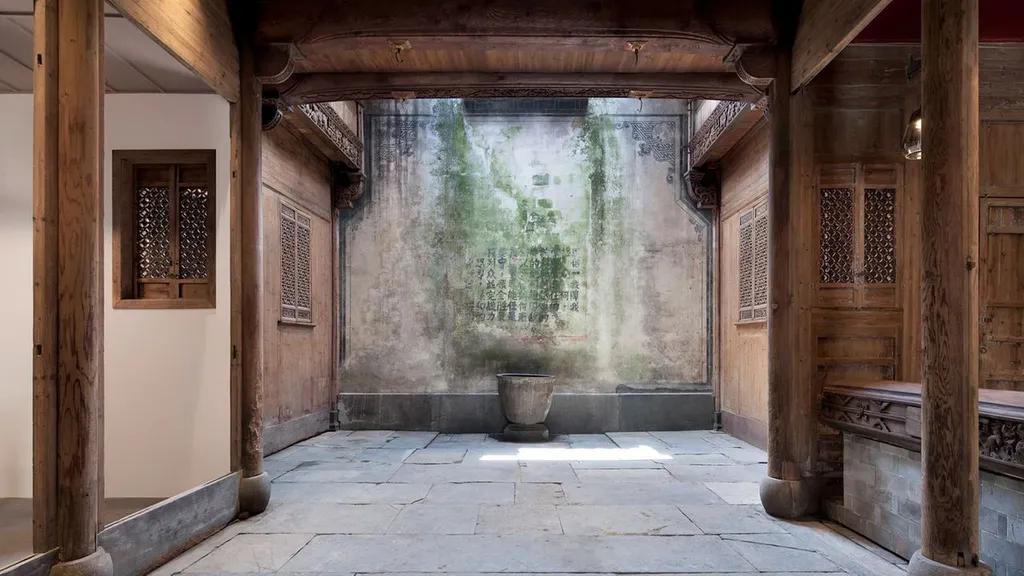
In the face of escalating climate change, the preservation of architectural heritage is becoming an increasingly complex challenge. A recent study published in the *Journal of Asian Architecture and Building Engineering* (also known as the *Journal of Asian Architecture and Building Engineering*) offers a novel approach to safeguarding traditional structures against the growing threat of rainstorms. Led by Miran He of Southwest Jiaotong University, the research focuses on Chinese skywell-style architectural heritage (SAH), a unique architectural style characterized by its central courtyard or skywell, which has historically managed rainwater through traditional ecological knowledge (TEK).
The study highlights the vulnerability of these structures to extreme precipitation, a risk exacerbated by global climate change. “Traditional rainwater management systems (TRMS) are sometimes insufficient to cope with extreme precipitation,” He explains. “Our research aims to integrate TEK with modern vulnerability assessment frameworks to enhance the resilience of these architectural treasures.”
The research team developed a comprehensive vulnerability assessment system that encompasses five critical dimensions: drainage, infiltration, water storage, protection, and structure. By employing the Analytic Hierarchy Process and the Entropy Weight Method, they ascertained the weights of various indicators to construct a robust vulnerability assessment model. This model was tested on Li’s Grand Ancestral Hall, which suffered damage during the “16th June” rainstorm. The results were striking, with the model accurately predicting 85.19% of the actual damage conditions.
One of the key findings was the critical role of drainage effectiveness, particularly outlet accessibility and topographic elevation, in TRMS. “The water storage system emerged as a key vulnerability-enhancing subsystem in TRMS,” He notes. “This underscores the need for a holistic approach that considers the spatial layout of the entire architectural ensemble, not just individual buildings.”
The implications of this research extend beyond the preservation of cultural heritage. For the energy sector, understanding and integrating TEK into modern infrastructure can lead to more sustainable and resilient design practices. As climate change continues to intensify, the lessons learned from traditional architectures can inform the development of innovative solutions that mitigate the impacts of extreme weather events.
This study presents a framework for applying TEK to climate adaptation, thereby enhancing the resilience of architectural heritage to climate change. By bridging the gap between traditional knowledge and modern technology, He and her team have paved the way for a more sustainable future. As the world grapples with the challenges of climate change, the integration of TEK into vulnerability assessment frameworks offers a promising path forward for preserving our architectural legacy.