
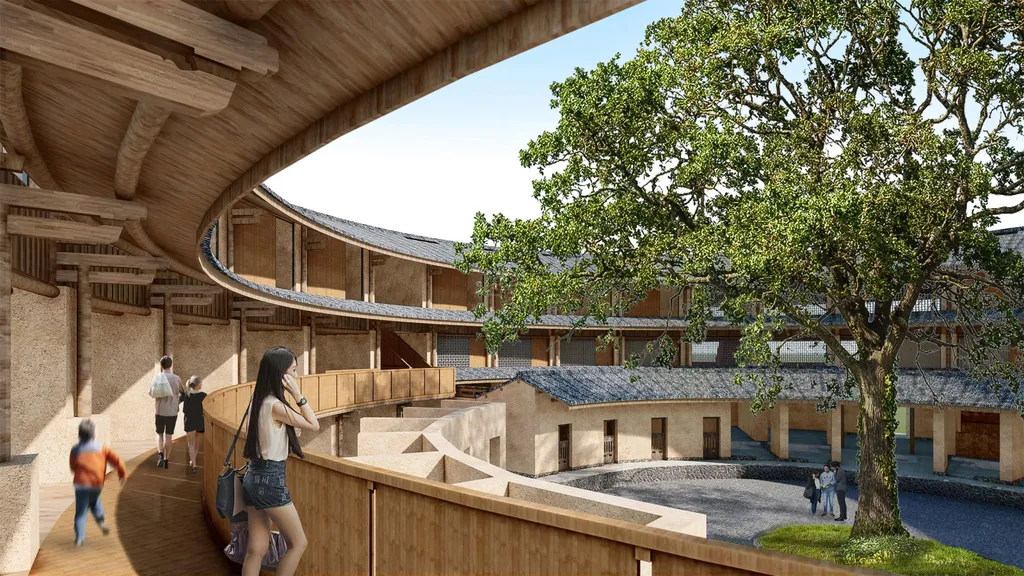
In the heart of Fujian Province, China, a unique architectural treasure is at risk of fading into history. Fujian Tubao, defensive residential structures with distinctive regional characteristics, are rapidly disappearing due to economic development and urban expansion. Xiaoyang Qiao, a researcher at Kangwon National University, is on a mission to preserve these cultural heritage sites, starting with a comprehensive study of Fuxing Bao, a representative example of Fujian Tubao.
Qiao’s study, published in the *Journal of Asian Architecture and Building Engineering* (known in English as the *Journal of Asian Architecture and Building Engineering*), delves into the construction background, architectural layout, environmental performance, and functional system of Fuxing Bao. The research employs a multi-faceted approach, including literature review, on-site architectural surveying, and in-depth interviews, to create a replicable framework for other Fujian Tubao cases.
“The rapid pace of urbanization is threatening these structures,” Qiao explains. “Many have already collapsed or deteriorated before any systematic academic investigation could be conducted. It’s crucial that we act now to preserve these cultural heritage sites.”
The study not only documents the current condition of Fuxing Bao but also proposes a framework that can be applied to other Fujian Tubao structures. This framework includes methods, content, and results, providing a comprehensive approach to safeguarding and transmitting regional cultural heritage.
The implications of this research extend beyond cultural preservation. Understanding the environmental performance and functional systems of these traditional structures can offer valuable insights for modern architecture and the energy sector. For instance, the defensive design and spatial morphology of Fujian Tubao could inspire innovative approaches to sustainable and resilient building design.
“By studying these traditional structures, we can learn from the past to inform the future,” Qiao adds. “This research aims to strengthen the academic framework of Fujian Tubao studies and provide a theoretical basis for the conservation and adaptive reuse of these architectural heritage sites.”
As urbanization continues to reshape landscapes, the need for preserving cultural heritage becomes increasingly urgent. Qiao’s research serves as a timely reminder of the value of these traditional structures and the potential they hold for shaping future developments in architecture and the energy sector. By acting now, we can ensure that the legacy of Fujian Tubao endures for generations to come.