
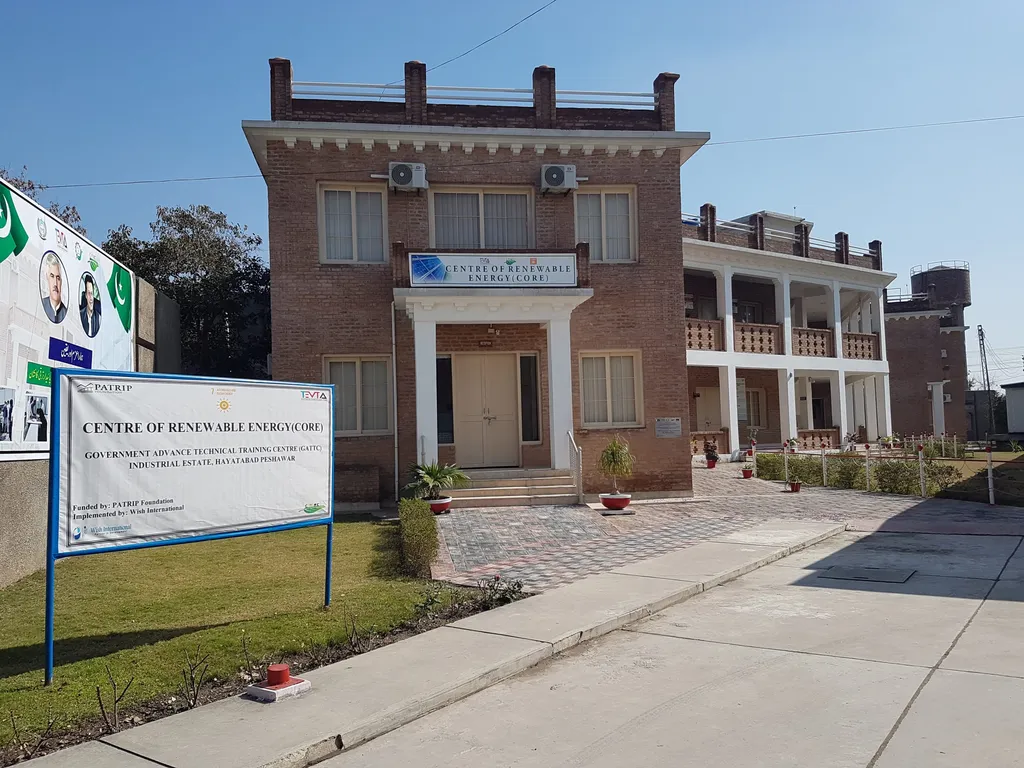
In the heart of Peshawar, Pakistan, a groundbreaking study is challenging the status quo of building design and energy efficiency. Fakhre Alam Khan, a researcher from the Department of Mechanical Engineering at the University of Engineering and Technology Peshawar, has published a novel study in the *Journal of Engineering* (translated from Arabic as “Journal of Engineering”) that could reshape how we think about the life cycle of buildings and their impact on our environment.
Buildings are not just static structures; they are dynamic entities that consume energy from the moment they are constructed until they are decommissioned. In fact, the building and construction sector accounts for a staggering 40–50% of greenhouse gas emissions and uses 30–40% of total primary energy. With buildings often lasting over 50 years, predicting their future energy consumption and environmental impact is crucial.
Khan’s research focuses on the life cycle assessment of an educational building in Peshawar, examining how different façade materials—such as walls, plaster, windows, and insulation—affect operational energy and carbon emissions over a 60-year period. The findings are nothing short of transformative.
“By making strategic changes to the building’s façade materials, we can significantly reduce both peak cooling total load and CO2 emissions,” Khan explains. For instance, switching from clay brick walls to lightweight concrete blocks can reduce peak cooling load and CO2 emissions by 16.4%. Similarly, replacing traditional cement plaster with lightweight plaster can cut emissions by 8.92%.
The study also highlights the importance of insulation. Adding just two inches of polyurethane board insulation to external walls can reduce peak cooling load and CO2 emissions by 10.55%. And when it comes to windows, replacing clear glass with single, double, or triple-glazed windows with a shading coefficient of 0.2 can lead to reductions of 10.3%, 16.4%, and 17.5% respectively.
These findings are not just academic exercises; they have real-world commercial implications. For the energy sector, this research underscores the potential for significant energy savings and reduced carbon footprints through thoughtful material selection. As buildings become more energy-efficient, the demand for traditional energy sources could decrease, opening up opportunities for renewable energy integration and innovative energy solutions.
Khan’s work also aligns with the broader goals of sustainable development, emphasizing the need for buildings that are not only functional but also environmentally responsible. “The future of building design lies in sustainability,” Khan asserts. “By adopting these strategies, we can create structures that are not only cost-effective but also kinder to our planet.”
As the construction industry continues to evolve, this research serves as a beacon, guiding professionals towards more sustainable and efficient building practices. The insights gleaned from Khan’s study could very well shape the future of urban development, making our cities greener and our buildings smarter.