
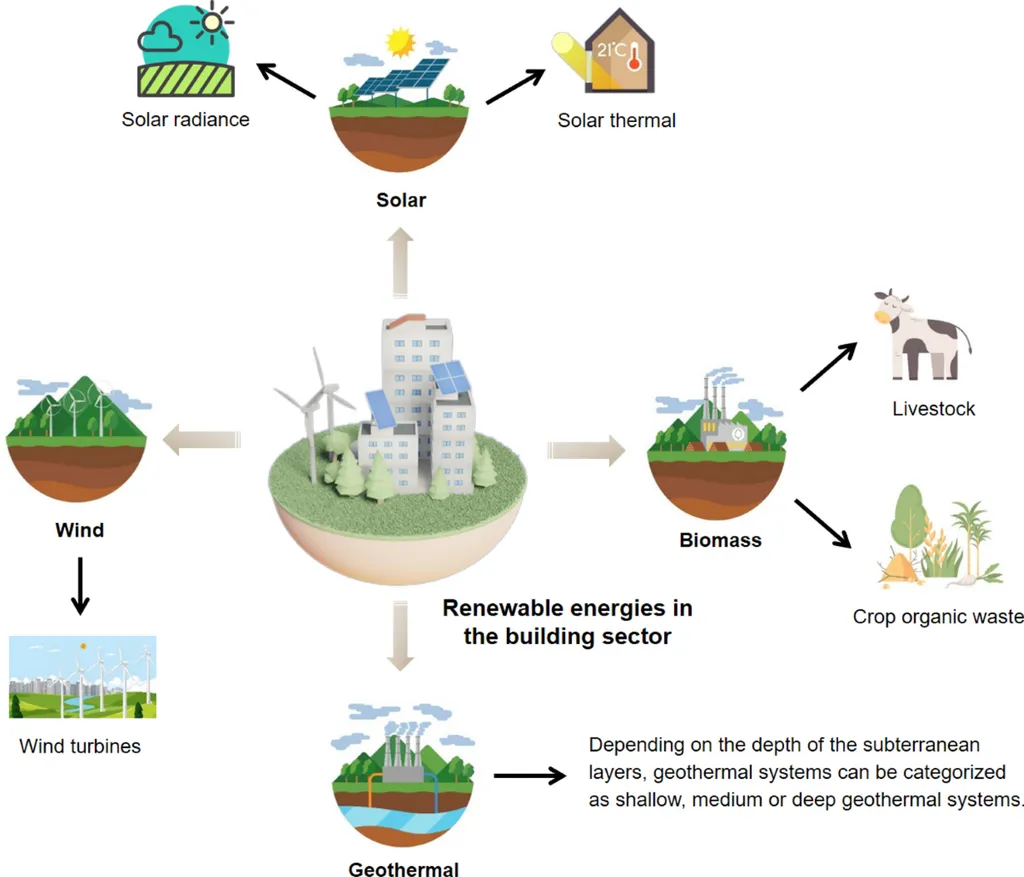
In a groundbreaking study that could reshape how we power our buildings, researchers have found that integrating renewable energy sources (RES) into both industrial and residential structures can significantly enhance sustainability and energy independence. The research, led by Mohammad Ghiasi from the Faculty of Engineering and Applied Science at the University of Regina in Canada, evaluates the performance of various renewable energy sources across different geographical settings and building types.
The study, published in the *IET Renewable Power Generation* (which translates to the *Institution of Engineering and Technology Renewable Power Generation*), examines photovoltaic (PV), wind, geothermal, and biomass energy systems in urban, rural, and coastal areas. Ghiasi and his team analyzed four types of buildings: single-family residential, multi-family residential, commercial, and industrial. Their findings reveal that the effectiveness of renewable energy systems varies significantly based on location and building type.
One of the key insights from the study is that photovoltaic energy outperforms other renewable sources in urban residential buildings due to the high availability of roof space. “PV energy is particularly effective in urban settings where space is limited but rooftops are abundant,” Ghiasi explains. This could drive a shift in urban planning, encouraging the integration of solar panels into residential and commercial buildings.
In coastal areas, wind energy emerged as a strong contender, providing a reliable energy source for industrial buildings. The study highlights that wind turbines can harness the consistent coastal winds to generate substantial energy, reducing dependence on fossil fuels. “Wind energy in coastal regions offers a promising alternative to traditional power sources, especially for energy-intensive industries,” Ghiasi notes.
Geothermal energy, on the other hand, proved to be a consistent and sustainable baseload energy source across all scenarios. Its ability to provide a steady supply of energy complements the variable outputs of PV and wind systems, enhancing overall energy reliability. This could lead to a more balanced and resilient energy grid, particularly in regions with fluctuating weather patterns.
Biomass energy, however, accounted for the lowest energy production in all buildings and locations. This finding suggests that while biomass may have its place in certain contexts, it is not as efficient or reliable as other renewable sources for widespread integration into buildings.
The study also delves into the economic aspects of renewable energy integration, analyzing cost analysis and payback periods for different RESs. The results indicate that the initial investment in renewable energy systems can be offset by long-term savings and reduced carbon footprints. This could incentivize energy and building planners to adopt renewable technologies more broadly.
Moreover, the research emphasizes the importance of tailoring renewable energy integration methods to the specific geographical and building characteristics. “Adapting renewable energy solutions to the unique needs of each location is crucial for maximizing their effectiveness,” Ghiasi states. This approach could lead to more customized and efficient energy systems, ultimately benefiting both the environment and the economy.
The findings of this study have significant implications for the energy sector. By highlighting the strengths and weaknesses of different renewable energy sources, the research provides a roadmap for energy planners and builders to make informed decisions. The integration of renewable energy into buildings not only reduces dependence on grid energy but also contributes to sustainability goals.
As the world moves towards a greener future, this research underscores the need for a diversified approach to renewable energy integration. By leveraging the strengths of PV, wind, geothermal, and biomass energy, we can create a more resilient and sustainable energy infrastructure. The study’s insights could pave the way for innovative solutions that drive the energy sector forward, making renewable energy a cornerstone of modern building design and management.