
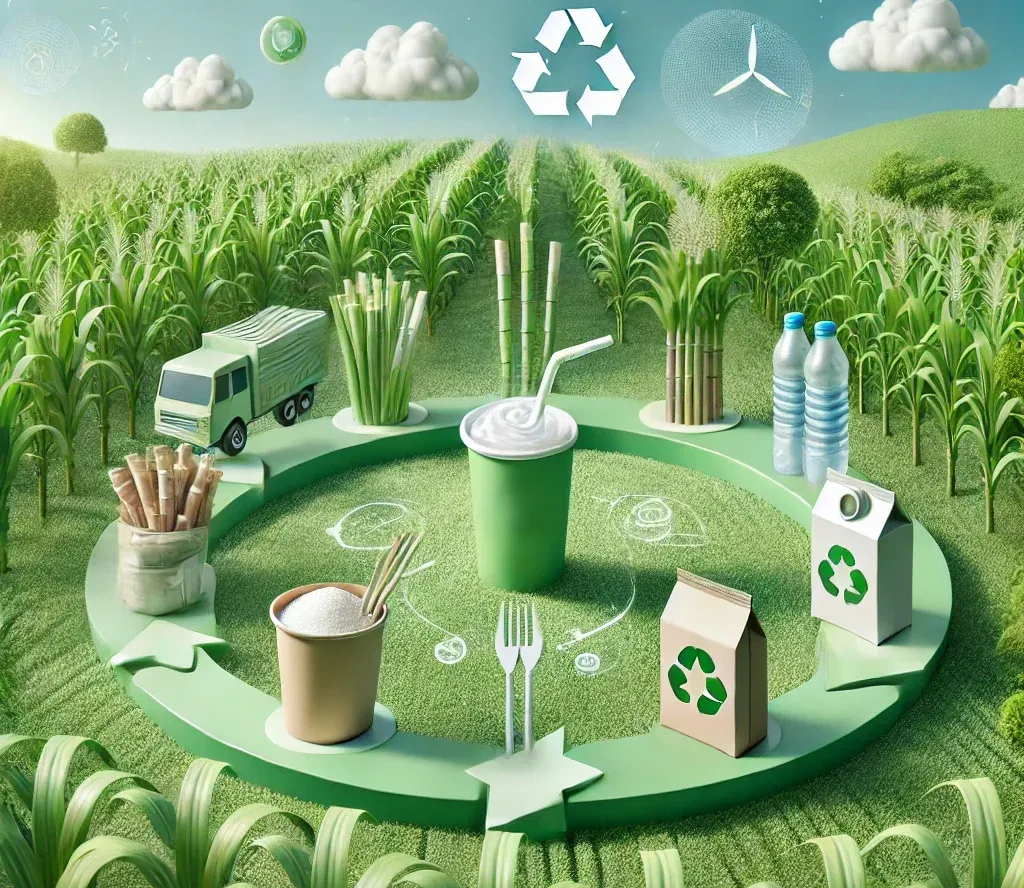
In a groundbreaking development for the rubber and tire industry, researchers have discovered a way to convert agricultural waste into a sustainable reinforcement for natural rubber, potentially reducing the sector’s reliance on petroleum-derived materials. The study, led by Dibyendu Dey, explores the use of ground sugarcane bagasse (GSB) as a bio-filler in natural rubber tread compounds, offering a promising alternative to traditional carbon black (CB).
Sugarcane bagasse, the fibrous residue left after extracting juice from sugarcane, is typically discarded or burned, contributing to environmental pollution. However, Dey’s research, published in the journal ‘eXPRESS Polymer Letters’ (which translates to ‘Polymer Letters Express’), reveals that this agro-waste can be repurposed as a sustainable filler in rubber compounding. “This study demonstrates that ground sugarcane bagasse can partially replace carbon black in natural rubber compounds, enhancing energy efficiency and sustainability,” Dey explains.
The research team compared a control formulation with 45 parts per hundred rubber (phr) of CB to hybrid formulations with varying levels of CB and GSB. They found that the optimal balance of tensile strength, elongation at break, and hardness was achieved with a compound containing 10 phr of GSB. This formulation also exhibited good cure behavior and thermal stability, making it a viable option for tire manufacturing.
One of the most significant findings was the improvement in tire performance characteristics. The dynamic mechanical study showed that the tan δ at 60 °C decreased by 8.0%, indicating lower rolling resistance and potentially better fuel efficiency. At the same time, tan δ at 0°C increased by 3.9%, improving wet traction. “The Payne effect also showed improved filler dispersion as a result of GSB partially replacing CB,” Dey notes, highlighting the enhanced performance of the hybrid compounds.
The study suggests that appropriately dispersed GSB can partially reinforce natural rubber, offering a sustainable and cost-effective alternative to traditional fillers. However, it also notes that larger GSB loadings can decrease modulus, tear strength, and abrasion resistance due to lower interfacial adhesion and the presence of micro-voids.
The implications of this research are far-reaching for the energy and transportation sectors. By reducing the reliance on petroleum-derived materials, the tire industry can lower its carbon footprint and contribute to a more circular economy. “This research opens up new possibilities for the use of agro-waste in rubber compounding, promoting sustainability and reducing environmental impact,” Dey concludes.
As the world seeks innovative solutions to combat climate change and reduce waste, Dey’s research offers a promising path forward. By converting agricultural waste into valuable materials, the rubber industry can take a significant step towards a more sustainable future. The findings published in ‘eXPRESS Polymer Letters’ provide a solid foundation for further exploration and development in this exciting field.